Articles

Articles & Insights

Discover, learn, and grow with stories from our ecosystem members.

search
Coworking Space in Jaipur: 2026 Trends Shaping the Future of Work Career & Business
Oct 16, 2026 • visibility 6 • 10 min read

Coworking Space in Jaipur: 2026 Trends Shaping the Future of Work

The way businesses operate is changing, and modern professionals are looking for workplaces that offer flexibility, convenience, and a professional environment. Startups, freelancers, entrepreneurs, and growing companies are exploring new ways to manage their workspace requirements without taking on the responsibilities of a traditional office.A coworking space in jaipur can offer a practical solution by combining flexible work arrangements with essential office facilities. As hybrid work models and managed office solutions gain attention across India, choosing the right workspace has become an important consideration for businesses planning for growth.2026 Workspace Trends: Why Flexibility MattersFlexible workspaces are becoming an important part of India's commercial office market. According to Cushman & Wakefield's October 2026 report, India's flexible office inventory reached 88.7 million square feet in the first half of 2026, representing 10.5% of the country's total office stock. The report projects that inventory could reach approximately 160 million square feet by 2030.This trend reflects how companies are considering workspace flexibility alongside their long-term office requirements.For businesses in Jaipur, this creates a useful opportunity to evaluate workspace arrangements that match their size, budget, location preferences, and working style.1. Hybrid Work and Flexible Office ArrangementsHybrid work allows employees to divide their time between remote work and a physical office. This approach makes flexible workspaces useful for businesses that need professional office access without requiring the same amount of space every day.A coworking arrangement may help businesses access desks, meeting rooms, and other office facilities according to their requirements.Before selecting a plan, consider how frequently your team will use the workspace, whether employees need dedicated desks, and how often client meetings take place.2. Managed Workspaces for Growing BusinessesAnother important trend is the growing interest in managed office solutions. Businesses may prefer a professionally maintained workspace instead of independently arranging furniture, utilities, housekeeping, and other operational requirements.Depending on the provider, managed workspace arrangements can include furnished offices, facility management, internet connectivity, and ongoing support.For startups and small businesses, this approach can simplify office operations and allow teams to concentrate on their core activities.3. Better Workplace ExperienceModern offices are increasingly evaluated on more than their appearance. Professionals also consider comfort, cleanliness, privacy, connectivity, and the quality of available facilities.A productive workspace may offer ergonomic furniture, reliable internet, power backup, meeting facilities, and a comfortable environment for focused work.When comparing a coworking space in jaipur, businesses should assess whether the available facilities support their daily activities rather than choosing a workspace based on price alone.4. Location and Commuting ConvenienceLocation remains an important part of workspace selection. A convenient office can make daily travel easier for employees and provide a more accessible meeting point for clients.In its India Office Occupier Survey 2026, CBRE reported that 70% of surveyed occupiers prioritised commute infrastructure when selecting office locations. The survey also found that 67% expected flexible workspaces to form part of their office portfolio within the next two years.These findings highlight why businesses should evaluate connectivity, travel time, parking, and access to nearby commercial areas when selecting a workspace.For Jaipur businesses, the right location will depend on where employees live, where clients are based, and how frequently the office will be used.5. Technology-Ready and Future-Focused OfficesTechnology continues to influence how businesses communicate, collaborate, and manage everyday work. Reliable internet connectivity, suitable meeting facilities, and access to essential digital infrastructure are increasingly important for modern professionals.Businesses should check whether a workspace can support video conferences, online collaboration, presentations, and other technology-dependent tasks.Although technology requirements differ across industries, a well-equipped office can make daily operations more convenient and help teams work effectively.Which Coworking Space Is Right for Your Business?The right workspace depends on your team size, budget, preferred location, and professional requirements.Freelancers and independent professionals may benefit from flexible workstations or dedicated desks that provide a structured working environment.Startups and small teams may prefer dedicated desks or private cabins that support collaboration and day-to-day operations.Established businesses may consider managed offices or flexible arrangements when expanding into another location or accommodating changing team requirements.Consultants and client-facing professionals may find meeting rooms useful for presentations, interviews, and business discussions.Before choosing a coworking space in jaipur, compare the available plans, included amenities, access timings, membership conditions, and any additional charges.Why Consider Arvian Workspaces?Arvian Workspaces provides workspace solutions for freelancers, startups, entrepreneurs, and growing businesses looking for a professional place to work.Its workspace options include dedicated desks, private cabins, meeting rooms, and flexible office arrangements designed for different business needs.When evaluating a workspace provider, consider the quality of the facilities, location convenience, pricing transparency, available support, and flexibility of membership plans.You can explore the services offered by Arvian Workspaces to learn more about available workspace solutions.How to Choose a Workspace That Supports Long-Term GrowthSelecting an office should involve both present requirements and future business plans. A workspace that suits a small team today may need to accommodate additional employees or more frequent meetings as the business develops.Consider these practical points before making a decision:Budget: Review the total membership cost and any additional fees.Facilities: Confirm that the required amenities are included in your plan.Flexibility: Check whether you can change your workspace arrangement as your needs evolve.Privacy: Evaluate whether shared desks, dedicated workstations, or private cabins suit your work.Support: Understand how the provider handles maintenance and everyday requests.Taking time to compare these factors can help businesses make a more informed workspace decision.ConclusionThe future of work is increasingly shaped by flexibility, better workplace experiences, technology, and changing business requirements. As flexible office arrangements become a larger part of India's commercial property market, businesses have more reasons to evaluate workspace options that fit their operations.Choosing a coworking space in jaipur involves considering more than a desk or an office address. Location, amenities, pricing, privacy, and flexibility all contribute to the overall working experience.Arvian Workspaces offers workspace options for professionals and businesses seeking a comfortable and professional environment. Visit Arvian Workspaces to explore available solutions for your business needs.

How to Choose the Right USB RFID Reader for Your Application Tech & Innovation
Oct 16, 2026 • visibility 8 • 18 min read

How to Choose the Right USB RFID Reader for Your Application

Choosing a USB RFID reader is not just a matter of finding a device with the right connector. Two readers may look almost identical on a desk but behave very differently when connected to an inventory system, an RFID encoding workstation, or a custom software application.The first question should be what the reader needs to do. Will it identify one RFID card at a registration counter? Read several tagged products during inventory work? Encode labels before shipment? Or communicate with an existing business application?Each situation has different requirements. Understanding them before purchasing can help businesses avoid compatibility problems, unnecessary hardware costs, and delays during integration.This guide explains the main factors to consider when selecting a USB RFID reader for a commercial project.1. Start With the RFID Tags You Need to ReadBefore comparing reader models, identify the RFID tags already used in your project or the tags you plan to purchase. This is usually the most important first step.RFID readers operate at different frequencies, and these frequencies are not interchangeable.LF RFID readersLow-frequency RFID commonly operates at 125 kHz or 134.2 kHz. It is used in certain identification, animal identification, and access-control applications.If your project uses LF tags, confirm the supported frequency and tag format. A reader supporting one LF format may not support every other format.HF and NFC-compatible readersHigh-frequency RFID commonly operates at 13.56 MHz. These readers are used for compatible cards, document management, product identification, and selected encoding applications.NFC is related to HF RFID, but the technologies and supported functions are not identical in every implementation. Check the specific card type, chip, standard, and required operation before selecting a reader.UHF RFID readersUHF RFID is widely used for inventory identification, item tracking, and applications involving multiple tagged objects. Many UHF systems support EPC Gen2 / ISO 18000-63, but protocol support must be verified for the specific model.A USB UHF RFID reader may be suitable for desktop inventory registration, RFID label testing, or tag encoding. However, it cannot automatically read LF or HF tags simply because they are also RFID products.Practical tip: If you already have RFID tags, provide the supplier with their frequency, chip information, and protocol before requesting a reader recommendation.2. Decide Whether You Need Single-Tag or Multi-Tag ReadingNot every RFID application needs to identify several tags at once.For employee registration, membership management, or a workstation where one card is presented at a time, single-tag interaction may be sufficient.Inventory applications can have different requirements. A business may need to identify several tagged products placed near a reader during a stock check. In this case, the reader’s anti-collision capability, antenna design, supported tag population, and software handling become important.Multi-tag reading does not guarantee that every tag in the surrounding area will be detected. Results depend on tag orientation, distance, materials, RF interference, and the physical arrangement of the items.Consider a desktop station used to register incoming merchandise. If staff place tagged items in a controlled reading area, a desktop UHF reader may be appropriate. If products are spread across a warehouse or move continuously along a conveyor, a fixed RFID system may be a better fit.The goal is to match the reading method to the actual workflow rather than choose the reader with the largest advertised tag capacity.3. Check the Required Reading DistanceReading distance is another specification that deserves attention before purchase.A compact desktop USB RFID reader is typically intended for a defined working area near the device. Some applications need only close-range identification, while others require tags to be detected farther away.Actual reading distance depends on several factors:Reader output power and antenna design.RFID frequency and tag sensitivity.Tag size, orientation, and mounting position.Nearby metal, liquids, and other materials.Regional radio-frequency regulations.The number of tags and surrounding RF activity.A specification measured under ideal laboratory conditions may not represent the performance achieved with your actual products.For example, an RFID label attached to a cardboard package may perform differently from a similar label mounted on a metal tool. Even when both use the same RFID protocol, their antenna behavior and surrounding materials can change the reading results.If the project requires a specific distance, tell the supplier how the tag will be positioned and what material it will be attached to. Testing representative tagged items is more useful than relying on a headline read-range figure alone.4. Choose the Right USB Interface and Host DeviceA USB connection makes desktop RFID integration convenient, but the connector itself does not guarantee compatibility.Some readers use USB-A, while others offer USB-C or different supported connection arrangements. The host device may be a Windows PC, an industrial computer, or an Android device.Before ordering, confirm the following:The physical USB connector and cable requirements.Supported operating systems and versions.Driver installation requirements.Whether USB OTG is required for Android.Whether the host supplies sufficient power.Whether the intended application can communicate with the reader.A reader that works with one desktop application may not work with another without additional integration. Likewise, a USB-C connector does not automatically mean that a device supports every USB-C host or mobile operating system.For commercial deployments, test the reader on the same type of computer and operating system that will be used in production.5. Understand HID, Serial, SDK, and API IntegrationSoftware compatibility can determine whether an RFID project is easy to deploy or requires additional development.Different USB RFID readers may offer different communication methods. The correct option depends on how the host application needs to receive tag data.HID keyboard emulationSome readers can output supported data as keyboard input. The identifier appears in the active text field, much like data entered through a keyboard.This approach can be convenient for simple registration forms and applications that only need to receive an identifier. However, keyboard emulation may provide limited control over advanced RFID functions.Serial communicationSome devices expose a serial communication interface, including a virtual COM port. The host application sends commands and receives responses according to the manufacturer’s communication protocol.This can be suitable for custom software, but developers need the correct command documentation and interface support.SDK and API integrationAn SDK or API can provide access to supported reader functions, such as inventory operations, tag reading, writing, configuration, or other device-specific features.Before selecting a model, confirm the available documentation, supported programming environments, sample code, operating systems, and technical support arrangements.Do not assume that all USB RFID readers provide the same SDK functions or that an API for one model works with another.6. Decide Whether Reading or Writing Is RequiredSome projects only need to identify tags. Others need to encode or update data during product preparation.If the application involves writing, confirm that the reader supports the required write operations and that the tags have compatible writable memory.For example, a manufacturer may need to assign an identifier to each RFID label before a product enters distribution. A reader-writer can support this workflow when the device, tag, and encoding software are compatible.It is also important to understand which memory area will be written. Some tag memory may be locked, password-protected, or subject to specific access conditions.If the project needs both reading and writing, make this requirement clear when requesting a quotation. The terms “RFID reader” and “RFID reader-writer” are sometimes used loosely in product listings, so verify the actual supported functions.7. Match the Reader to the ApplicationA suitable reader should fit the working process, not just the technical specification sheet.ApplicationKey selection considerationsEmployee or membership cardsCard frequency, chip compatibility, data outputRetail inventoryUHF protocol, tag placement, multi-tag performanceTool and asset registrationTag type, reading area, software database integrationLibrary managementSupported HF tag standard, workflow, encoding requirementsRFID label encodingWrite support, memory access, encoding softwareSoftware developmentSDK, API, command protocol, sample codeWarehouse automationRequired read zone, throughput, and possible fixed-reader alternativesThese are starting points rather than universal rules. A library may use different RFID standards from another library, and an asset-tracking project may use LF, HF, or UHF depending on its requirements.If your project involves continuous conveyor reading, automatic portal detection, or a wide reading zone, compare desktop USB readers with fixed RFID readers before making a final decision.8. Test Before Placing a Bulk OrderA product specification sheet is useful, but a practical test helps reveal issues that may not be obvious during initial selection.For a business purchasing USB RFID readers for a larger deployment, a simple evaluation can include:Test the reader with the exact tags intended for production.Check reading consistency at the required distance.Test the items in their actual packaging or mounting conditions.Verify the required read/write operations.Connect the device to the target operating system and application.Confirm that tag data is transferred and processed correctly.Document any configuration or integration requirements.If several reader models are being considered, use the same tags, host computer, and test procedure for each device. This makes the comparison more meaningful.For OEM projects or system integration, it is also useful to confirm sample availability, documentation, firmware requirements, customization options, and technical support before committing to a larger quantity.Find a USB RFID Reader for Your ProjectThe right USB RFID reader depends on a combination of requirements: tag frequency, supported protocol, reading distance, multi-tag performance, USB compatibility, software integration, and read/write functions.For a simple card-registration station, a compact reader with the correct card support and straightforward data output may be enough. For a UHF inventory workstation or a custom RFID encoding system, protocol support, antenna performance, and software access may require closer evaluation.Cykeo offers a range of USB RFID reader options for desktop and integration projects. Visit the USB RFID Reader product category to review available models and identify options for your application.When contacting the supplier, include your RFID tag type, required reading distance, host operating system, read/write requirements, and expected project quantity. These details help the engineering team evaluate compatibility and recommend a practical solution.ConclusionChoosing a USB RFID reader starts with understanding the job it needs to perform. Frequency and tag compatibility establish the basic requirements, while reading distance, antenna performance, USB connectivity, and software integration determine whether the device will work reliably in the intended environment.For B2B buyers and system integrators, testing a suitable reader with actual tags and software before a bulk purchase is a practical way to reduce deployment risks and avoid unnecessary integration work.Before comparing reader specifications, it helps to understand how RFID readers communicate with tags and why LF, HF, and UHF devices are not interchangeable. Read our guide on [what a USB RFID reader is and how it works] for a practical introduction to RFID reading principles and common applications.

Improve Athletic Performance With Sports Physiotherapy
Oct 16, 2026 • visibility 9 • 3 min read

Improve Athletic Performance With Sports Physiotherapy

People need to be strong, flexible, co-ordinated and recover well. Running, cycling, gym exercises and competitive sports can all cause discomfort, and if it becomes a problem, it may impact your performance and lifestyle. Sports physiotherapists can assist you to overcome movement deficits, heal injuries and improve exercise practices.How Physiotherapy Supports Active IndividualsSports physiotherapy is based on evaluating movement, determining physical restrictions and devising rehabilitation strategies tailored to the individual. It can be used to treat strains, ligament injuries, joint pain, tendon issues and injuries caused by physical activity. The physiotherapist may suggest strengthening, mobility, balance and functional movement training depending on your condition.The Connection Between Sport Medicine and Physical TherapySport medicine and physical therapy can coordinate to enable effective injury management. Medical evaluation is used to determine the type of injury, and physical therapy is used to restore physical function, strength, flexibility and coordination. This is a coordinated approach that can help facilitate a more structured recovery process.Choosing the Right Sports TreatmentSports treatment should be carried out according to your injury, fitness and recovery objectives. For athletes, sport-specific training sessions may be required to prepare for sprinting, jumping, or quick changes of direction while for the recreational exerciser, exercises that are comfortable with the focus of building strength may be needed. A slow progression of exercise intensity under good professional supervision can help minimize the likelihood of negative consequences.Take the Next Step With Innovation PhysioPersonalized physiotherapy at Innovation Physio may be indicated to help them get better at moving, to improve their physical function and to return to the activities they enjoy safely. Preventing injuries at an early stage, using an appropriate rehabilitation pathway and practice good training techniques can help maintain physical performance and confidence throughout the season.

innovationphysio
Read arrow_forward
Diagnostikzentrum
Oct 16, 2026 • visibility 12 • 1 min read

Diagnostikzentrum

Diagnostikzentrum Radiologie Wolfsburg – Ihr Spezialist für MRT und CT in Wolfsburg. Unter der Leitung von Dr. med. Michael Au bietet das moderne Radiologiezentrum präzise MRT-Untersuchungen, strahlungsarme Low-Dose-CT, digitales Röntgen, Prostata-MRT, Ganzkörper-MRT und 3D-Mammographie. Zwei moderne MRT-Geräte, darunter ein besonders komfortables MRT für Patienten mit Platzangst, ermöglichen hochwertige Diagnostik. Kurze Wartezeiten, zeitnahe Termine und persönliche Betreuung stehen im Mittelpunkt. Patienten aus Wolfsburg, Gifhorn, Braunschweig, Helmstedt und Umgebung profitieren von moderner Radiologie und einfacher Online-Terminbuchung.Website: https://www.diagnostikzentrum-wolfsburg.deRadiologie Wolfsburg

Diagnostikzentrum web
Read arrow_forward
Where Can Families Enjoy a Comfortable Dinner in Vrindavan? Food & Drink
Oct 16, 2026 • visibility 15 • 9 min read

Where Can Families Enjoy a Comfortable Dinner in Vrindavan?

Vrindavan is a popular destination for families, pilgrims, and tourists who come to experience its temples, spiritual atmosphere, and local culture. After a long day of sightseeing and visiting temples, finding a good place to enjoy dinner becomes an important part of the trip. Families often look for a restaurant that offers tasty food, a clean environment, comfortable seating, and a menu with options for everyone.If you are planning a visit to Vrindavan, choosing the right restaurant can make your evening more relaxing. Rudr Shiva By Jagdeesh, also known as Shiva Dhaba By Jagdeesh, offers pure vegetarian food near Vrindavan Cut on the Yamuna Expressway, making it a convenient dining option for families and travellers.What Makes a Restaurant Ideal for Family Dinner?A family dinner is about more than just food. It is an opportunity for everyone to sit together, relax, and enjoy a meal after a busy day. A good family restaurant should offer a welcoming atmosphere and food choices suitable for different age groups.Here are some important things to consider when choosing a restaurant:Food variety: A menu with different dishes helps families choose meals according to their preferences.Clean surroundings: A tidy dining area and attention to food hygiene help guests feel comfortable.Comfortable seating: Families need enough space to enjoy their meals without feeling rushed.Convenient location: Restaurants that are easy to reach can save time during a busy sightseeing schedule.Helpful service: Friendly and attentive staff can make the dining experience more pleasant.These factors can help visitors choose the Best Family Restaurant in Vrindavan for Dinner according to their needs and expectations.Why Is Pure Vegetarian Food Popular in Vrindavan?Vrindavan is closely associated with Lord Krishna and has a strong tradition of vegetarian food. Many visitors prefer vegetarian meals during their pilgrimage, while local residents and families also enjoy the wide variety of Indian vegetarian dishes available in the area.Popular choices include paneer curries, dal makhani, stuffed parathas, vegetable dishes, rice, and traditional thalis. These meals offer different flavours and can suit both light dinners and more filling meals.At Rudr Shiva By Jagdeesh, guests can explore a variety of vegetarian options, including Paneer Butter Masala, Dal Makhani, Kadhai Paneer, parathas, and veg thalis. The menu also includes South Indian dishes and selected Chinese-style vegetarian options.This variety makes it easier for families and groups to find something that suits their individual tastes.Rudr Shiva By Jagdeesh: A Convenient Dinner Stop Near VrindavanWhen searching for the best family restaurant in Vrindavan for dinner, location and convenience are worth considering alongside food quality. Rudr Shiva By Jagdeesh is located near Vrindavan Cut on the Yamuna Expressway, making it a practical stop for people travelling towards or away from Vrindavan.The restaurant is also known as Shiva Dhaba By Jagdeesh. Its vegetarian menu gives families and travellers several meal options, whether they want a traditional Indian dinner, a filling thali, or a quick meal during their journey.Before visiting, guests can explore the menu and other details on the official website: https://rudrshivabyjagdeesh.com/Planning ahead can help families decide what they would like to eat and make their dining stop more convenient.What Should Tourists Look for in a Restaurant in Vrindavan?Tourists often have busy schedules. They may visit temples, explore local markets, shop for souvenirs, or travel between Mathura and Vrindavan. After several hours of sightseeing, a convenient place to eat can make the day more enjoyable.A suitable tourist restaurant in Vrindavan should ideally offer:A convenient location for visitors and road travellers.A menu with a variety of vegetarian dishes.Comfortable dining facilities for families and groups.Clear information about the menu, location, and opening hours.A relaxing place to take a break during the journey.Rudr Shiva By Jagdeesh is an option for tourists looking for vegetarian food near the Yamuna Expressway and Vrindavan Cut. Its menu offers familiar Indian dishes that can appeal to visitors travelling with children, older family members, or friends.Tips for Planning a Relaxing Family DinnerA little planning can help you enjoy dinner without unnecessary stress. Keep these simple tips in mind:Check the menu in advance: Review the available dishes and prices before visiting.Consider everyone's preferences: Choose a restaurant with options for different tastes and appetites.Plan your route: Check the restaurant's location before starting your journey.Allow enough time: Avoid scheduling dinner too tightly around temple visits or other activities.Confirm current details: Check the latest opening hours and contact information before travelling.These small steps can help make dinner a pleasant part of your Vrindavan visit.Enjoy Your Next Vegetarian Meal in VrindavanFinding the right place to eat can add comfort to a family outing or a spiritual trip. Good food, a suitable menu, a convenient location, and a welcoming dining environment all contribute to a satisfying experience.Rudr Shiva By Jagdeesh, also known as Shiva Dhaba By Jagdeesh, offers a range of vegetarian dishes near Vrindavan Cut on the Yamuna Expressway. Whether you are a local resident, a visiting family, or a tourist exploring the area, you can check its menu and location to see whether it suits your dining plans.

Rudr Shiva Dhaba By Jagdeesh
Read arrow_forward
article
Arts & Crafts (DIY)
Oct 16, 2026 • visibility 8 • 6 min read

NLS Enterprises: Discover Quality Wooden Kitchen and Home Products for Everyday Living

NLS Enterprises: Discover Quality Wooden Kitchen and Home Products for Everyday LivingWooden products have always held a special place in Indian homes because of their traditional appeal, natural appearance, and practical uses. From everyday kitchen essentials to decorative accessories, wooden items can add warmth and functionality to modern living spaces. NLS Enterprises offers a collection of wooden kitchen and household products designed to meet a variety of everyday needs.Explore Wooden Kitchen Products at NLS EnterprisesThe kitchen is one of the most important areas of any home, and choosing practical kitchen tools can make daily cooking more convenient. NLS Enterprises features traditional wooden kitchen essentials, including wooden Chakla Belan sets, wooden rolling boards, wooden Belan, and kitchen utensils.A wooden Chakla Belan is a familiar tool in Indian kitchens, commonly used to prepare roti, chapati, and paratha. When selecting a Chakla Belan set, customers can consider the size, finish, handling comfort, and suitability for their cooking requirements. Wooden kitchen tools are also worth exploring for people who appreciate traditional cooking accessories and the natural appearance of wood.Enhance Your Home with Wooden Decorative ProductsHome decoration is an effective way to express personal style and create a welcoming atmosphere. Wooden decorative products can complement different interior styles, from traditional settings to contemporary homes.NLS Enterprises offers a range of home and decorative products, including wooden candle holders, agarbatti and dhoop stands, decorative storage boxes, and other household accessories. These products can be considered for living rooms, bedrooms, workspaces, and special occasions, depending on their design and intended use.Customers looking for decorative accessories can explore different styles to find items that complement their existing furniture and home decor.Practical Wooden Household Products for Daily UseApart from kitchen accessories and decorative items, practical household products can help organize everyday spaces. Wooden storage racks, organizers, money banks, and other household accessories can serve useful purposes while adding a natural visual element to interiors.When purchasing wooden household products, it is helpful to check the product dimensions, material details, finish, maintenance requirements, and intended use. Choosing items according to available space and individual needs can make them more useful in daily life.Why Explore NLS Enterprises?NLS Enterprises provides an online platform where customers can browse wooden kitchen and home products in different categories. The website makes it convenient to discover available items and contact the business directly for additional product information.Customers can explore the collection, identify products that suit their requirements, and enquire about pricing and availability through WhatsApp. This direct communication option allows buyers to ask questions and obtain relevant details before making a purchasing decision.Whether you are looking for a traditional wooden Chakla Belan, useful kitchen accessories, decorative candle holders, or wooden household products, exploring a dedicated product collection can help you discover suitable options for your home.ConclusionWooden kitchen and home products combine traditional appeal with practical everyday uses. From roti-making essentials to decorative accessories and storage solutions, the right products can complement your cooking routine and living environment.If you are searching for wooden kitchen products, wooden Chakla Belan sets, wooden home decor, or useful household accessories, visit NLS Enterprises to explore its collection and enquire about product details.Website: https://nlsenterprises.in/Discover wooden products for your kitchen and home with NLS Enterprises, and find options that suit your everyday requirements.

Abhishek Kumar
Read arrow_forward
Buying 18650 Batteries in Bulk: What Wholesale Buyers Should Check Tech & Innovation
Oct 16, 2026 • visibility 9 • 19 min read

Buying 18650 Batteries in Bulk: What Wholesale Buyers Should Check

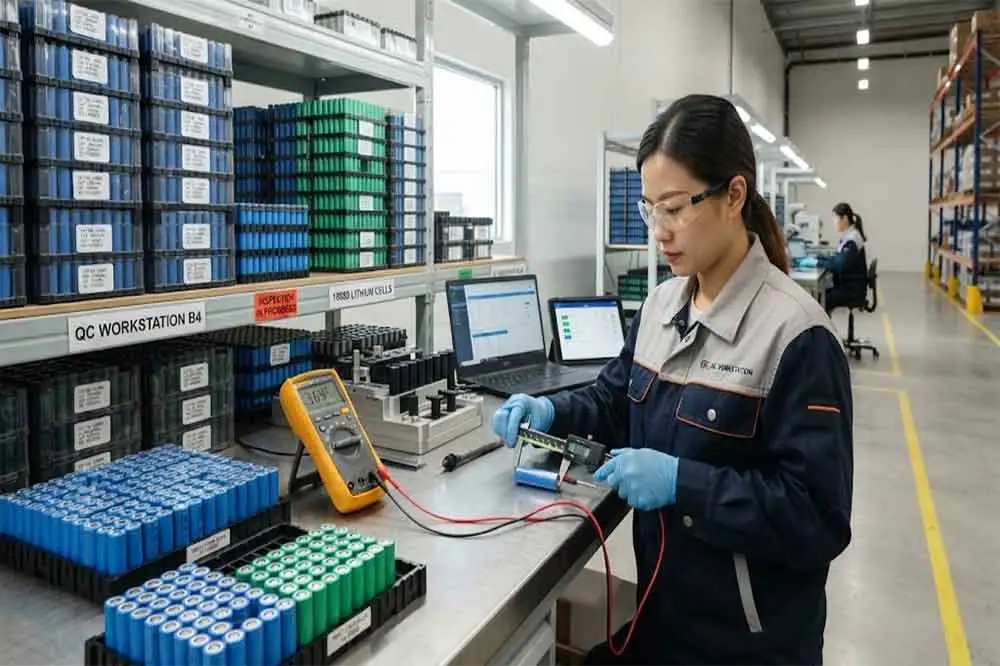
Buying few 18650 cells for testing is very different from buying thousands for production.A sample order can help confirm dimensions, capacity, discharge performance, and compatibility. A bulk order introduces another set of questions: cell consistency, production batches, documentation, packaging, lead time, quality control, and long-term supply.For wholesalers, battery pack manufacturers, distributors, and OEM buyers, these details can affect the final product just as much as the cell specification itself.This guide explains what to check when buying 18650 batteries in bulk, from the first sample to repeat production.1. Define the Cell Specification Before Asking for a QuoteA common mistake is starting with a simple request such as:“Please quote 18650 batteries, 3000mAh.”That specification is not complete enough for a serious bulk purchase.A supplier needs to know what type of 18650 cell is required and how it will be used.A basic RFQ should include:Cell typeNominal voltageCapacityContinuous discharge currentPeak current, if applicableCell dimensionsFlat-top or button-top terminalQuantityApplicationRequired certifications or documentsDestination countryExpected delivery scheduleFor OEM battery packs, also provide the intended series/parallel configuration when it is already known.A more detailed specification usually leads to a more useful quotation.2. Decide Whether You Need Cells or Complete Battery Packs“Buying 18650 batteries in bulk” can mean two different things.The first is purchasing loose 18650 cells.The second is purchasing assembled battery packs containing 18650 cells.These require different purchasing specifications.For loose cells, the buyer may focus on:Cell modelCapacityVoltageDischarge ratingInternal resistanceTerminal typeQuantityBatch informationFor assembled packs, the buyer may also need:Pack voltagePack capacityS/P configurationBMSConnectorHousingWire specificationDimensionsLabelPackagingCertificationFunctional testingMaking this distinction early avoids confusion during quotation.3. Know the Exact Capacity You Are BuyingCapacity is one of the most important specifications when purchasing 18650 cells.Common specifications may include 2000mAh, 2500mAh, 2600mAh, 3000mAh, 3200mAh, and 3500mAh.However, the number printed in a quotation should not be treated as the only evidence.Ask how the capacity is tested.Important test conditions can include:Charging methodCharging voltageDischarge currentCutoff voltageTest temperatureRest timeTesting equipmentTwo suppliers can quote the same nominal capacity but use different test conditions.For bulk purchasing, the test method matters because it gives the buyer a consistent basis for comparison.For more information, see Standard 18650 Battery Capacity: 2000mAh, 2600mAh, 3000mAh or 3500mAh?4. Check Discharge Current CarefullyCapacity and discharge current are different specifications.A 3500mAh cell is not automatically suitable for a high-current application.A power tool, motor system, industrial device, or high-output product may require a cell with a much higher discharge capability.When reviewing a quotation, ask whether the stated current is:Continuous discharge currentMaximum continuous currentPulse or peak currentManufacturer’s recommended operating limitThese terms should not be treated as interchangeable.For high-current projects, also consider voltage sag, internal resistance, temperature rise, and the number of cells connected in parallel.See 18650 Battery Discharge Current: What Buyers Should Check for more background.5. Ask for the Cell DatasheetA professional bulk quotation should be supported by technical information.A cell datasheet may contain:Nominal voltageNominal capacityStandard charging methodMaximum charging currentContinuous discharge currentDischarge cutoff voltageOperating temperatureDimensionsWeightInternal resistanceCycle informationSafety informationThe datasheet should match the exact cell model being quoted.A general 18650 datasheet is not enough when the buyer is approving a specific cell for production.6. Confirm the Cell Model and ManufacturerBefore placing a bulk order, confirm exactly what cell is being supplied.Ask for:Manufacturer nameExact cell modelCell chemistryRated capacityProduction specificationDatasheetBatch informationThis becomes particularly important when a buyer is developing a product around a specific cell.A replacement cell with a similar capacity may still have different dimensions, internal resistance, discharge performance, or charging characteristics.For OEM projects, changing the cell after product validation may require additional testing.7. Sample Testing Should Come Before Bulk ProductionA sample is not only for checking whether the battery looks correct.It is an opportunity to verify the cell against the actual application.Depending on the project, sample testing can include:Capacity testCheck whether the measured capacity matches the agreed specification.Internal resistance testCompare resistance between samples.Discharge testEvaluate voltage behavior under the intended load.Charging testConfirm charging behavior with the planned charger or BMS.Temperature testMonitor temperature under representative operating conditions.Dimension checkMeasure actual cell dimensions before designing or approving the battery holder.For an OEM battery pack, testing the assembled pack is also important.8. Check Cell Matching for Bulk Battery Pack ProductionBuying thousands of cells does not mean putting any four cells together and building a pack.Cell matching becomes important when cells are assembled into multi-cell battery packs.The manufacturer may need to control:CapacityInternal resistanceOpen-circuit voltageProduction batchCell ageSelf-discharge characteristicsFor example, a 13S4P battery pack contains:13 × 4 = 52 cellsThose cells need to work together as a system.Good cell matching can help improve pack consistency and reduce differences between parallel groups.9. Ask About Internal ResistanceInternal resistance is often overlooked during purchasing because capacity is easier to understand.But resistance can have a significant effect on high-current applications.A simplified relationship is:Power loss ≈ I² × RAs current increases, the effect of resistance becomes more noticeable.When comparing bulk suppliers, ask:What is the resistance specification?How is it measured?At what temperature?At what state of charge?What equipment is used?Is the value an average or maximum?How is batch consistency controlled?The testing method should be consistent before comparing results from different suppliers.10. Understand Batch ConsistencyA sample from one production batch does not automatically represent every future batch.This is particularly important for long-term OEM projects.A buyer may approve a cell based on a sample and later order a much larger quantity.The supplier should be able to explain how it controls production consistency.Useful information may include:Incoming material inspectionCell testingCapacity gradingInternal resistance gradingBatch identificationSampling inspectionFinal QCProduction recordsFor repeat orders, keeping the approved cell specification and sample reference can make quality control easier.11. Check Production Date and Storage ConditionsLithium-ion cells are not normally treated like a product that can be stored indefinitely without consideration.Production date and storage conditions can matter, especially for large purchases.Ask the supplier about:Production dateStorage temperatureStorage conditionsRecommended storage periodPackaging conditionStock rotationFor a project requiring a large quantity, buyers may prefer controlled production and shipment rather than receiving old inventory without clear batch information.12. Packaging Matters in Bulk OrdersA bulk shipment may contain hundreds or thousands of cells.Packaging should protect the cells during handling and transportation.Depending on the product and shipping method, packaging may include:Individual insulationTraysInner cartonsOuter cartonsProtective separatorsBatch labelsQuantity labelsThe packaging method should also be suitable for the destination and transportation requirements.For international shipments, battery transportation documentation and packaging requirements should be confirmed before shipping.13. Ask for the Required Compliance DocumentsThe exact documents depend on the market, product, transportation method, and application.Common battery-related documents may include:UN38.3 test informationMSDS/SDSCE-related documentation where applicableRoHS documentation where applicableUL-related documentation where applicableQuality-system documentationCell datasheetTest reportsDo not assume that a supplier having one certificate means every cell model has the same certification coverage.Ask for documents related to the exact product being purchased.14. Understand MOQ Before Planning Your PurchaseMinimum order quantity can vary significantly between suppliers and products.For standard loose cells, the MOQ may depend on:Cell modelStock availabilityProduction schedulePackaging requirementsCustom labelingCustom sorting or gradingOEM requirementsA stocked standard cell may have a different purchasing condition from a cell that needs a dedicated production run.For buyers planning long-term supply, it is useful to ask about both:Sample MOQandMass-production MOQThis makes it easier to plan the project from prototype to production.15. Compare the Total Purchase CostThe unit cell price is important, but it is not the entire purchasing cost.A bulk buyer may also need to consider:PackagingTestingCertification documentsCustom labelingSortingBMSAssemblyShippingInsuranceImport costsLocal taxesStorageQuality inspectionFor loose cells, logistics can also depend on the shipment quantity, packaging, destination, and transportation method.A slightly different unit price may therefore have a different total landed cost.For a complete OEM battery pack, the calculation should include all major components rather than comparing cell prices alone.16. Check Lead Time Before Placing the Purchase OrderLead time can be very different for stocked cells and custom production.A supplier should ideally clarify:Sample preparation timeProduction lead timeTesting timePackaging timeShipping preparationEstimated dispatch dateA buyer planning a product launch should also leave time for incoming inspection.It is risky to calculate the project schedule using only the manufacturer’s production time.International transportation and customs processing can add additional time.17. Ask How Repeat Orders Are ControlledLong-term OEM purchasing is not a one-time transaction.The first order may be used to validate the product. Later orders need to maintain the same basic specification.Discuss how repeat orders are controlled.Useful questions include:Will the same cell model be supplied?How are production batches recorded?What happens if the original cell is discontinued?Will the buyer be informed before a specification change?Can an alternative cell be provided for approval?These questions become more important when the battery is installed in a product that will remain in production for several years.18. Build a Simple Bulk Purchasing ChecklistBefore confirming an order, buyers can review the following list.TechnicalExact cell modelNominal voltageCapacityDischarge currentInternal resistanceDimensionsTerminal typeCell chemistryQualitySample test resultsCapacity gradingResistance testingBatch informationProduction dateQC processDocumentationDatasheetSafety documentationTransportation documentsApplicable compliance documentsTest reportsCommercialQuantityMOQLead timePackagingPayment termsShipping termsRepeat-order conditionsA checklist helps prevent a common purchasing problem: confirming the price before confirming the product specification.19. What Should Be Included in an 18650 Bulk RFQ?For B2B buyers, a clear RFQ can save several rounds of emails.A practical RFQ could look like this:Product: 18650 lithium-ion cellCapacity: 3000mAhNominal voltage: 3.6V/3.7V according to approved specificationDischarge requirement: [required current]Quantity: [required quantity]Terminal: flat top/button topApplication: [application]Required documents: datasheet, MSDS/SDS, UN38.3 and other applicable documentsDestination: [country/city]Sample requirement: [quantity]Mass production target: [quantity/month or year]Additional requirement: [label, sorting, packaging, OEM pack assembly, etc.]The more complete the RFQ, the easier it is for a battery supplier to recommend the right cell and provide a realistic quotation.20. Common Mistakes When Buying 18650 Cells in BulkBuying only by capacityA 3500mAh cell may not be appropriate for a high-current application.Comparing different test conditionsCapacity numbers should be compared under consistent test conditions.Ignoring batch informationA buyer needs to know what production batch the approved samples represent.Skipping sample testingA bulk order should not normally be the first opportunity to test the cell.Assuming all 18650 cells are identicalDimensions, terminals, resistance, capacity, and discharge performance can vary between models.Focusing only on unit priceShipping, testing, documents, packaging, and quality control can affect total purchasing cost.Ordering too much before validationLarge quantities should generally follow successful sample and prototype evaluation.21. Bulk Buying Is a Supply-Chain DecisionThe main difference between sample purchasing and bulk purchasing is consistency.A sample answers:“Does this cell work?”A bulk purchasing process needs to answer several additional questions:“Can the supplier provide the same specification?”“Can the quality remain consistent?”“Can the quantity be delivered on schedule?”“Can the supplier provide the required documentation?”“What happens when we place the next order?”These questions matter for wholesalers and OEM manufacturers because the battery becomes part of their own supply chain.ConclusionBuying 18650 batteries in bulk requires more than finding a suitable capacity and negotiating a unit price.The buyer should confirm the exact cell model, capacity, discharge capability, internal resistance, dimensions, production batch, testing method, documentation, packaging, MOQ, lead time, and repeat-order conditions.For OEM battery projects, sample testing should come before mass production, and cell matching should be considered when multiple cells are assembled into a pack.The goal is not simply to buy a large quantity of 18650 cells.The goal is to establish a stable supply of cells that consistently meet the technical requirements of the finished product.