Oct 17, 2026
•
visibility 1
•
27 min read
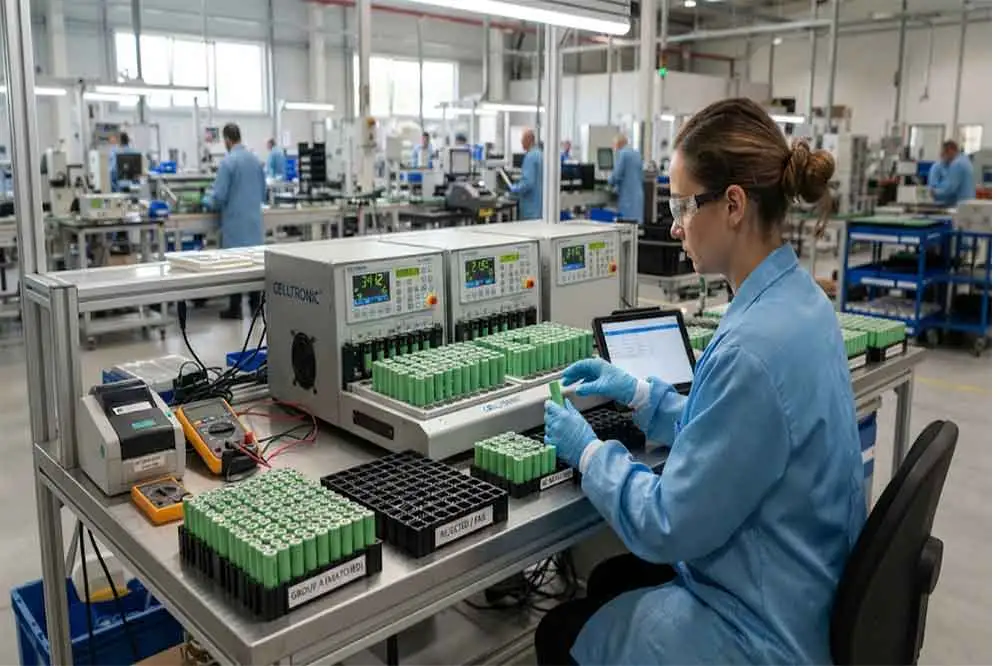
Buying the right 18650 cell is only the first step in making a battery pack.When a pack contains many cells, those cells need to work well together. Small differences in capacity, voltage, and internal resistance can affect pack performance.This is why 18650 battery cell matching matters in OEM battery pack production.Cell matching means testing individual cells and grouping cells with similar characteristics. The goal is simple: create more consistent battery packs.However, matching is not just about finding cells with the same mAh rating. Internal resistance, voltage, production batch, and other factors may also matter.This guide explains how cell matching works and what OEM buyers should check before production.What Is 18650 Battery Cell Matching?18650 battery cell matching is the process of testing individual cells before battery pack assembly.The manufacturer checks selected electrical characteristics. The cells are then sorted into suitable groups.Common matching factors include:CapacityInternal resistanceVoltageSelf-dischargeProduction batchCell agePhysical conditionNot every project needs the same matching process.A small portable device may have different requirements from a high-current industrial battery. Therefore, the matching method should follow the actual battery design.Why Do 18650 Cells Need to Be Matched?A battery pack contains multiple cells that work as one system.Each cell contributes to the pack’s electrical performance. As a result, large differences between cells can affect the complete pack.Consider four 3000mAh cells connected in parallel.The simple capacity calculation is:3000mAh × 4 = 12,000mAhIn real production, the four cells may not measure exactly 3000mAh.For example:Cell A: 3010mAhCell B: 3004mAhCell C: 2998mAhCell D: 2993mAhThese values are relatively close.A manufacturer can use test results to group cells with similar performance. This helps create more consistent parallel groups.The exact acceptable difference depends on the cell and battery design.Capacity MatchingCapacity is one of the most common factors used in cell matching.An 18650 cell may have a rated capacity of 3000mAh. However, the actual measured capacity can vary within the manufacturer’s specification.The test conditions also matter.For example, capacity testing may depend on:Charging methodCharging voltageDischarge currentCutoff voltageTest temperatureRest timeFor this reason, two capacity results should not be compared without checking the test conditions.A Simple Capacity Matching ExampleSuppose a manufacturer tests several cells.The measured results are:CellCapacityA3010mAhB3005mAhC3002mAhD2999mAhE2995mAhF2991mAhThe manufacturer can sort the cells according to the measured results.Cells with similar results can then be assigned to the same production group.This process is more reliable than taking random cells from a box.For more information about capacity, see Standard 18650 Battery Capacity: 2000mAh, 2600mAh, 3000mAh or 3500mAh?Why Internal Resistance MattersCapacity is important, but it is not the whole story.Internal resistance also affects battery performance.A simple relationship is:Voltage drop ≈ Current × ResistanceResistance also produces heat:Power loss ≈ Current² × ResistanceTherefore, resistance becomes more important as current increases.For example, two 18650 cells may both have a capacity close to 3000mAh.However:Cell A: 35mΩCell B: 75mΩThe capacity difference is small. The resistance difference is much larger.Under a light load, the difference may have limited practical impact.Under a heavy load, the higher-resistance cell may show more voltage drop and generate more heat.That is why high-current battery packs need careful resistance control.Capacity and Resistance Should Be Checked TogetherOne common mistake is matching cells by capacity only.Imagine two cells with these specifications:CellCapacityInternal ResistanceA3000mAh35mΩB3010mAh70mΩThe capacity values are close.The resistance values are not.For a low-current application, this difference may be less important. For a high-current application, it can become much more significant.In practice, the manufacturer should consider both parameters.The same principle applies to other characteristics that affect the final pack.Voltage MatchingManufacturers may also check the open-circuit voltage of each cell.Voltage gives useful information about the cell’s current state.However, voltage alone does not prove that two cells are matched.The cells should be tested under controlled conditions. Their state of charge should also be considered.For example, two cells with different voltages may simply have different states of charge.Therefore, voltage matching works best as part of a broader testing process.What About Self-Discharge?Self-discharge is another characteristic that can matter.A cell slowly loses stored energy when it is not connected to an external load. The rate can vary between cells.This difference may be more important for products that remain unused for long periods.Examples include:Backup equipmentEmergency devicesStored battery productsCertain industrial systemsA manufacturer may monitor self-discharge when the application requires tighter control.However, this type of testing takes more time. It should therefore be selected according to the project requirements.Do Cells From the Same Model Match Automatically?No.The same model means that the cells follow the same basic specification.It does not mean every individual cell has exactly the same performance.Normal production variation can occur in:CapacityInternal resistanceVoltageWeightSelf-dischargeProduction batchThese differences are one reason manufacturers perform testing and sorting.Cell matching helps control normal variation before the cells enter the battery pack.Same Batch or Mixed Batches?Using cells from the same production batch can simplify quality control.It can also make production records easier to manage.However, the same batch does not mean every cell is identical. Testing is still important.Mixed batches can introduce additional variables.For an OEM project, the manufacturer should record information such as:Cell modelProduction batchTest resultsMatching groupAssembly dateThis creates better production traceability.If a customer later reports a problem, traceable records can help identify the affected production batch.How Are 18650 Cells Tested?The exact process depends on the cell model and project.A typical workflow may include several stages.1. Visual InspectionThe QC team first checks the physical condition.They look for:Damaged insulationDentsCorrosionTerminal damageAbnormal marksPackaging problemsA damaged cell should not enter normal pack production.2. Voltage TestThe manufacturer measures the cell voltage.This provides an initial electrical reference.The cells should be tested under consistent conditions.3. Internal Resistance TestA suitable battery tester measures the internal resistance.The testing method should remain consistent.Different instruments or test methods can produce different results. Therefore, buyers should ask how the supplier measures resistance before comparing numbers.4. Capacity TestThe cell is charged and discharged under defined conditions.The measured capacity is recorded.This step takes longer than a simple voltage test, but it provides important information for cell matching.5. Data SortingThe test results are collected and sorted.The manufacturer can then identify cells with similar characteristics.6. Cell GroupingSuitable cells are assigned to the same battery pack or parallel group.7. Pack TestingAfter assembly, the finished battery pack needs another round of testing.This final check is important.Good cells do not automatically guarantee a good battery pack.How Does Matching Work in a Parallel Group?Parallel connections make cell matching especially important.Consider a 10S4P battery pack.The configuration contains:10 series groups × 4 parallel cells = 40 cellsEach parallel group contains four cells.The four cells should have suitable characteristics for that group.For example:Group 1: A + B + C + DGroup 2: E + F + G + HThe manufacturer uses test data to create these groups.Randomly selecting four cells may produce a wider performance difference.Good grouping helps reduce unnecessary variation between parallel groups.For more information, see 18650 Battery Series and Parallel: Understanding S and P Configurations.What Happens When Cells Are Poorly Matched?The result depends on how large the difference is.A small difference may have little practical effect.A larger difference can create problems such as:Uneven voltage behaviorDifferent voltage dropIncreased heatLower usable capacityEarlier voltage cutoffGreater imbalance between groupsLess consistent pack performanceThe weakest series group can sometimes determine when the BMS stops charging or discharging the pack.As a result, other groups may still have available energy when the pack reaches its protection limit.This is one reason cell consistency matters.Cell Matching and Battery Pack CapacityCell matching can also affect how much of the theoretical pack capacity is usable.Suppose a battery pack has several series groups.One group may reach its lower voltage limit earlier than the others. The BMS may then stop the discharge process.The other groups may still have some remaining capacity.A similar situation can happen during charging.One group can reach its upper voltage limit before the other groups.Therefore, consistent cells can help the pack operate more evenly.Does the BMS Replace Cell Matching?No.The BMS and cell matching have different jobs.A BMS can monitor and protect the battery pack. Depending on the design, it can also balance series groups.However, a BMS cannot turn very different cells into identical cells.A reliable battery system combines several elements:Suitable cells + cell matching + correct BMS + proper assembly + final testingEach element has a separate purpose.This is particularly important for OEM battery pack production.How Does the BMS See a 10S4P Pack?In a 10S4P pack, four cells are connected in parallel within each group.The BMS normally monitors the voltage of the series groups.Therefore, the four parallel cells effectively work as one group from the BMS monitoring perspective.This makes consistency inside each parallel group important.The exact BMS design depends on the battery configuration and application.High-Current Applications Need More AttentionCell matching becomes more important when the battery operates at high current.Typical examples include:Power toolsMotor systemsIndustrial equipmentRoboticsPortable power systemsHigh-output devicesAt higher current, resistance-related voltage drop and heat become more noticeable.For this reason, high-current battery packs should not rely on capacity matching alone.The manufacturer may also need to evaluate:Internal resistanceContinuous discharge currentPeak currentTemperature riseBMS current limitConnection resistanceFor more information, see 18650 Battery Discharge Current: What Buyers Should Check.How Tight Should Cell Matching Be?There is no single matching tolerance for every 18650 battery pack.The correct range depends on the application.Important factors include:Cell modelChemistryPack configurationCurrent demandOperating temperatureBMS designExpected service conditionsProduction volumeFor example, a small portable device may have different requirements from an industrial high-current battery.Therefore, the manufacturer and customer should agree on the matching requirements for the actual project.A copied tolerance from another battery design may not be appropriate.Cell Matching Is More Than Capacity SortingA simple cell-matching process might sort cells by capacity.A more complete process can consider several characteristics.CapacityHow much energy can the cell deliver under the defined test conditions?Internal ResistanceHow much resistance does the cell present during current flow?VoltageWhat is the cell voltage under the defined test condition?Self-DischargeHow well does the cell maintain its stored energy during storage?Production InformationWhich model and production batch does the cell belong to?These factors provide a better picture of cell consistency.The exact combination depends on the battery application.Cell Matching for OEM Battery PacksOEM battery packs often have more demanding requirements than simple consumer replacements.The customer may specify:Pack voltageCapacityMaximum currentMaximum dimensionsOperating temperatureBMS requirementsAnnual quantityExpected service lifeThe battery manufacturer can then select a suitable 18650 cell.After that, the manufacturer can define the matching process.This approach is better than choosing a generic matching tolerance first.The battery design should come first.What Should OEM Buyers Ask Battery Manufacturer?Buyers can ask several simple questions before approving production.How are the cells tested?Ask whether the supplier measures capacity, resistance, voltage, or other parameters.What are the matching criteria?The supplier should explain how cells are grouped.Are cells matched by capacity only?For high-current applications, resistance may also need to be considered.Are production batches recorded?Batch information improves traceability.Can test records be provided?The available data depends on the supplier’s QC system and the project requirements.How are cells grouped into the final pack?This is especially important for large S/P configurations.These questions can help buyers understand the supplier’s production process before mass production begins.Example: Matching a 13S4P Battery PackConsider a 13S4P battery pack.The total number of cells is:13 × 4 = 52 cellsThe pack contains 13 series groups.Each group contains four parallel cells.A simple production workflow looks like this:Test → Record → Sort → Match → Group → Assemble → TestFirst, the manufacturer tests the cells.Next, the QC team records the results.The cells are then sorted according to the agreed criteria.Suitable cells are grouped together.After assembly, the finished pack is tested again.This creates two levels of quality control:Cell-level testingandPack-level testingBoth are important.Cell Matching Does Not Fix a Poor Cell ChoiceMatching is not a way to make an unsuitable cell suitable.For example, a low-discharge cell should not be used in a high-current application simply because several cells have similar resistance and capacity.The correct process is:1. Define the application2. Select the suitable cell3. Test the cells4. Match the cells5. Assemble the pack6. Test the finished packThis sequence is particularly useful for OEM battery projects.For more information, see How to Choose 18650 Cells for OEM Battery Packs.Cell Matching and Bulk PurchasingLarge orders make cell matching even more important.Consider an OEM project requiring 1,000 battery packs.Suppose each pack uses 10S4P.Each pack needs:10 × 4 = 40 cellsThe complete project therefore needs:1,000 × 40 = 40,000 cellsThe actual purchasing quantity may be higher because the manufacturer may need additional cells for testing, sorting, and production losses.This is why cell matching should be discussed before the bulk order is confirmed.The supplier needs enough suitable cells to support the production plan.For more information, see Buying 18650 Batteries in Bulk: What Wholesale Buyers Should Check.Common 18650 Cell Matching MistakesMatching Only by CapacityTwo cells can have similar capacity but different internal resistance.For high-current applications, that difference can matter.Assuming the Same Model Means Identical CellsThe same model follows the same specification, but individual cells can still vary.Using Random Cells in Parallel GroupsRandom grouping can create unnecessary differences between groups.Ignoring Test ConditionsCapacity and resistance values are only useful when the test conditions are clear.Mixing Different Cell AgesCells with different storage histories may behave differently.Relying on the BMS to Solve EverythingThe BMS provides protection.It does not replace good cell selection or matching.Testing Only the CellsThe finished battery pack also needs testing.Assembly quality, BMS operation, wiring, insulation, and protection functions all matter.A Practical Cell Matching WorkflowFor most OEM projects, the process can be summarized in seven steps.Step 1: Define the Battery RequirementsConfirm voltage, capacity, current, dimensions, temperature, and application.Step 2: Select the CellChoose an 18650 cell that fits the electrical and mechanical requirements.Step 3: Test Incoming CellsCheck appearance, voltage, internal resistance, and capacity as required.Step 4: Record the DataKeep test results and batch information for traceability.Step 5: Sort and MatchGroup cells according to the agreed matching criteria.Step 6: Build the Battery PackAssemble the required S/P configuration and install the BMS.Step 7: Test the Finished PackCheck the finished battery according to the project’s electrical and safety requirements.This process connects cell-level quality control with finished-pack quality control.18650 Cell Matching ChecklistBefore approving an OEM battery pack, buyers should check:Exact cell modelCell chemistryRated capacityCapacity test methodInternal resistanceResistance test methodCell voltageProduction batchStorage historyMatching toleranceS/P configurationBMS designPack testingProduction traceabilityThe exact checklist can be expanded for industrial or high-current applications.Conclusion18650 battery cell matching helps manufacturers build more consistent multi-cell battery packs.Capacity is important because cells with different capacities can behave differently during charge and discharge.Internal resistance also matters. Its effect becomes more noticeable when current increases.However, good cell matching goes beyond these two numbers.Voltage, self-discharge, production batch, storage history, and test conditions may also matter.For OEM battery production, the practical approach is straightforward:Choose the right cell → test the cells → match suitable cells → assemble the pack → test the finished pack.Cell matching cannot replace good battery design.Instead, it works together with proper cell selection, BMS design, thermal management, assembly, and quality control.For buyers ordering custom 18650 battery packs, asking about the supplier’s cell matching process can provide useful information about how the battery will be controlled before and during production.FAQWhat is 18650 battery cell matching?18650 battery cell matching is the process of testing and grouping 18650 cells according to characteristics such as capacity, internal resistance, and voltage before battery pack assembly.Why does internal resistance matter?Internal resistance affects voltage drop and heat when current flows through a cell. Its effect becomes more noticeable as the battery current increases.Are 18650 cells from the same model identical?No. Cells from the same model follow the same basic specification, but their measured capacity, resistance, voltage, and other characteristics can vary within the specified range.Does a BMS replace cell matching?No. A BMS provides monitoring and protection. It does not make significantly different cells identical. Proper cell selection and matching remain important.How are 18650 cells matched?Manufacturers can test voltage, capacity, internal resistance, and other characteristics. The results are then used to sort and group suitable cells for the battery pack.


 Career & Business