

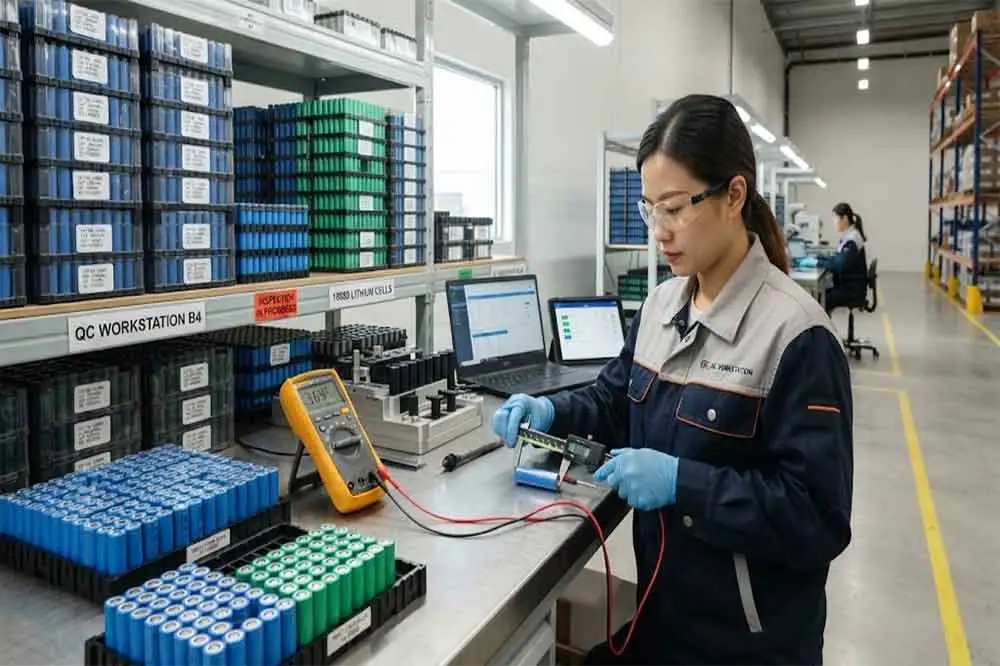
Buying 18650 Batteries in Bulk: What Wholesale Buyers Should Check
Buying few 18650 cells ↗ for testing is very different from buying thousands for production.
A sample order can help confirm dimensions, capacity, discharge performance, and compatibility. A bulk order introduces another set of questions: cell consistency, production batches, documentation, packaging, lead time, quality control, and long-term supply.
For wholesalers, battery pack manufacturers, distributors, and OEM buyers, these details can affect the final product just as much as the cell specification itself.
This guide explains what to check when buying 18650 batteries in bulk, from the first sample to repeat production.
1. Define the Cell Specification Before Asking for a QuoteA common mistake is starting with a simple request such as:
“Please quote 18650 batteries, 3000mAh.”
That specification is not complete enough for a serious bulk purchase.
A supplier needs to know what type of 18650 cell is required and how it will be used.
A basic RFQ should include:
Cell typeNominal voltageCapacityContinuous discharge currentPeak current, if applicableCell dimensionsFlat-top or button-top terminalQuantityApplicationRequired certifications or documentsDestination countryExpected delivery scheduleFor OEM battery packs, also provide the intended series/parallel configuration when it is already known.
A more detailed specification usually leads to a more useful quotation.
2. Decide Whether You Need Cells or Complete Battery Packs“Buying 18650 batteries in bulk” can mean two different things.
The first is purchasing loose 18650 cells.
The second is purchasing assembled battery packs containing 18650 cells.
These require different purchasing specifications.
For loose cells, the buyer may focus on:
Cell modelCapacityVoltageDischarge ratingInternal resistanceTerminal typeQuantityBatch informationFor assembled packs, the buyer may also need:
Pack voltagePack capacityS/P configurationBMSConnectorHousingWire specificationDimensionsLabelPackagingCertificationFunctional testingMaking this distinction early avoids confusion during quotation.
3. Know the Exact Capacity You Are BuyingCapacity is one of the most important specifications when purchasing 18650 cells.
Common specifications may include 2000mAh, 2500mAh, 2600mAh, 3000mAh, 3200mAh, and 3500mAh.
However, the number printed in a quotation should not be treated as the only evidence.
Ask how the capacity is tested.
Important test conditions can include:
Charging methodCharging voltageDischarge currentCutoff voltageTest temperatureRest timeTesting equipmentTwo suppliers can quote the same nominal capacity but use different test conditions.
For bulk purchasing, the test method matters because it gives the buyer a consistent basis for comparison.
For more information, see Standard 18650 Battery Capacity: 2000mAh, 2600mAh, 3000mAh or 3500mAh? ↗
4. Check Discharge Current CarefullyCapacity and discharge current are different specifications.
A 3500mAh cell is not automatically suitable for a high-current application.
A power tool, motor system, industrial device, or high-output product may require a cell with a much higher discharge capability.
When reviewing a quotation, ask whether the stated current is:
Continuous discharge currentMaximum continuous currentPulse or peak currentManufacturer’s recommended operating limitThese terms should not be treated as interchangeable.
For high-current projects, also consider voltage sag, internal resistance, temperature rise, and the number of cells connected in parallel.
See 18650 Battery Discharge Current: What Buyers Should Check ↗ for more background.
5. Ask for the Cell DatasheetA professional bulk quotation should be supported by technical information.
A cell datasheet may contain:
Nominal voltageNominal capacityStandard charging methodMaximum charging currentContinuous discharge currentDischarge cutoff voltageOperating temperatureDimensionsWeightInternal resistanceCycle informationSafety informationThe datasheet should match the exact cell model being quoted.
A general 18650 datasheet is not enough when the buyer is approving a specific cell for production.
6. Confirm the Cell Model and ManufacturerBefore placing a bulk order, confirm exactly what cell is being supplied.
Ask for:
Manufacturer nameExact cell modelCell chemistryRated capacityProduction specificationDatasheetBatch informationThis becomes particularly important when a buyer is developing a product around a specific cell.
A replacement cell with a similar capacity may still have different dimensions, internal resistance, discharge performance, or charging characteristics.
For OEM projects, changing the cell after product validation may require additional testing.
7. Sample Testing Should Come Before Bulk ProductionA sample is not only for checking whether the battery looks correct.
It is an opportunity to verify the cell against the actual application.
Depending on the project, sample testing can include:
Capacity test
Check whether the measured capacity matches the agreed specification.
Internal resistance test
Compare resistance between samples.
Discharge test
Evaluate voltage behavior under the intended load.
Charging test
Confirm charging behavior with the planned charger or BMS.
Temperature test
Monitor temperature under representative operating conditions.
Dimension check
Measure actual cell dimensions before designing or approving the battery holder.
For an OEM battery pack, testing the assembled pack is also important.
8. Check Cell Matching for Bulk Battery Pack ProductionBuying thousands of cells does not mean putting any four cells together and building a pack.
Cell matching becomes important when cells are assembled into multi-cell battery packs.
The manufacturer may need to control:
CapacityInternal resistanceOpen-circuit voltageProduction batchCell ageSelf-discharge characteristicsFor example, a 13S4P battery pack contains:
13 × 4 = 52 cells
Those cells need to work together as a system.
Good cell matching can help improve pack consistency and reduce differences between parallel groups.
9. Ask About Internal ResistanceInternal resistance is often overlooked during purchasing because capacity is easier to understand.
But resistance can have a significant effect on high-current applications.
A simplified relationship is:
Power loss ≈ I² × R
As current increases, the effect of resistance becomes more noticeable.
When comparing bulk suppliers, ask:
What is the resistance specification?How is it measured?At what temperature?At what state of charge?What equipment is used?Is the value an average or maximum?How is batch consistency controlled?The testing method should be consistent before comparing results from different suppliers.
10. Understand Batch ConsistencyA sample from one production batch does not automatically represent every future batch.
This is particularly important for long-term OEM projects.
A buyer may approve a cell based on a sample and later order a much larger quantity.
The supplier should be able to explain how it controls production consistency.
Useful information may include:
Incoming material inspectionCell testingCapacity gradingInternal resistance gradingBatch identificationSampling inspectionFinal QCProduction recordsFor repeat orders, keeping the approved cell specification and sample reference can make quality control easier.
11. Check Production Date and Storage ConditionsLithium-ion cells are not normally treated like a product that can be stored indefinitely without consideration.
Production date and storage conditions can matter, especially for large purchases.
Ask the supplier about:
Production dateStorage temperatureStorage conditionsRecommended storage periodPackaging conditionStock rotationFor a project requiring a large quantity, buyers may prefer controlled production and shipment rather than receiving old inventory without clear batch information.
12. Packaging Matters in Bulk OrdersA bulk shipment may contain hundreds or thousands of cells.
Packaging should protect the cells during handling and transportation.
Depending on the product and shipping method, packaging may include:
Individual insulationTraysInner cartonsOuter cartonsProtective separatorsBatch labelsQuantity labelsThe packaging method should also be suitable for the destination and transportation requirements.
For international shipments, battery transportation documentation and packaging requirements should be confirmed before shipping.
13. Ask for the Required Compliance DocumentsThe exact documents depend on the market, product, transportation method, and application.
Common battery-related documents may include:
UN38.3 test informationMSDS/SDSCE-related documentation where applicableRoHS documentation where applicableUL-related documentation where applicableQuality-system documentationCell datasheetTest reportsDo not assume that a supplier having one certificate means every cell model has the same certification coverage.
Ask for documents related to the exact product being purchased.
14. Understand MOQ Before Planning Your PurchaseMinimum order quantity can vary significantly between suppliers and products.
For standard loose cells, the MOQ may depend on:
Cell modelStock availabilityProduction schedulePackaging requirementsCustom labelingCustom sorting or gradingOEM requirementsA stocked standard cell may have a different purchasing condition from a cell that needs a dedicated production run.
For buyers planning long-term supply, it is useful to ask about both:
Sample MOQ
and
Mass-production MOQ
This makes it easier to plan the project from prototype to production.
15. Compare the Total Purchase CostThe unit cell price is important, but it is not the entire purchasing cost.
A bulk buyer may also need to consider:
PackagingTestingCertification documentsCustom labelingSortingBMSAssemblyShippingInsuranceImport costsLocal taxesStorageQuality inspectionFor loose cells, logistics can also depend on the shipment quantity, packaging, destination, and transportation method.
A slightly different unit price may therefore have a different total landed cost.
For a complete OEM battery pack, the calculation should include all major components rather than comparing cell prices alone.
16. Check Lead Time Before Placing the Purchase OrderLead time can be very different for stocked cells and custom production.
A supplier should ideally clarify:
Sample preparation timeProduction lead timeTesting timePackaging timeShipping preparationEstimated dispatch dateA buyer planning a product launch should also leave time for incoming inspection.
It is risky to calculate the project schedule using only the manufacturer’s production time.
International transportation and customs processing can add additional time.
17. Ask How Repeat Orders Are ControlledLong-term OEM purchasing is not a one-time transaction.
The first order may be used to validate the product. Later orders need to maintain the same basic specification.
Discuss how repeat orders are controlled.
Useful questions include:
Will the same cell model be supplied?
How are production batches recorded?
What happens if the original cell is discontinued?
Will the buyer be informed before a specification change?
Can an alternative cell be provided for approval?
These questions become more important when the battery is installed in a product that will remain in production for several years.
18. Build a Simple Bulk Purchasing ChecklistBefore confirming an order, buyers can review the following list.
TechnicalExact cell modelNominal voltageCapacityDischarge currentInternal resistanceDimensionsTerminal typeCell chemistryQualitySample test resultsCapacity gradingResistance testingBatch informationProduction dateQC processDocumentationDatasheetSafety documentationTransportation documentsApplicable compliance documentsTest reportsCommercialQuantityMOQLead timePackagingPayment termsShipping termsRepeat-order conditionsA checklist helps prevent a common purchasing problem: confirming the price before confirming the product specification.
19. What Should Be Included in an 18650 Bulk RFQ?For B2B buyers, a clear RFQ can save several rounds of emails.
A practical RFQ could look like this:
Product: 18650 lithium-ion cell
Capacity: 3000mAh
Nominal voltage: 3.6V/3.7V according to approved specification
Discharge requirement: [required current]
Quantity: [required quantity]
Terminal: flat top/button top
Application: [application]
Required documents: datasheet, MSDS/SDS, UN38.3 and other applicable documents
Destination: [country/city]
Sample requirement: [quantity]
Mass production target: [quantity/month or year]
Additional requirement: [label, sorting, packaging, OEM pack assembly, etc.]
The more complete the RFQ, the easier it is for a battery supplier to recommend the right cell and provide a realistic quotation.
20. Common Mistakes When Buying 18650 Cells in BulkBuying only by capacityA 3500mAh cell may not be appropriate for a high-current application.
Comparing different test conditionsCapacity numbers should be compared under consistent test conditions.
Ignoring batch informationA buyer needs to know what production batch the approved samples represent.
Skipping sample testingA bulk order should not normally be the first opportunity to test the cell.
Assuming all 18650 cells are identicalDimensions, terminals, resistance, capacity, and discharge performance can vary between models.
Focusing only on unit priceShipping, testing, documents, packaging, and quality control can affect total purchasing cost.
Ordering too much before validationLarge quantities should generally follow successful sample and prototype evaluation.
21. Bulk Buying Is a Supply-Chain DecisionThe main difference between sample purchasing and bulk purchasing is consistency.
A sample answers:
“Does this cell work?”
A bulk purchasing process needs to answer several additional questions:
“Can the supplier provide the same specification?”
“Can the quality remain consistent?”
“Can the quantity be delivered on schedule?”
“Can the supplier provide the required documentation?”
“What happens when we place the next order?”
These questions matter for wholesalers and OEM manufacturers because the battery becomes part of their own supply chain.
ConclusionBuying 18650 batteries in bulk ↗ requires more than finding a suitable capacity and negotiating a unit price.
The buyer should confirm the exact cell model, capacity, discharge capability, internal resistance, dimensions, production batch, testing method, documentation, packaging, MOQ, lead time, and repeat-order conditions.
For OEM battery projects, sample testing should come before mass production, and cell matching should be considered when multiple cells are assembled into a pack.
The goal is not simply to buy a large quantity of 18650 cells.
The goal is to establish a stable supply of cells that consistently meet the technical requirements of the finished product.