Articles

Articles & Insights

Discover, learn, and grow with stories from our ecosystem members.

search
Skin Cycling Explained: A Simple 4-Night Skincare Routine for Beginners Beauty & Skincare
Oct 16, 2026 • visibility 5 • 3 min read

Skin Cycling Explained: A Simple 4-Night Skincare Routine for Beginners

With so many skincare products available, figuring out what to use and when can feel overwhelming. From exfoliating acids to retinol and hydrating serums, it's easy to end up using too many products without giving your skin enough time to adjust.That's where skin cycling comes in.Skin cycling is a simple nighttime skincare routine that alternates between active ingredients and recovery nights. Instead of applying everything at once, you follow a four-night schedule designed to keep your routine balanced and manageable.Here's how it works and how beginners can get started.What Is Skin Cycling?Skin cycling is a skincare approach that involves using stronger active ingredients on specific nights, followed by nights dedicated to hydration and recovery.A typical 4-night skin cycling routine includes:Night 1: ExfoliationNight 2: RetinolNight 3: Recovery and hydrationNight 4: Recovery and hydrationAfter completing the cycle, you can repeat it if your skin is tolerating the products well.The idea is to avoid overusing active ingredients while giving your skin time to recover between treatments.Night 1: Exfoliation – Refresh Your SkinThe first night focuses on removing dead surface skin cells that can contribute to dullness and uneven texture.Start with a gentle facial cleanser, followed by a suitable exfoliating product. Ingredients such as AHAs and BHAs are commonly used for chemical exfoliation, but the right choice depends on your skin type.Finish with a moisturiser to keep your skin comfortable.Your routine: Cleanser → Exfoliant → MoisturiserSkincare tip: Avoid combining multiple exfoliating products. If you're new to exfoliation, start with a gentle formula and use it less frequently if needed.....Read More Here

Eveline Pakistan
Read arrow_forward
Why Is My Makeup Separating? 7 Skincare & Makeup Mistakes to Fix Beauty & Skincare
Oct 16, 2026 • visibility 7 • 3 min read

Why Is My Makeup Separating? 7 Skincare & Makeup Mistakes to Fix

Ever spent time perfecting your makeup, only to notice your foundation turning patchy, separating around your nose or looking uneven a few hours later?You're not alone! Makeup separation is a common problem, and your foundation isn't always to blame. Sometimes, it's the way you prepare your skin, layer products or apply your makeup.Here are seven common mistakes that could be ruining your base and simple ways to fix them.1. You're Skipping Proper Skin PrepA smooth makeup base starts with healthy, hydrated skin. Applying foundation over dry patches or excess oil can make it look uneven.The fix: Cleanse your face with a gentle face wash and follow with a moisturiser suited to your skin type.2. You're Using Too Much MoisturiserHydration is essential, but applying a thick layer of moisturiser right before makeup can make your foundation slip or separate.The fix: Use a lightweight moisturiser that suits your skin and allow it to absorb before applying makeup.3. You're Not Letting Skincare SettleRushing from serum to moisturiser to foundation? Layering products too quickly can cause them to mix, slide around or even pill.The fix: Give each skincare layer a little time to settle before applying the next product.4. Your Primer and Foundation Don't Layer WellNot every primer works well with every foundation. Sometimes, combining certain formulas or using too much primer can cause your base to separate.....Read More Here

Eveline Pakistan
Read arrow_forward
Top Poultry Equipment & Automation Manufacturers – Easy Agrotech Career & Business
Oct 16, 2026 • visibility 7 • 5 min read

Top Poultry Equipment & Automation Manufacturers – Easy Agrotech

Leading Integrated Poultry & Farming EnterprisesEasy Agrotech is committed to providing innovative poultry equipment, advanced automation systems, and integrated farming solutions to support modern poultry businesses across India.The poultry industry is rapidly adopting modern technology to improve productivity, reduce labour costs, and maintain better bird health. Choosing the right poultry equipment and automation manufacturer is essential for building an efficient and profitable poultry farm. Easy Agrotech is a poultry equipment manufacturer in India that provides modern poultry farming equipment, automated systems, and complete turnkey poultry farm solutions.Easy Agrotech: Your Trusted Poultry Equipment ManufacturerEasy Agrotech, offers integrated solutions for commercial poultry farms. Established in 2016, the company focuses on designing, manufacturing, and installing equipment for modern livestock and poultry production. Its solutions are designed to support farmers in developing efficient broiler and layer farms with reliable equipment and automation technology.From poultry farm planning to equipment installation, Easy Agrotech aims to provide end-to-end support for farmers, poultry entrepreneurs, and commercial farm operators across India.Advanced Poultry Equipment and Automation SolutionsEasy Agrotech provides a comprehensive range of poultry equipment designed to improve farm management and operational efficiency. Its product portfolio includes:Automatic Feeding Systems: Designed to distribute feed efficiently, reduce feed wastage, and support uniform bird growth.Automatic Drinking Systems: Help provide a consistent supply of clean drinking water to poultry birds.Poultry Ventilation Systems: Support proper airflow and help maintain a suitable environment inside poultry sheds.Cooling Systems: Help manage high temperatures and reduce heat stress during warmer weather.Environmental Control Panels: Assist in managing essential poultry house conditions through integrated control systems.Poultry Cage Systems: Provide equipment options for commercial layer farming operations.Poultry Housing and Turnkey Projects: Include farm planning, shed construction, equipment installation, and commissioning support.These solutions can help poultry farmers improve operational consistency, manage resources more effectively, and reduce dependence on manual work.Why Choose Easy Agrotech?Selecting an experienced poultry automation manufacturer can make a significant difference to farm operations. Easy Agrotech offers customized solutions based on farm capacity, housing requirements, and production goals. Its integrated approach brings together poultry equipment, engineering, installation, and technical support.The company also undertakes turnkey poultry projects, helping customers coordinate different stages of farm development. Whether you are planning a new commercial poultry farm or upgrading an existing facility, choosing suitable automation systems can support better feed management, improved environmental control, and efficient daily operations.Contact Easy AgrotechIf you are searching for a reliable poultry equipment and automation manufacturer in India, contact Easy Agrotech to discuss your project requirements, product specifications, and installation needs.Company:Easy AgrotechPhone: +91 74400 13121Email: [email protected]: https://easyagrotech.com/Contact Page: https://easyagrotech.com/contact/Easy Agrotech is committed to supporting modern poultry farming through practical equipment solutions and automation technology. Contact the team today to explore suitable poultry equipment and turnkey solutions for your farming business.

Easy Agrotech
Read arrow_forward
article
Career & Business
Oct 16, 2026 • visibility 8 • 2 min read

Tobacco pouch packing machine Manufacturers

Businesses looking for reliable Tobacco Pouch Packing Machine Manufacturers can explore suitable packaging solutions from Durga Packaging Machine. These machines are designed for packaging applications that require controlled product filling, pouch formation, and sealing, depending on the selected machine configuration and production requirements.A tobacco pouch packing machine can help streamline packaging operations by supporting consistent pouch sizes, organized filling processes, and efficient handling of packaging materials. The appropriate machine depends on factors such as the type of tobacco product, pouch dimensions, required packing capacity, packaging material, and level of automation.Address: Plot No. 8, Gali No. 8E,Sarurpur Industrial Area,Sohna Road, Faridabad ,Haryana 121004phone no: 080 3115 1012

webdesigning house72
Read arrow_forward
article
Tech & Innovation
Oct 16, 2026 • visibility 7 • 19 min read

How Businesses Can Turn AI Investments Into Measurable Results

IntroductionInvesting in artificial intelligence is easy compared with proving that it makes a difference. A business can purchase AI tools, introduce an assistant, or automate a few tasks, but those activities do not automatically lead to better performance.The real value of AI becomes clear when it helps a company solve a problem, improve a process, serve customers more effectively, or make better use of its resources.For example, a customer support team might use AI to organize incoming requests. An operations team could automate document processing, while a sales department might use intelligent systems to prepare customer insights. Each initiative has potential value, but the business needs to understand what improvement it expects and how it will measure the result.That is why successful AI adoption requires more than a technology budget. It requires clear priorities, suitable tools, employee involvement, reliable data, and a practical plan for evaluating results.Start With the Outcome, Not the TechnologyOne of the most common mistakes businesses make is choosing an AI tool before defining the problem.A company might decide to introduce an AI assistant because competitors are using similar technology. However, without a clear purpose, the project can become an additional expense rather than a useful business improvement.A better approach is to identify the outcome first.Does the business want to reduce manual work? Improve customer response times? Make internal information easier to find? Reduce errors in routine processes? Help employees analyze data more efficiently?Each objective leads to a different set of requirements.Once the expected outcome is clear, the business can decide whether AI is appropriate and which capabilities it needs. Sometimes, conventional automation is enough. Other situations may require machine learning, generative AI, or a more advanced system that coordinates multiple tasks.The objective should guide the technology decision, not the other way around.Identify Where the Business Loses TimeA useful way to find AI opportunities is to examine everyday workflows.Look at activities that employees repeat frequently, especially when those activities involve collecting information, reviewing documents, sorting requests, preparing summaries, or moving data between systems.These tasks may seem minor, but they can consume a significant amount of time when repeated across a large team.Consider a company whose employees manually review incoming documents before entering information into a business application. An AI-enabled solution might extract relevant details, classify the documents, and prepare the information for review.The employee still checks the result, but no longer has to perform every step manually.This type of improvement is often easier to evaluate than a broad AI initiative because the business can compare processing time, error rates, and employee effort before and after implementation.Choose Projects That Can Prove Their ValueNot every AI idea needs to become a major investment immediately.Businesses often benefit from starting with a manageable project that has a clear purpose, accessible data, and realistic implementation requirements.For example, an internal knowledge assistant could help employees find approved company information more quickly. A customer support workflow could use AI to categorize routine questions. A reporting assistant might summarize operational data for managers.These use cases allow the business to test the technology in a real environment without changing every department at once.A focused implementation also provides useful feedback. Employees can explain what works, developers can identify technical limitations, and management can determine whether the solution is producing the expected outcome.If the results are positive, the company can expand the project with greater confidence.Work With a Partner Who Understands the BusinessThe success of an AI project often depends on how well the solution fits the organization's actual needs.AI Development Companies can help businesses turn broad ideas into practical applications by assessing requirements, selecting suitable technologies, designing architecture, connecting existing systems, and testing the finished solution.However, a provider should do more than recommend popular AI tools.The development team should understand the business process, ask questions about the expected outcome, identify technical constraints, and explain why its proposed approach makes sense.Businesses should also examine relevant project experience, communication practices, security capabilities, and post-launch support.A strong development partner connects technical decisions with business results rather than focusing only on the features being built.Use Generative AI Where Information Is the Main ChallengeMany business activities involve working with large amounts of text and other unstructured information.Employees read reports, search internal documents, prepare communications, review customer feedback, and summarize information for decision-makers. Generative AI can support these tasks by producing drafts, organizing information, answering questions, and summarizing content.For example, an internal assistant could help employees locate relevant material across approved company documents instead of requiring them to search through multiple folders.Businesses evaluating Generative Ai Development Companies should consider whether a provider can build an application that uses reliable information, protects sensitive data, and produces outputs that employees can evaluate.The underlying model is only part of the solution. Data retrieval, access controls, testing, application integration, and user experience also influence how useful the final product becomes.Generative AI should make information easier to work with, not create another source of unverified answers.Consider AI Agents for More Complex WorkflowsSome business processes involve a series of connected steps rather than a single task.For example, an employee might submit a request that requires checking internal records, retrieving relevant information, creating a ticket, and notifying the right department.An AI agent can be designed to coordinate these activities within defined boundaries. Depending on the application, it may use connected tools, follow business rules, prepare actions, and request human approval where necessary.This is where AI Agent Development Companies may be useful for businesses exploring advanced workflow automation.The important consideration is whether an agent provides a real advantage. If a process can be handled reliably using a simple workflow, a more complex system may not justify its additional cost and maintenance.Businesses should define what the agent is allowed to do, what information it can access, how its actions will be monitored, and when a person needs to intervene.Measure Results With the Right MetricsAn AI project needs a reliable way to measure success.The right metrics depend on the problem being solved. A document-processing application could be evaluated through processing time and correction rates. A customer service assistant might be measured by response efficiency, while an internal knowledge tool could be assessed through how quickly employees find relevant information.Businesses should establish a baseline before implementation. Without knowing how the process performed previously, it becomes difficult to determine whether the new system has made a meaningful improvement.It is also important to look beyond usage.An AI tool may receive thousands of interactions without improving the underlying workflow. A smaller system may generate greater value if it consistently reduces manual effort or helps employees complete work more accurately.The goal is to measure outcomes, not simply count AI activity.Prepare Data Before Scaling the SolutionData quality becomes increasingly important as businesses expand their AI applications.Information may be scattered across different systems, stored in inconsistent formats, or contain outdated records. If an AI application depends on unreliable data, its outputs may also become unreliable.Before scaling a project, businesses should review their information sources, improve data quality, establish access permissions, and determine how information will move between systems.These steps are particularly important when an AI application connects with customer databases, financial systems, internal documents, or other sensitive business information.The NIST AI Risk Management Framework provides guidance that organizations can use to structure their approach to identifying, assessing, and managing AI-related risks.Strong data practices help businesses improve not only AI performance but also reporting, analytics, and broader operational decision-making.Compare Development Partners Across MarketsBusinesses do not always need to work with a provider in the same location. The right choice depends on technical requirements, project complexity, communication, budget, and ongoing support needs.Companies researching AI Development Companies In India may compare providers based on AI expertise, software engineering capabilities, cloud experience, data engineering, integration skills, and post-launch support.Organizations considering AI Development Companies In USA can assess similar capabilities, alongside their requirements for enterprise integration, security, communication, and project coordination.In either case, location should be considered alongside the provider's actual capabilities.Businesses should review relevant case studies, speak with the proposed team, understand the development process, and clarify responsibilities before signing an agreement.A good partner should be able to explain how the solution will work, what assumptions it depends on, how success will be measured, and what support will be available after launch.Keep Security and Human Oversight in the PlanAs AI becomes more involved in business operations, security and accountability become more important.An AI system may work with customer information, internal records, source code, financial data, or confidential documents. Businesses need to define who can access the system, what it can do, and how sensitive information should be handled.For language-model applications, the OWASP Top 10 for LLM Applications provides a useful reference for understanding common security risks.Human oversight is equally important. AI can misunderstand information, generate inaccurate responses, or fail when it encounters an unusual situation.Businesses should therefore decide which activities can be automated and which require review. An AI assistant may prepare a recommendation, for example, while an employee remains responsible for approving an important decision.This balance can help organizations gain efficiency while maintaining appropriate control.Treat AI as an Ongoing InvestmentLaunching an AI application is not the final step.Business requirements change, data sources evolve, new integrations become necessary, and employees discover additional ways to use the system. AI models and supporting technologies also continue to develop.Companies should establish processes for monitoring performance, collecting feedback, addressing errors, updating systems, and reviewing whether the original business goals are still being met.This does not mean every AI application needs constant redevelopment. It means the business should understand who is responsible for maintaining the system and how future improvements will be managed.An application that continues to evolve alongside the business is more likely to remain useful over time.ConclusionTurning AI investments into measurable results begins with a clear business objective. Organizations need to identify a genuine problem, choose an appropriate use case, prepare reliable data, involve employees, and establish practical ways to evaluate performance.They also need to consider integration, security, human oversight, and long-term maintenance before expanding an AI initiative.AI Development Companies can help turn business requirements into working solutions, while Generative Ai Development Companies may support applications focused on language, content, and business knowledge. AI Agent Development Companies can be relevant when a workflow benefits from coordinated, multi-step actions. Businesses evaluating AI Development Companies In India or AI Development Companies In USA should focus on relevant experience, technical capabilities, communication, security, and ongoing support rather than relying on location or service lists alone.The most valuable AI investment is not necessarily the most advanced or expensive one. It is the one that addresses a real business need, improves the way people work, and delivers results that can be measured over time.

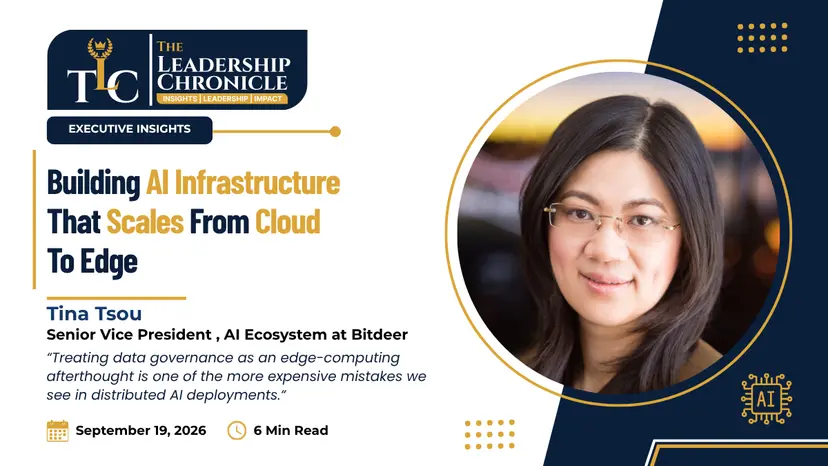
Building AI Infrastructure That Scales From Cloud To Edge Finance & Wealth
Oct 16, 2026 • visibility 8 • 14 min read

Building AI Infrastructure That Scales From Cloud To Edge

Open Interfaces Security and Operations for Distributed AI PlatformsAI infrastructure is becoming a distributed systems problem. Training may take place in a high-performance computing environment, inference may run in a public or private cloud, and time-sensitive decisions may need to happen on a factory floor, in a vehicle, or at a remote site. The value of the system depends on how well these environments work together.Organizations should approach this as one platform spanning a continuum of locations rather than as a collection of isolated AI projects. That platform needs clear workload-placement rules, open interfaces, a security model that reaches every node, and operational practices that cover models, data, policies, and infrastructure together. These choices determine whether an early pilot can become a service that the organization can operate at scale.Workload Placement Comes FirstThe first architecture decision is where each workload should run. Cloud and centralized data centers offer large pools of compute, mature services, and efficient access to shared data. Edge locations can reduce latency, limit the movement of sensitive data, conserve bandwidth, and preserve local operation when connectivity is constrained. The right answer is usually a combination, with placement based on the needs of each workload.A practical placement review should examine latency, data sensitivity, compute and energy requirements, network reliability, and the cost of operating the workload over its full life. It should also consider how quickly models and policies must be updated. A workload that performs well in a laboratory can become expensive or fragile when it is distributed across thousands of sites without a reliable update and rollback process.This review should happen before a team commits to a platform. Product selection can then follow the architecture instead of defining it. That sequence preserves room to use specialized accelerators, local data services, or cloud capabilities when they create a measurable advantage.“Sequencing architecture before product selection sounds obvious until you watch how many organizations do it backward — buying the platform first and discovering the constraints later.”Open Interfaces Reduce Operational FrictionDistributed AI environments are heterogeneous by design. They include different processors, accelerators, operating systems, runtimes, networks, and management domains. Requiring every location to use the same hardware or software stack creates a brittle form of consistency. A more durable approach standardizes the interfaces between layers while allowing implementation choices beneath them.Open APIs, declarative workload definitions, portable packaging, and common telemetry formats give operators a stable way to deploy and observe services across varied environments. LF Edge, for example, describes an open framework that is independent of hardware, silicon, cloud, and operating system. OpenTelemetry provides vendor-neutral instrumentation for traces, metrics, and logs. These efforts show how common interfaces can reduce integration work without requiring one vendor to supply every component.Open source contributes reference implementations, shared testing, and a place for multiple companies to solve common problems together. It still requires disciplined governance. Enterprises need a supported bill of materials, clear ownership, tested upgrade paths, and a process for managing vulnerabilities. The goal is controlled choice, not uncontrolled variation.“Controlled choice, not uncontrolled variation” is a distinction worth pinning above every platform team’s desk.”Security Must Span the Full Deployment ContinuumSecurity cannot stop at the cloud boundary. Every device, workload, model artifact, data flow, and management service needs an identity that can be verified. Access should be limited by policy, software and model artifacts should be signed, data should be protected in transit and at rest, and remote systems should be able to prove relevant aspects of their state before receiving sensitive workloads or data.Remote attestation is useful because it turns trust into an evidence-based decision. The IETF Remote ATtestation procedureS architecture defines roles for producing, evaluating, and using evidence about a system’s operating state. The architecture is intentionally neutral about processors and protocols, which makes it relevant to heterogeneous AI deployments. Attestation does not eliminate risk, but it can give a relying party a consistent way to evaluate whether a remote system meets policy before establishing trust.The same discipline should apply to AI risk. The NIST AI Risk Management Framework encourages organizations to govern, map, measure, and manage risk throughout the AI lifecycle. CISA’s Secure by Design guidance places responsibility on technology producers to make safe outcomes easier for customers. Together, these ideas support a clear operating principle: security requirements should shape architecture, product defaults, and lifecycle processes from the beginning.Data governance is part of that security model. Teams need to know where data originated, what uses are permitted, where it may travel, how long it may be retained, and which model or decision used it. At the edge, local processing can reduce unnecessary data movement, but it also creates more locations that must be inventoried, monitored, and governed.“Treating data governance as an edge-computing afterthought is one of the more expensive mistakes we see in distributed AI deployments. This piece treats it as inseparable from security from the outset.”Models Need Operational DisciplineA deployed model is a living system. Its inputs change, its performance can drift, dependencies are patched, and business policies evolve. Operating the model therefore requires more than a one-time deployment. The organization needs a repeatable lifecycle for testing, approval, rollout, monitoring, incident response, and retirement.The deployment record should connect the model version with its configuration, runtime, policy set, and approved use. Changes should move through staged environments, and operators should be able to pause or roll back a release when results fall outside defined limits. At the edge, those controls must continue to work across intermittent networks and large fleets of devices.Observability should follow the request across cloud and edge boundaries. Infrastructure metrics alone cannot explain whether an AI service is meeting its purpose. Teams also need signals tied to model quality, response time, resource consumption, policy violations, and human escalation. A shared telemetry model makes it easier to compare behavior across locations and to investigate failures that cross organizational or vendor boundaries.Interoperability Is a Business DecisionInteroperability is often treated as a technical preference, but it has direct business consequences. It affects how quickly a company can add a new hardware platform, move a workload, work with an ecosystem partner, or replace a component that no longer meets requirements. It also influences negotiating leverage and the long-term cost of change.Executives should ask for portability at the points where switching costs are highest. Workload packages should move without a complete rebuild. Telemetry should remain available when an observability backend changes. Identity and policy should work across locations. Data should be exportable with its meaning and lineage intact. Procurement terms should reinforce these architecture goals by addressing interfaces, data access, operational visibility, and exit paths.Interoperability does not mean that every component is interchangeable. Specialized systems can deliver important gains. The organization should know where it is accepting a dependency, why the advantage justifies it, and how the surrounding architecture limits the cost of that choice.The Executive AgendaLeadership teams can make the architecture concrete through five actions.Classify workloads. Define placement criteria for latency, data sensitivity, compute demand, connectivity, resilience, and lifecycle cost. Review each use case against those criteria before selecting a platform.Set interface requirements. Specify the APIs, packaging formats, identity mechanisms, telemetry, and data contracts that must remain portable across the deployment continuum.Make trust verifiable. Use strong identity, signed artifacts, least-privilege access, remote attestation where appropriate, and policy enforcement that can operate at distributed locations.Manage the complete lifecycle. Connect model approval, deployment, monitoring, rollback, and retirement. Treat the runtime, configuration, and policy set as part of the deployed system.Test the exit path. Verify that workloads, data, telemetry, and operational records can move before the organization depends on a platform at scale. Portability that has never been tested is only an assumption.“Portability that has never been tested is only an assumption” is the single line from this piece worth forwarding to your infrastructure team today.”For more details, visit: https://theleadershipchronicle.com/If you would like to get featured or want to know more, connect with us at [email protected] : https://www.linkedin.com/company/the-leadership-chronicle/Twitter : @TLChronicle

How Crypto Payment Providers Simplify Cross-Border Transactions Education & Learning
Oct 16, 2026 • visibility 10 • 10 min read

How Crypto Payment Providers Simplify Cross-Border Transactions

International business has become increasingly accessible as companies sell products and services to customers worldwide. However, cross-border payments can still involve high transaction fees, currency conversion costs, banking delays, and complicated payment procedures. These challenges can affect businesses of all sizes, particularly e-commerce stores, software companies, and digital service providers. Crypto payment providers offer an alternative by helping businesses accept cryptocurrency payments from international customers and manage digital transactions more efficiently.What Are Crypto Payment Providers?Crypto payment providers are companies that offer tools and services for accepting, processing, and managing cryptocurrency payments. Depending on the provider, supported digital assets may include Bitcoin, Ethereum, and stablecoins such as USDT and USDC.These services connect cryptocurrency transactions with business payment systems. Merchants can generate payment requests, display QR codes, track transaction confirmations, and access payment records through a dashboard or integrated application programming interface (API).Some providers also offer automatic cryptocurrency conversion, settlement in traditional currencies, and integrations with e-commerce platforms. These features can help businesses introduce digital currency payments without developing their own blockchain infrastructure.Reducing Dependence on Traditional Banking NetworksTraditional international payments often pass through several financial institutions before reaching the recipient. Depending on the payment method and countries involved, this process can introduce intermediary fees, additional verification requirements, and delays.Cryptocurrency transactions provide another way to transfer digital assets across borders. Businesses can receive payments through supported blockchain networks without relying entirely on traditional banking intermediaries for the cryptocurrency transfer itself.For example, an online business selling software subscriptions to international customers could accept supported cryptocurrencies alongside credit cards and bank transfers. This additional payment option may make checkout more convenient for customers who already hold digital assets.However, cryptocurrency payment availability depends on local laws, provider restrictions, and the customer's access to supported digital assets.Potentially Faster International PaymentsPayment speed is an important consideration for businesses serving global markets. Traditional bank transfers can take several business days, depending on the countries, financial institutions, and compliance checks involved.Some blockchain transactions can be confirmed within minutes, although processing times vary by network, congestion, and transaction fees. Crypto payment providers can simplify the process by monitoring incoming payments and notifying merchants when transactions meet the required confirmation criteria.Businesses should distinguish between blockchain confirmation and final settlement into a bank account. Converting cryptocurrency into fiat currency and withdrawing funds may require additional processing time.Managing Cross-Border Payment CostsInternational transactions can include processing fees, foreign exchange charges, intermediary banking costs, and withdrawal expenses. For companies handling numerous payments, these charges can gradually reduce profit margins.Crypto payment providers offer different pricing structures that may suit particular business models. Some charge a percentage of each transaction, while others may include fixed fees or additional costs for conversion and withdrawals.Blockchain network fees may also apply. Therefore, businesses should compare the total cost of receiving, converting, and settling payments rather than focusing only on the advertised processing fee.A careful cost comparison helps merchants determine whether cryptocurrency payments offer a practical financial advantage over their existing payment methods.Using Stablecoins to Manage Currency VolatilityCryptocurrency price fluctuations can create uncertainty for merchants accepting digital assets. Bitcoin and Ethereum may change in value between the time a customer submits a payment and the time the business converts the funds.Stablecoins such as USDT and USDC are designed to maintain a value linked to a reference asset, typically the US dollar. Depending on the provider, businesses may accept stablecoins and convert them into supported currencies or other assets.This approach can help reduce exposure to the price volatility associated with many other cryptocurrencies. Nevertheless, stablecoins carry risks related to issuers, redemption, liquidity, regulation, and platform availability.Expanding Access to International CustomersOffering cryptocurrency payments can help businesses reach customers who prefer digital assets or face limitations with certain conventional payment methods. This may be particularly useful for online retailers, software companies, digital creators, and businesses selling internationally.Crypto payment providers can make this process more manageable by offering checkout integrations, payment instructions, transaction monitoring, and support for multiple digital currencies.Providing several payment methods can improve flexibility, but cryptocurrency adoption varies across markets. Businesses should research customer preferences and applicable local regulations before introducing crypto payments.Improving Payment Management Through AutomationManaging international payments manually can create administrative challenges. Payment notifications, transaction reconciliation, exchange-rate calculations, and accounting records all require time and attention.Many crypto payment providers offer dashboards, APIs, transaction histories, and automated notifications to simplify these tasks. Some also support e-commerce plugins and invoicing tools that connect payments with existing business systems.These integrations can reduce repetitive work and help businesses maintain more organized financial records. Merchants should confirm that the provider's tools are compatible with their website, accounting software, and settlement requirements.Security and Compliance ConsiderationsAlthough blockchain technology provides transaction transparency, cryptocurrency payments still require careful security management. Confirmed transactions are generally difficult to reverse, so businesses should verify payment amounts and confirmation status before delivering goods or services.Merchants should assess provider security practices, wallet custody arrangements, authentication features, transaction monitoring, and customer support. They should also establish clear refund policies and maintain accurate payment records.Cross-border cryptocurrency regulations differ between jurisdictions. Depending on the business and location, tax reporting, consumer protection, sanctions screening, and other compliance obligations may apply.ConclusionCrypto payment providers can simplify cross-border transactions by offering alternative payment options, blockchain-based transfers, transaction monitoring, and integrations with business systems. Potential benefits include flexible international payments, alternative fee structures, and access to customers who prefer digital currencies.However, transaction costs, settlement times, regulatory requirements, and security risks vary by provider and market. Businesses should compare available services carefully and evaluate their total costs before adopting a cryptocurrency payment solution. With the right approach, crypto payments can become a useful addition to a broader international payment strategy.Web:- https://bitnxt.io/best-crypto-payment-gateways#cryptopaymentproviders