Articles

Articles & Insights

Discover, learn, and grow with stories from our ecosystem members.

search
Stainless Steel 316 Round Bars: Properties, Applications, Specifications and Buying Guide Career & Business
Oct 15, 2026 • visibility 8 • 24 min read

Stainless Steel 316 Round Bars: Properties, Applications, Specifications and Buying Guide

Stainless Steel 316 Round Bars are widely used in industries where corrosion resistance, strength, and reliable performance are important. These solid cylindrical bars are made from an austenitic stainless steel grade containing chromium, nickel, and molybdenum. The addition of molybdenum improves resistance to pitting and crevice corrosion, particularly in environments containing chlorides.Industries such as chemical processing, marine engineering, pharmaceuticals, food processing, oil and gas, and general manufacturing use SS 316 round bars for machining, fabrication, shafts, fasteners, and equipment components.For industrial buyers, choosing the right round bar involves more than selecting a stainless steel grade. Diameter, length, manufacturing condition, applicable standards, material certification, and the intended working environment must also be considered.Hindco Steel and Alloys serves industrial buyers looking for stainless steel products for a range of engineering and manufacturing requirements. This guide explains the properties, specifications, applications, and selection factors associated with Stainless Steel 316 Round Bars.What Are Stainless Steel 316 Round Bars?Stainless Steel 316 Round Bars are solid metal rods with a circular cross-section, manufactured from Type 316 stainless steel. They are used as raw material for machining, component manufacturing, fabrication, and industrial assemblies.Grade 316 belongs to the austenitic stainless steel family. Its composition includes chromium and nickel, along with approximately 2–3% molybdenum within the applicable specification limits.Chromium helps form a protective passive layer on the steel surface. Nickel supports the austenitic structure and contributes to toughness and ductility. Molybdenum improves resistance to localized corrosion, making Grade 316 a useful choice for many chemical and marine applications.Stainless Steel 316 Round Bars are available in different diameters, lengths, and surface conditions. The appropriate product depends on whether the bar will be machined into a precision component, used in a fabricated assembly, or processed for another industrial purpose.Key Properties of SS 316 Round BarsThe following properties explain why this grade is used across several industrial sectors.1. Corrosion ResistanceOne of the main advantages of SS 316 round bars is their resistance to corrosion in many industrial environments. The molybdenum content improves resistance to pitting and crevice corrosion compared with Grade 304 stainless steel under many chloride-exposure conditions.This makes Grade 316 suitable for selected marine components, chemical processing equipment, and industrial installations exposed to moisture or corrosive substances.However, Grade 316 is not immune to corrosion. Performance depends on chloride concentration, temperature, exposure time, surface condition, and the presence of crevices or deposits.2. Strength and ToughnessStainless Steel 316 combines useful mechanical strength with good toughness. It can be machined and fabricated into a range of components when the correct tools and processes are used.Its mechanical properties vary according to the product standard, diameter, heat treatment, and supplied condition. Buyers should review the applicable specification and material test certificate rather than rely on a single general value.3. Heat ResistanceGrade 316 provides useful oxidation resistance and mechanical performance at elevated temperatures within suitable operating limits. Its suitability depends on the actual temperature, loading, environment, and exposure duration.For equipment exposed to continuous high temperatures or severe thermal cycling, engineers should verify the grade against the service conditions before selection.4. WeldabilitySS 316 generally offers good weldability using suitable procedures. Welding parameters, filler material, joint design, and post-weld cleaning can influence the final performance of a component.For welded assemblies where resistance to sensitization and intergranular corrosion is a concern, Stainless Steel 316L may be worth considering because of its lower carbon content.5. Machining and FabricationRound bars are commonly used to manufacture shafts, pins, fasteners, valve parts, and machined fittings. Grade 316 can be machined using appropriate cutting tools, speeds, feeds, and cooling methods.Because austenitic stainless steels can work-harden during machining, proper process planning is important for dimensional accuracy and tool life.Stainless Steel 316 Round Bar SpecificationsIndustrial buyers should confirm the applicable product standard and dimensions before placing an order. ASTM A276 is a commonly used specification for stainless steel bars and shapes, while ASTM A479 covers stainless steel bars and shapes intended for use in boilers and other pressure vessels.The correct standard depends on the intended application and project requirements.Specification detailTypical informationMaterial gradeStainless Steel 316UNS designationS31600European material number1.4401Common Japanese designationSUS 316Product formSolid round barCommon bar standardASTM A276, where applicableOther applicable standardASTM A479, for qualifying pressure-vessel applicationsMain alloying elementsChromium, nickel, molybdenumAvailable dimensionsConfirm required diameter and lengthSurface conditionsDepending on supply, hot-finished, cold-drawn, peeled, turned, or polishedInspection documentsMaterial test certificate and other documents as specified in the purchase orderImportant: Standards, dimensions, finishes, and certifications must be confirmed for the exact material being supplied. Not every size or finish is available under every specification.Chemical Composition of Stainless Steel 316The chemical composition of Stainless Steel 316 contributes to its corrosion resistance, strength, and fabrication characteristics.The following table provides commonly specified composition limits for Grade 316. Final acceptance should be based on the applicable material standard and the actual test certificate.ElementTypical specification limit, weight %Carbon (C)0.08 maxManganese (Mn)2.00 maxSilicon (Si)0.75 max in common bar specificationsPhosphorus (P)0.045 maxSulfur (S)0.030 maxChromium (Cr)16.00–18.00Nickel (Ni)10.00–14.00Molybdenum (Mo)2.00–3.00The exact limits may differ by standard or product specification. Buyers should not use a general composition table as a substitute for material certification.Mechanical Properties of SS 316 Round BarsMechanical properties help engineers assess whether a round bar is suitable for the intended component. Under commonly referenced ASTM A276 requirements for Grade 316 in the specified annealed condition, typical minimum values include:PropertyCommonly referenced valueMinimum tensile strength515 MPaMinimum yield strength at 0.2% offset205 MPaMinimum elongationDepends on specimen and product requirementsDensityApproximately 8.0 g/cm³These values are reference figures, not a guarantee for every bar. Product dimensions, test specimen requirements, material condition, and the applicable edition of the standard can affect the acceptance criteria. Always check the relevant specification and mill test certificate.Industrial Applications of Stainless Steel 316 Round BarsSS 316 round bars are used in applications that need a combination of corrosion resistance, mechanical performance, and fabrication flexibility.1. Chemical Processing IndustryChemical plants use stainless steel components in equipment exposed to process liquids, cleaning solutions, and industrial chemicals. SS 316 round bars may be machined into valve parts, pump components, fittings, shafts, and equipment hardware.Before choosing the grade, buyers should confirm its compatibility with the specific chemical, concentration, temperature, and operating conditions. Some chemicals require more corrosion-resistant alloys.2. Marine and Offshore EngineeringMarine environments expose materials to moisture and chlorides. The molybdenum content in Grade 316 can provide better resistance to localized corrosion than Grade 304 in many such conditions.Potential applications include selected marine hardware, machined fittings, fasteners, and equipment components. However, continuous seawater immersion and severe crevice conditions can still cause corrosion. The service environment must be assessed carefully.3. Food and Beverage ProcessingFood processing equipment requires materials that can withstand regular cleaning and maintain suitable surface conditions. SS 316 round bars may be used to manufacture machine parts, shafts, fittings, and other components for food-processing systems.The finished component must also meet the applicable hygiene, surface-finish, and cleaning requirements. Material grade alone does not establish that an entire component or installation is suitable for food contact.4. Pharmaceutical and Biotechnology EquipmentPharmaceutical facilities often require corrosion-resistant materials and carefully controlled surface finishes. Grade 316 and Grade 316L are used in various equipment and components, depending on design and process requirements.For applications involving hygienic processing, buyers should verify surface finish, cleanability, welding requirements, and the applicable equipment standards.5. Oil and Gas IndustryThe oil and gas sector uses stainless steel components in selected valves, fittings, instrumentation assemblies, and processing equipment. SS 316 round bars can serve as raw material for machined parts where their mechanical and corrosion properties are suitable.Not every oilfield environment is suitable for Grade 316. Sour service, high chloride levels, elevated temperatures, and demanding pressure conditions may require additional material qualification or a different alloy.6. General Engineering and ManufacturingEngineering companies use round bars to manufacture pins, shafts, bushes, fasteners, machine components, and precision parts. The circular shape makes the material suitable for turning, drilling, milling, and other machining operations.The required diameter, straightness, finish, tolerance, and material condition should be selected according to the final component design.7. Water Treatment and Industrial EquipmentWater treatment plants and industrial facilities use corrosion-resistant metals in selected pumps, fittings, valves, and equipment assemblies. Grade 316 may be suitable for some freshwater and treated-water applications.For seawater, concentrated brines, or high-chloride process water, buyers should evaluate the risk of pitting and crevice corrosion before finalizing the grade.Stainless Steel 316 vs Stainless Steel 304 Round BarsBoth grades are austenitic stainless steels, but their alloy composition and corrosion performance differ.Comparison factorSS 304SS 316Molybdenum contentGenerally not intentionally addedApproximately 2–3%Corrosion resistanceSuitable for many general environmentsImproved resistance to pitting and crevice corrosion in many chloride-containing environmentsCommon applicationsGeneral fabrication, equipment, fittingsChemical processing, selected marine applications, food and pharmaceutical equipmentRelative material costOften lowerOften higher because of alloy contentSelection priorityGeneral corrosion resistance and costAdditional corrosion resistance where service conditions justify itSS 316 is not automatically the best choice for every application. Grade 304 may be sufficient for many general-purpose uses. Grade 316 becomes more attractive when the service environment makes its additional corrosion resistance useful.The final decision should consider operating conditions, expected service life, fabrication requirements, and total project cost.Stainless Steel 316 vs Stainless Steel 316L Round BarsStainless Steel 316L is the low-carbon version of Grade 316. Both grades contain chromium, nickel, and molybdenum, but 316L has a lower maximum carbon content.FactorSS 316SS 316LUNS designationS31600S31603Maximum carbon content0.08%0.03%Main distinctionStandard carbon Grade 316Lower-carbon Grade 316LWelding considerationsSuitable with appropriate proceduresLower carbon helps reduce sensitization risk during weldingTypical selection factorGeneral engineering and machining requirementsApplications where welding-related corrosion considerations are importantThe two grades have similar corrosion characteristics in many environments, but they are not interchangeable in every specification. Confirm the grade and material standard required by the design or purchase order.How to Select the Right Stainless Steel 316 Round BarBefore buying SS 316 round bars, review the following points.1. Confirm the grade. Specify Grade 316 or 316L according to the application. Do not rely only on a general description such as stainless steel.2. Check the applicable standard. Confirm whether ASTM A276, ASTM A479, or another specification is required by the project.3. Specify the diameter and length. Provide the required diameter, standard or cut length, and dimensional tolerances. This helps avoid unnecessary machining and material waste.4. Select the surface finish. Hot-finished bars may suit general machining requirements, while cold-drawn or polished products may be preferred for certain precision applications. Confirm actual finish availability with the supplier.5. Review the service environment. Consider exposure to chlorides, chemicals, moisture, temperature, and cleaning agents. Grade 316 is corrosion-resistant, but it is not suitable for every aggressive environment.6. Ask for material documentation. Where required, request a material test certificate showing the grade, heat number, chemical composition, and mechanical test results.7. Confirm inspection and delivery requirements. Clarify quantity, cutting requirements, packaging, inspection, documentation, and delivery location before confirming the order.A clear specification helps the buyer compare quotations on a like-for-like basis and reduces the risk of receiving material that does not meet the project requirements.Why Choose Hindco Steel and Alloys for Stainless Steel 316 Round Bars?Industrial buyers need a supplier that understands the importance of grade identification, dimensions, applicable standards, and material documentation. Hindco Steel and Alloys supplies stainless steel products for industrial and engineering requirements.When enquiring about Stainless Steel 316 Round Bars, share the following information to help the team assess your requirement:Required grade: SS 316 or SS 316LApplicable ASTM, ASME, EN, or other project standardDiameter and lengthRequired surface finishQuantity and cutting requirementsMaterial test certificate or inspection requirementsDelivery location and expected scheduleFor product details and enquiries, visit the Stainless Steel 316 Round Bars page on the Hindco Steel and Alloys website.Contact the team with your technical specification to discuss the material requirements for your project.Frequently Asked Questions About Stainless Steel 316 Round Bars1. What is Stainless Steel 316 Round Bar?It is a solid cylindrical bar made from Grade 316 austenitic stainless steel. It contains chromium, nickel, and molybdenum and is used for machining, fabrication, and industrial components.2. What is the UNS number for SS 316?The UNS designation for Stainless Steel 316 is S31600. Grade 316L is designated S31603.3. Which standard is used for SS 316 round bars?ASTM A276 is a commonly referenced specification for stainless steel bars and shapes. ASTM A479 may apply to bars and shapes for boilers and pressure vessels. The required standard depends on the intended use and project specification.4. Is SS 316 better than SS 304?SS 316 offers improved resistance to pitting and crevice corrosion in many chloride-containing environments because it contains molybdenum. SS 304 can be suitable for less demanding environments and may be more economical. The best choice depends on the application.5. Are Stainless Steel 316 Round Bars suitable for marine use?They can be suitable for selected marine components, but performance depends on exposure conditions. Continuous seawater immersion, deposits, and tight crevices can create corrosion risks. Confirm the grade's suitability for the exact environment.6. Can SS 316 round bars be machined and welded?Yes. Grade 316 can be machined and welded using appropriate processes. Machining parameters and welding procedures should be selected according to the component design and required finish. Grade 316L may be preferred for certain welded applications.7. What information should I provide when requesting a quotation?Provide the material grade, standard, diameter, length, quantity, surface finish, certification requirements, and delivery location. Include a drawing or technical specification if the component has special requirements.8. How do I verify the quality of Stainless Steel 316 Round Bars?Check material identification, dimensions, surface condition, and the material test certificate where required. The certificate should correspond to the supplied material and identify the relevant heat or batch. Additional inspections can be specified according to project requirements.ConclusionStainless Steel 316 Round Bars are an important material choice for engineering, chemical processing, marine equipment, food processing, and general manufacturing applications. Their chromium-nickel-molybdenum composition provides useful corrosion resistance, while their strength and machinability support the production of a wide range of industrial components.Choosing the right bar requires careful attention to grade, dimensions, applicable standards, surface finish, documentation, and operating conditions. A well-defined purchase specification helps buyers obtain material that matches their technical requirements.For Stainless Steel 316 Round Bars, contact Hindco Steel and Alloys with your required dimensions, quantity, and material specification to discuss your enquiry.

Nonprofit 990 Preparation Services for Tax-Exempt Organizations Finance & Wealth
Oct 15, 2026 • visibility 10 • 2 min read

Nonprofit 990 Preparation Services for Tax-Exempt Organizations

Nonprofit organizations must meet applicable IRS reporting requirements to maintain compliance and keep their financial records organized. Nonprofit 990 preparation helps eligible organizations prepare the appropriate forms based on their financial activities and filing obligations.Preparing Form 990, Form 990-EZ, Form 990-N, or Form 990-PF requires accurate financial information and proper documentation. Depending on the organization's eligibility, these forms report details about donations, grants, expenses, assets, and other financial activities.Professional nonprofit tax preparation support can help organizations organize financial records, review reporting requirements, and prepare the necessary documentation. Maintaining accurate accounting records and monitoring filing deadlines can also help reduce common filing errors.Cube Accounting Solutions offers tax preparation services for nonprofit organizations, individuals, and businesses, including nonprofit 990 preparation, individual tax returns, corporate tax returns, partnership K-1 preparation, and small business tax packages.Organizations should identify the appropriate filing form and verify their annual reporting obligations before submitting a return. With proper preparation and organized documentation, nonprofits can manage their tax filing responsibilities more efficiently.

cubeaccouting
Read arrow_forward
RFID Tool Cabinet for Tool Risk Management: Identify Problems Before They Escalate Tech & Innovation
Oct 15, 2026 • visibility 7 • 30 min read

RFID Tool Cabinet for Tool Risk Management: Identify Problems Before They Escalate

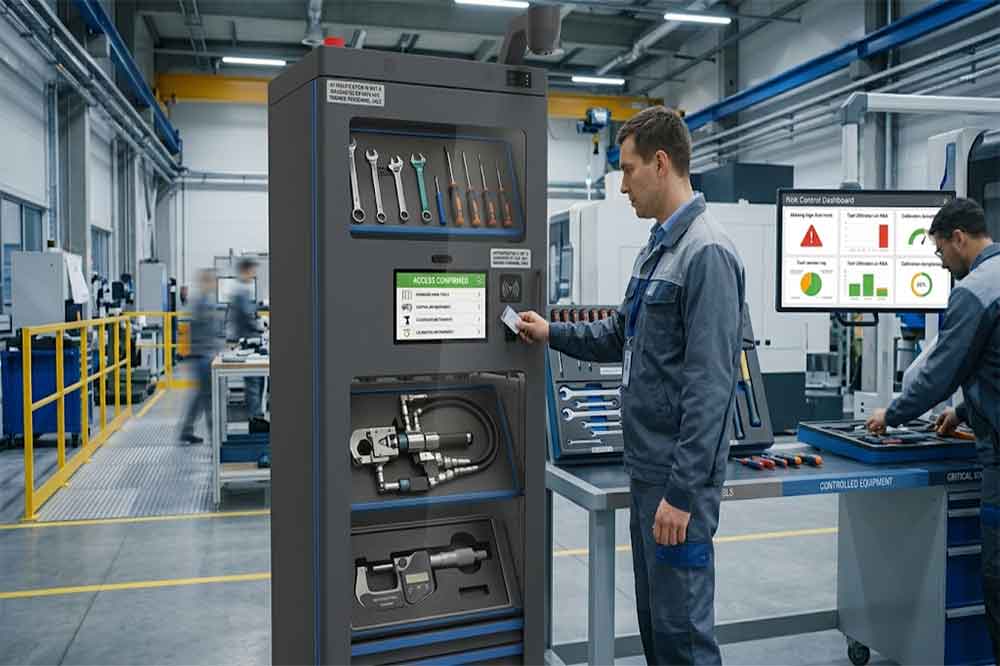
RFID Tool Cabinet for Tool Risk Management: Identify Problems Before They EscalateA missing screwdriver and an unavailable torque wrench may both appear as tool management problems, but the consequences can be very different. One may cause a short delay in a routine maintenance task. The other could interrupt a production line, delay a quality inspection, or leave a critical job waiting for equipment.Industrial companies do not need the same level of control for every tool. They need to understand which tools create the greatest operational, financial, quality, or safety risks and decide how those risks should be managed.An RFID tool cabinet can support this work by improving tool identification, recording checkout and return events, supporting configured access rules, and making selected tool statuses easier to review. When these functions are connected to a clear risk management process, teams can respond more consistently to missing tools, overdue returns, restricted equipment, and recurring shortages.The cabinet is not a complete risk management system by itself. Its value depends on how the company classifies tools, defines control requirements, handles exceptions, and uses the information collected.What Is Tool Risk Management?Tool risk management is the process of identifying problems that could arise from storing, issuing, using, maintaining, or losing industrial tools, then applying controls appropriate to their potential consequences.The risks vary by workplace. A general-purpose wrench may mainly create a replacement cost if it goes missing. A calibrated measuring instrument may introduce quality concerns if its status is uncertain. A specialized maintenance tool may cause production delays if it cannot be located when needed.A practical risk management process usually includes identifying tools and possible failure scenarios, estimating their likelihood and impact, selecting controls, assigning responsibility, and reviewing whether those controls are working.An RFID tool cabinet can contribute to several parts of this process. It can help establish which tools are registered, record supported transactions, associate events with users, and provide information about recorded availability or status.These records can help teams investigate risk events and identify patterns. For example, repeated overdue returns from one department may indicate a workflow problem, while frequent requests for an unavailable tool may reveal a shortage or allocation issue.The important point is that risk management starts with understanding the consequences of a problem. RFID provides useful information and control options, but people still need to assess the risks and decide what action is appropriate.Which Tool Risks Should Companies Consider?Tool loss and unexplained inventory differencesTools may disappear gradually rather than in one obvious incident. An item is borrowed without a complete transaction, returned to the wrong storage area, or moved to another department without updating its record.Over time, the digital register and physical inventory no longer match.An RFID-enabled cabinet can support inventory verification and record tool checkout and return events. When a discrepancy appears, supervisors can review the available transaction history and investigate whether the issue involves an incomplete return, an incorrect record, or a genuinely missing item.This does not guarantee that every loss will be prevented. The effectiveness depends on tag readability, cabinet design, transaction rules, and whether tools are required to pass through the controlled workflow.Production delays caused by unavailable toolsSome tools are inexpensive but operationally critical. A particular fixture, service tool, or specialized instrument may be required for one specific maintenance procedure.If that item is missing, being repaired, or already allocated to another team, the cost of the delay may exceed the replacement value of the tool.An RFID tool cabinet can help teams review recorded availability, outstanding checkouts, and recurring demand. Combined with work-order planning, these records can reveal which tools deserve closer availability monitoring or a backup plan.For more detailed guidance, companies can also review RFID tool downtime management and RFID tool demand planning.Unauthorized access or useSome tools are expensive, sensitive, specialized, or subject to internal restrictions. Uncontrolled access can increase the risk of loss, misuse, or use by personnel who have not received the required training.A compatible RFID cabinet system may support user authentication, permissions, and transaction records. These features can help a company apply different access rules to different tool categories.However, a recorded user identity does not prove that the tool was used correctly after checkout. Where misuse could have serious consequences, additional safeguards, supervision, training, and work procedures may be necessary.Tools used in unsuitable conditionA tool can be physically available but not ready for use. It may be damaged, awaiting repair, overdue for inspection, or subject to a restriction that has not been reflected in the cabinet’s current status.This creates a different kind of risk from ordinary tool loss. The concern is not simply whether the tool can be found, but whether it should be issued.A tool management platform can link tools to maintenance or inspection information when the relevant data is available. Depending on the system, it may display warnings, flag restricted items, or enforce configured checkout rules.The company must define the status categories and ensure that inspection or maintenance information remains accurate.Poor visibility across departmentsA tool may be available somewhere in a factory but remain unavailable to the team that needs it. Different departments may maintain separate registers, use different naming conventions, or follow inconsistent transfer procedures.This makes it difficult to understand the overall exposure created by shared equipment.A coordinated RFID tool management system can help standardize tool identities and record movements between cabinets or locations where the required functionality is supported. This gives managers a better basis for reviewing shared resources and deciding where stronger controls are needed.Classify Tools According to RiskOne of the most useful steps is to stop treating all tools as equally important.A simple classification process can group tools according to factors such as replacement value, operational criticality, inspection requirements, access restrictions, loss history, and the consequences of incorrect use.For example, a factory might use three broad categories:Risk categoryTypical characteristicsPossible controlsStandardCommon tools with limited operational impactBasic identification, checkout records, periodic inventoryControlledHigher replacement cost, frequent demand, or restricted accessUser permissions, closer transaction review, exception alertsCriticalSignificant production, quality, or safety consequences if unavailable or misusedDefined authorization, status checks, escalation procedures, contingency planningThese categories are illustrative rather than universal. A company should adapt them to its own equipment, processes, and risk assessment.A low-cost tool may still deserve critical status if a production process cannot continue without it. Conversely, an expensive tool may not require the strictest operational controls if the consequences of loss or misuse are limited.Risk classification should therefore reflect both the probability of a problem and the potential impact.Use a practical risk scoring methodA simple risk score can help teams prioritize their attention. One common approach is to score likelihood and impact separately, then multiply the two values.For example:Risk score = Likelihood score × Impact scoreIf each factor is scored from one to five, the resulting score ranges from one to twenty-five.A tool with a likelihood score of four and an impact score of five receives a score of twenty. A tool with a likelihood score of two and an impact score of two receives a score of four.The numbers are only a prioritization aid. They do not provide a precise prediction of future events, and different risks may require separate treatment even when their scores are similar.Teams should document their scoring criteria and review them when operating conditions change. A frequently missing tool may deserve a higher likelihood rating, while a tool used in a newly critical process may need a higher impact rating.How an RFID Tool Cabinet Supports Risk ControlsImprove tool identification and recorded statusRisk decisions are difficult when the company cannot reliably identify the affected tool.Each managed tool should have a unique asset record linked to its RFID tag. The record may contain the tool category, location, responsible department, current status, and relevant risk classification.This allows the management platform to distinguish between tools that look similar but have different control requirements.For example, two visually identical measuring instruments may have different inspection dates or restrictions. Their records should not be combined simply because the models match.Accurate identification creates a foundation for more targeted control rules and more reliable investigations.Record transactions that matterCheckout and return events can provide useful evidence about how tools move through the workplace.Depending on the system configuration, a transaction may record the tool ID, user ID, timestamp, cabinet, and event type. Transfer or exception events may also be recorded if the software supports them.These records can help managers investigate overdue tools and identify recurring patterns. If one category regularly remains checked out beyond the expected period, the team can review whether return rules, work scheduling, or storage arrangements need to change.The goal is not to collect every possible data point. It is to capture enough reliable information to support the decisions that matter.Apply risk-based access rulesRisk classification can guide cabinet permissions.Standard tools may be available through a routine checkout process, while selected equipment may require a specific user role, supervisor approval, or another configured authorization step.The rules should be clear enough for employees to follow without creating unnecessary delays. Emergency access also needs attention: if a critical maintenance job cannot wait, the company should define how an authorized exception is approved and recorded.Review permissions when employees change roles, temporary assignments end, or departments reorganize. Otherwise, outdated permissions can create avoidable exposure.For more detail, see RFID tool cabinet access control.Support exception alerts and escalationAn exception becomes more useful when someone knows what action to take.Examples include a critical tool remaining checked out beyond its expected return time, an inventory discrepancy involving a high-risk item, or an item whose status indicates that it should not be issued.Where supported, an RFID tool management platform can generate alerts or reports for these events. The company should then define who receives the alert, how quickly it should be reviewed, and when the issue must be escalated.Not every exception requires the same response. A short delay involving a common hand tool may need a reminder. An unexplained discrepancy involving critical equipment may require an immediate inventory check and supervisor review.The response should reflect the actual risk rather than relying on a single rule for every event.Make recurring risk patterns easier to identifyA single missing tool may be an isolated incident. Repeated missing tools from the same work area could indicate a deeper problem.Transaction histories and exception reports can help identify recurring issues, such as frequent overdue returns, repeated status overrides, tools often unavailable during planned maintenance, or unusually high demand for specific equipment.Managers can use these patterns to adjust storage locations, clarify responsibilities, revise checkout periods, purchase backup tools, or improve employee training.For related operational metrics, see RFID tool cabinet reporting and analytics.Build a Risk Register for Managed ToolsA risk register helps turn observations into assigned actions. It does not need to be complicated, particularly during a pilot project.A useful register might include the following fields:FieldPurposeTool ID and categoryIdentifies the equipment under reviewRisk scenarioDescribes what could go wrongLikelihood and impactEstablishes a consistent priorityExisting controlsRecords what is already in placeAdditional actionDefines the proposed risk responseResponsible personAssigns ownershipReview dateSets a point for reassessmentCurrent statusShows whether the action is open or completeFor example, a specialized maintenance tool may have a high impact rating because its absence can delay a critical repair. Existing controls might include a cabinet checkout record, while an additional action could be to introduce a return-time review and identify a backup source.The risk register should remain connected to the real operating process. If it becomes a spreadsheet that nobody updates, it will provide little ongoing value.An RFID tool cabinet can supply some of the operational information used during reviews, but risk ratings, action ownership, and decisions may need to remain in a separate maintenance, quality, or risk management system.Connect Tool Risk Information With Maintenance and PlanningTool risk does not exist in isolation.Maintenance teams may know that a particular tool is essential for a planned repair. Quality teams may know that a measuring instrument must have a current calibration status. Production planners may know that several work orders require the same limited equipment.Combining these perspectives can improve decisions about tool availability and control.Where system interfaces support it, an RFID tool management platform may exchange tool identities and transaction information with a computerized maintenance management system, enterprise resource planning platform, or other operational software.For example, a maintenance planner could review whether required tools are recorded as available before scheduling a job. A tool manager could use demand history to identify frequently contested equipment. A quality team could review the recorded status of controlled instruments before use.The implementation should define which system owns each authoritative record and how updates are synchronized. If a connected system becomes unavailable, staff need a documented process for handling transactions and reconciling records afterward.Integration should be tested with actual workflows rather than judged only by the presence of an API or a software connection.How to Implement Risk-Based RFID Tool ManagementStart with the most consequential risksDo not begin by trying to apply advanced controls to every item in the factory.Choose a tool group where a problem would have a meaningful impact, such as critical maintenance equipment, high-value tools, or instruments with specific inspection requirements.Document the main risk scenarios and the controls already in place. This provides a baseline for deciding what the RFID cabinet should help improve.Confirm the required system functionsTranslate the risk scenarios into specific requirements.A project may need unique tool identification, user authentication, transaction history, configurable permissions, status warnings, exception reporting, or integration with maintenance records.Ask the supplier to demonstrate each important function. If a requirement is to prevent checkout of restricted tools, confirm whether the proposed system can enforce the rule or only display a warning.Test normal operations and failure scenariosA pilot should include everyday checkout and return tasks, but that is only the beginning.Test missing tags, duplicate-looking tools, overdue returns, restricted status, unauthorized access attempts, damaged returns, and network interruptions. Check how the system records each event and whether employees can follow the required response.For critical equipment, test the escalation process as well. An alert is useful only if the responsible person receives it and knows what to do.Define measurable indicatorsChoose a small set of indicators that reflect the original risk.Possible measures include overdue returns for critical tools, inventory discrepancies, time needed to locate a required item, repeated access exceptions, or tool-related delays in maintenance work.Compare results with a reliable baseline and allow for differences in workload or production conditions. Do not assume that every improvement is caused by the cabinet alone.Review and adjust the controlsAfter the pilot, review whether the controls are reducing the intended exposure without creating excessive work.A rule that is too strict may encourage employees to bypass the process. A rule that is too loose may fail to address the original risk.Use feedback from operators, supervisors, maintenance staff, and IT personnel to refine the workflow before expanding to more tool categories or locations.Common Mistakes in Tool Risk ManagementOne common mistake is classifying risk only by purchase price. A low-cost tool may be essential to production, while a more expensive item may have limited operational impact. Classification should consider consequences, likelihood, and use conditions.Another mistake is assuming that RFID automatically prevents tool loss. The system can improve identification and recordkeeping, but results depend on tag performance, cabinet design, transaction compliance, and the procedures used outside the cabinet.Companies may also create too many alerts. If every minor delay triggers the same urgent notification, staff can begin to ignore them. Prioritize events according to their impact and assign clear response responsibilities.A further problem is failing to maintain tool status information. An RFID record cannot provide a reliable risk signal if the underlying inspection, maintenance, or location data is outdated.Finally, some projects measure only how many tools have been tagged. Tagging is an implementation milestone, not proof that operational risk has been reduced. The more useful question is whether the controls help prevent, detect, or resolve the specific problems identified at the start.Choosing an RFID Tool Cabinet for Risk ManagementWhen evaluating an RFID tool cabinet, begin with the risks the system is expected to address.Review tool identification accuracy, cabinet access options, user authentication, transaction records, status management, exception handling, reporting, and supported software interfaces. The required features will depend on the tool categories and the operating environment.Ask practical questions during evaluation:Can the system distinguish individual tools with similar models or appearances?Which checkout, return, and access events are recorded?Can different permissions be configured for different tool categories?Can restricted status be enforced, or is it only displayed?How are overdue returns and unresolved discrepancies handled?Can records be exported or shared with existing maintenance software?What happens during network or synchronization failures?Can the system support the company’s expected number of users, tools, and locations?For a broader purchasing review, use an RFID tool cabinet procurement checklist. A structured RFID tool cabinet pilot project can then verify whether the selected functions address the real risks before full deployment.The best solution is not necessarily the one with the longest feature list. It is the one that provides dependable information and workable controls for the risks the organization actually faces.ConclusionRFID tool cabinets can support industrial tool risk management by improving identification, recording tool movements, supporting configured permissions, and making selected exceptions easier to investigate. When this information is used alongside a risk register, maintenance planning, and clear operating procedures, teams can make more informed decisions about which tools need stronger controls.The process should begin with risk, not hardware. Identify the tools whose loss, unavailability, restricted status, or misuse could have the greatest consequences. Define suitable controls, test them with actual workflows, and measure whether they improve the intended outcomes.RFID does not eliminate every risk, and it cannot replace sound maintenance, safety, or quality practices. Used as part of a well-designed process, however, it can help organizations move from reacting to missing or unavailable tools toward more consistent, evidence-based risk control.

RFID Tool Cabinet for Tool Risk Management Tech & Innovation
Oct 15, 2026 • visibility 7 • 30 min read

RFID Tool Cabinet for Tool Risk Management

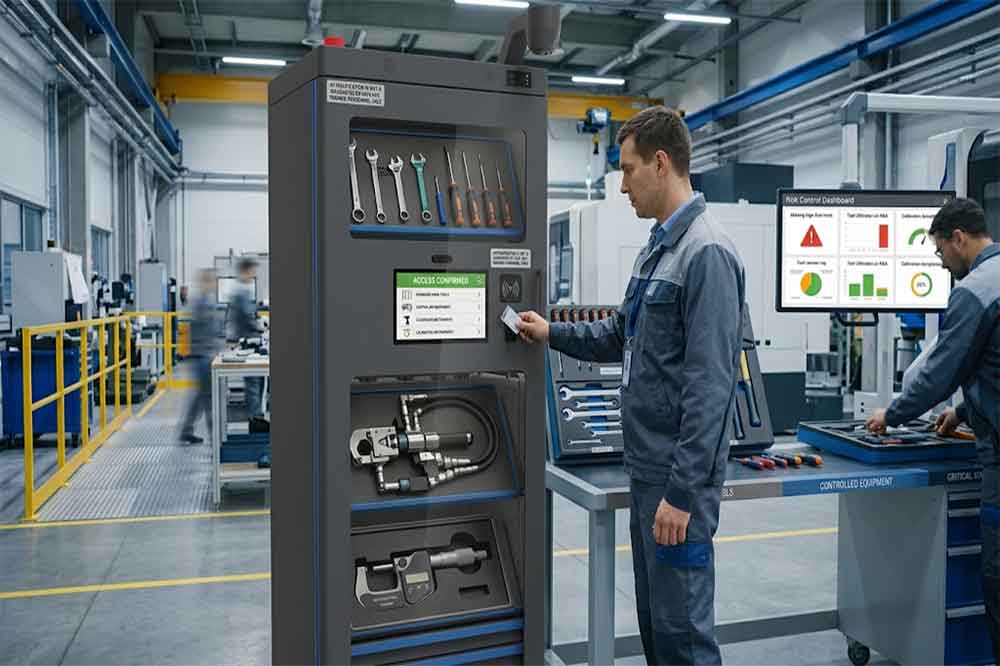
RFID Tool Cabinet for Tool Risk Management: Identify Problems Before They EscalateA missing screwdriver and an unavailable torque wrench may both appear as tool management problems, but the consequences can be very different. One may cause a short delay in a routine maintenance task. The other could interrupt a production line, delay a quality inspection, or leave a critical job waiting for equipment.Industrial companies do not need the same level of control for every tool. They need to understand which tools create the greatest operational, financial, quality, or safety risks and decide how those risks should be managed.An RFID tool cabinet can support this work by improving tool identification, recording checkout and return events, supporting configured access rules, and making selected tool statuses easier to review. When these functions are connected to a clear risk management process, teams can respond more consistently to missing tools, overdue returns, restricted equipment, and recurring shortages.The cabinet is not a complete risk management system by itself. Its value depends on how the company classifies tools, defines control requirements, handles exceptions, and uses the information collected.What Is Tool Risk Management?Tool risk management is the process of identifying problems that could arise from storing, issuing, using, maintaining, or losing industrial tools, then applying controls appropriate to their potential consequences.The risks vary by workplace. A general-purpose wrench may mainly create a replacement cost if it goes missing. A calibrated measuring instrument may introduce quality concerns if its status is uncertain. A specialized maintenance tool may cause production delays if it cannot be located when needed.A practical risk management process usually includes identifying tools and possible failure scenarios, estimating their likelihood and impact, selecting controls, assigning responsibility, and reviewing whether those controls are working.An RFID tool cabinet can contribute to several parts of this process. It can help establish which tools are registered, record supported transactions, associate events with users, and provide information about recorded availability or status.These records can help teams investigate risk events and identify patterns. For example, repeated overdue returns from one department may indicate a workflow problem, while frequent requests for an unavailable tool may reveal a shortage or allocation issue.The important point is that risk management starts with understanding the consequences of a problem. RFID provides useful information and control options, but people still need to assess the risks and decide what action is appropriate.Which Tool Risks Should Companies Consider?Tool loss and unexplained inventory differencesTools may disappear gradually rather than in one obvious incident. An item is borrowed without a complete transaction, returned to the wrong storage area, or moved to another department without updating its record.Over time, the digital register and physical inventory no longer match.An RFID-enabled cabinet can support inventory verification and record tool checkout and return events. When a discrepancy appears, supervisors can review the available transaction history and investigate whether the issue involves an incomplete return, an incorrect record, or a genuinely missing item.This does not guarantee that every loss will be prevented. The effectiveness depends on tag readability, cabinet design, transaction rules, and whether tools are required to pass through the controlled workflow.Production delays caused by unavailable toolsSome tools are inexpensive but operationally critical. A particular fixture, service tool, or specialized instrument may be required for one specific maintenance procedure.If that item is missing, being repaired, or already allocated to another team, the cost of the delay may exceed the replacement value of the tool.An RFID tool cabinet can help teams review recorded availability, outstanding checkouts, and recurring demand. Combined with work-order planning, these records can reveal which tools deserve closer availability monitoring or a backup plan.For more detailed guidance, companies can also review RFID tool downtime management and RFID tool demand planning.Unauthorized access or useSome tools are expensive, sensitive, specialized, or subject to internal restrictions. Uncontrolled access can increase the risk of loss, misuse, or use by personnel who have not received the required training.A compatible RFID cabinet system may support user authentication, permissions, and transaction records. These features can help a company apply different access rules to different tool categories.However, a recorded user identity does not prove that the tool was used correctly after checkout. Where misuse could have serious consequences, additional safeguards, supervision, training, and work procedures may be necessary.Tools used in unsuitable conditionA tool can be physically available but not ready for use. It may be damaged, awaiting repair, overdue for inspection, or subject to a restriction that has not been reflected in the cabinet’s current status.This creates a different kind of risk from ordinary tool loss. The concern is not simply whether the tool can be found, but whether it should be issued.A tool management platform can link tools to maintenance or inspection information when the relevant data is available. Depending on the system, it may display warnings, flag restricted items, or enforce configured checkout rules.The company must define the status categories and ensure that inspection or maintenance information remains accurate.Poor visibility across departmentsA tool may be available somewhere in a factory but remain unavailable to the team that needs it. Different departments may maintain separate registers, use different naming conventions, or follow inconsistent transfer procedures.This makes it difficult to understand the overall exposure created by shared equipment.A coordinated RFID tool management system can help standardize tool identities and record movements between cabinets or locations where the required functionality is supported. This gives managers a better basis for reviewing shared resources and deciding where stronger controls are needed.Classify Tools According to RiskOne of the most useful steps is to stop treating all tools as equally important.A simple classification process can group tools according to factors such as replacement value, operational criticality, inspection requirements, access restrictions, loss history, and the consequences of incorrect use.For example, a factory might use three broad categories:Risk categoryTypical characteristicsPossible controlsStandardCommon tools with limited operational impactBasic identification, checkout records, periodic inventoryControlledHigher replacement cost, frequent demand, or restricted accessUser permissions, closer transaction review, exception alertsCriticalSignificant production, quality, or safety consequences if unavailable or misusedDefined authorization, status checks, escalation procedures, contingency planningThese categories are illustrative rather than universal. A company should adapt them to its own equipment, processes, and risk assessment.A low-cost tool may still deserve critical status if a production process cannot continue without it. Conversely, an expensive tool may not require the strictest operational controls if the consequences of loss or misuse are limited.Risk classification should therefore reflect both the probability of a problem and the potential impact.Use a practical risk scoring methodA simple risk score can help teams prioritize their attention. One common approach is to score likelihood and impact separately, then multiply the two values.For example:Risk score = Likelihood score × Impact scoreIf each factor is scored from one to five, the resulting score ranges from one to twenty-five.A tool with a likelihood score of four and an impact score of five receives a score of twenty. A tool with a likelihood score of two and an impact score of two receives a score of four.The numbers are only a prioritization aid. They do not provide a precise prediction of future events, and different risks may require separate treatment even when their scores are similar.Teams should document their scoring criteria and review them when operating conditions change. A frequently missing tool may deserve a higher likelihood rating, while a tool used in a newly critical process may need a higher impact rating.How an RFID Tool Cabinet Supports Risk ControlsImprove tool identification and recorded statusRisk decisions are difficult when the company cannot reliably identify the affected tool.Each managed tool should have a unique asset record linked to its RFID tag. The record may contain the tool category, location, responsible department, current status, and relevant risk classification.This allows the management platform to distinguish between tools that look similar but have different control requirements.For example, two visually identical measuring instruments may have different inspection dates or restrictions. Their records should not be combined simply because the models match.Accurate identification creates a foundation for more targeted control rules and more reliable investigations.Record transactions that matterCheckout and return events can provide useful evidence about how tools move through the workplace.Depending on the system configuration, a transaction may record the tool ID, user ID, timestamp, cabinet, and event type. Transfer or exception events may also be recorded if the software supports them.These records can help managers investigate overdue tools and identify recurring patterns. If one category regularly remains checked out beyond the expected period, the team can review whether return rules, work scheduling, or storage arrangements need to change.The goal is not to collect every possible data point. It is to capture enough reliable information to support the decisions that matter.Apply risk-based access rulesRisk classification can guide cabinet permissions.Standard tools may be available through a routine checkout process, while selected equipment may require a specific user role, supervisor approval, or another configured authorization step.The rules should be clear enough for employees to follow without creating unnecessary delays. Emergency access also needs attention: if a critical maintenance job cannot wait, the company should define how an authorized exception is approved and recorded.Review permissions when employees change roles, temporary assignments end, or departments reorganize. Otherwise, outdated permissions can create avoidable exposure.For more detail, see RFID tool cabinet access control.Support exception alerts and escalationAn exception becomes more useful when someone knows what action to take.Examples include a critical tool remaining checked out beyond its expected return time, an inventory discrepancy involving a high-risk item, or an item whose status indicates that it should not be issued.Where supported, an RFID tool management platform can generate alerts or reports for these events. The company should then define who receives the alert, how quickly it should be reviewed, and when the issue must be escalated.Not every exception requires the same response. A short delay involving a common hand tool may need a reminder. An unexplained discrepancy involving critical equipment may require an immediate inventory check and supervisor review.The response should reflect the actual risk rather than relying on a single rule for every event.Make recurring risk patterns easier to identifyA single missing tool may be an isolated incident. Repeated missing tools from the same work area could indicate a deeper problem.Transaction histories and exception reports can help identify recurring issues, such as frequent overdue returns, repeated status overrides, tools often unavailable during planned maintenance, or unusually high demand for specific equipment.Managers can use these patterns to adjust storage locations, clarify responsibilities, revise checkout periods, purchase backup tools, or improve employee training.For related operational metrics, see RFID tool cabinet reporting and analytics.Build a Risk Register for Managed ToolsA risk register helps turn observations into assigned actions. It does not need to be complicated, particularly during a pilot project.A useful register might include the following fields:FieldPurposeTool ID and categoryIdentifies the equipment under reviewRisk scenarioDescribes what could go wrongLikelihood and impactEstablishes a consistent priorityExisting controlsRecords what is already in placeAdditional actionDefines the proposed risk responseResponsible personAssigns ownershipReview dateSets a point for reassessmentCurrent statusShows whether the action is open or completeFor example, a specialized maintenance tool may have a high impact rating because its absence can delay a critical repair. Existing controls might include a cabinet checkout record, while an additional action could be to introduce a return-time review and identify a backup source.The risk register should remain connected to the real operating process. If it becomes a spreadsheet that nobody updates, it will provide little ongoing value.An RFID tool cabinet can supply some of the operational information used during reviews, but risk ratings, action ownership, and decisions may need to remain in a separate maintenance, quality, or risk management system.Connect Tool Risk Information With Maintenance and PlanningTool risk does not exist in isolation.Maintenance teams may know that a particular tool is essential for a planned repair. Quality teams may know that a measuring instrument must have a current calibration status. Production planners may know that several work orders require the same limited equipment.Combining these perspectives can improve decisions about tool availability and control.Where system interfaces support it, an RFID tool management platform may exchange tool identities and transaction information with a computerized maintenance management system, enterprise resource planning platform, or other operational software.For example, a maintenance planner could review whether required tools are recorded as available before scheduling a job. A tool manager could use demand history to identify frequently contested equipment. A quality team could review the recorded status of controlled instruments before use.The implementation should define which system owns each authoritative record and how updates are synchronized. If a connected system becomes unavailable, staff need a documented process for handling transactions and reconciling records afterward.Integration should be tested with actual workflows rather than judged only by the presence of an API or a software connection.How to Implement Risk-Based RFID Tool ManagementStart with the most consequential risksDo not begin by trying to apply advanced controls to every item in the factory.Choose a tool group where a problem would have a meaningful impact, such as critical maintenance equipment, high-value tools, or instruments with specific inspection requirements.Document the main risk scenarios and the controls already in place. This provides a baseline for deciding what the RFID cabinet should help improve.Confirm the required system functionsTranslate the risk scenarios into specific requirements.A project may need unique tool identification, user authentication, transaction history, configurable permissions, status warnings, exception reporting, or integration with maintenance records.Ask the supplier to demonstrate each important function. If a requirement is to prevent checkout of restricted tools, confirm whether the proposed system can enforce the rule or only display a warning.Test normal operations and failure scenariosA pilot should include everyday checkout and return tasks, but that is only the beginning.Test missing tags, duplicate-looking tools, overdue returns, restricted status, unauthorized access attempts, damaged returns, and network interruptions. Check how the system records each event and whether employees can follow the required response.For critical equipment, test the escalation process as well. An alert is useful only if the responsible person receives it and knows what to do.Define measurable indicatorsChoose a small set of indicators that reflect the original risk.Possible measures include overdue returns for critical tools, inventory discrepancies, time needed to locate a required item, repeated access exceptions, or tool-related delays in maintenance work.Compare results with a reliable baseline and allow for differences in workload or production conditions. Do not assume that every improvement is caused by the cabinet alone.Review and adjust the controlsAfter the pilot, review whether the controls are reducing the intended exposure without creating excessive work.A rule that is too strict may encourage employees to bypass the process. A rule that is too loose may fail to address the original risk.Use feedback from operators, supervisors, maintenance staff, and IT personnel to refine the workflow before expanding to more tool categories or locations.Common Mistakes in Tool Risk ManagementOne common mistake is classifying risk only by purchase price. A low-cost tool may be essential to production, while a more expensive item may have limited operational impact. Classification should consider consequences, likelihood, and use conditions.Another mistake is assuming that RFID automatically prevents tool loss. The system can improve identification and recordkeeping, but results depend on tag performance, cabinet design, transaction compliance, and the procedures used outside the cabinet.Companies may also create too many alerts. If every minor delay triggers the same urgent notification, staff can begin to ignore them. Prioritize events according to their impact and assign clear response responsibilities.A further problem is failing to maintain tool status information. An RFID record cannot provide a reliable risk signal if the underlying inspection, maintenance, or location data is outdated.Finally, some projects measure only how many tools have been tagged. Tagging is an implementation milestone, not proof that operational risk has been reduced. The more useful question is whether the controls help prevent, detect, or resolve the specific problems identified at the start.Choosing an RFID Tool Cabinet for Risk ManagementWhen evaluating an RFID tool cabinet, begin with the risks the system is expected to address.Review tool identification accuracy, cabinet access options, user authentication, transaction records, status management, exception handling, reporting, and supported software interfaces. The required features will depend on the tool categories and the operating environment.Ask practical questions during evaluation:Can the system distinguish individual tools with similar models or appearances?Which checkout, return, and access events are recorded?Can different permissions be configured for different tool categories?Can restricted status be enforced, or is it only displayed?How are overdue returns and unresolved discrepancies handled?Can records be exported or shared with existing maintenance software?What happens during network or synchronization failures?Can the system support the company’s expected number of users, tools, and locations?For a broader purchasing review, use an RFID tool cabinet procurement checklist. A structured RFID tool cabinet pilot project can then verify whether the selected functions address the real risks before full deployment.The best solution is not necessarily the one with the longest feature list. It is the one that provides dependable information and workable controls for the risks the organization actually faces.ConclusionRFID tool cabinets can support industrial tool risk management by improving identification, recording tool movements, supporting configured permissions, and making selected exceptions easier to investigate. When this information is used alongside a risk register, maintenance planning, and clear operating procedures, teams can make more informed decisions about which tools need stronger controls.The process should begin with risk, not hardware. Identify the tools whose loss, unavailability, restricted status, or misuse could have the greatest consequences. Define suitable controls, test them with actual workflows, and measure whether they improve the intended outcomes.RFID does not eliminate every risk, and it cannot replace sound maintenance, safety, or quality practices. Used as part of a well-designed process, however, it can help organizations move from reacting to missing or unavailable tools toward more consistent, evidence-based risk control.

RFID Tool Cabinet for Tool Risk Management Tech & Innovation
Oct 15, 2026 • visibility 4 • 30 min read

RFID Tool Cabinet for Tool Risk Management

RFID Tool Cabinet for Tool Risk Management: Identify Problems Before They EscalateA missing screwdriver and an unavailable torque wrench may both appear as tool management problems, but the consequences can be very different. One may cause a short delay in a routine maintenance task. The other could interrupt a production line, delay a quality inspection, or leave a critical job waiting for equipment.Industrial companies do not need the same level of control for every tool. They need to understand which tools create the greatest operational, financial, quality, or safety risks and decide how those risks should be managed.An RFID tool cabinet can support this work by improving tool identification, recording checkout and return events, supporting configured access rules, and making selected tool statuses easier to review. When these functions are connected to a clear risk management process, teams can respond more consistently to missing tools, overdue returns, restricted equipment, and recurring shortages.The cabinet is not a complete risk management system by itself. Its value depends on how the company classifies tools, defines control requirements, handles exceptions, and uses the information collected.What Is Tool Risk Management?Tool risk management is the process of identifying problems that could arise from storing, issuing, using, maintaining, or losing industrial tools, then applying controls appropriate to their potential consequences.The risks vary by workplace. A general-purpose wrench may mainly create a replacement cost if it goes missing. A calibrated measuring instrument may introduce quality concerns if its status is uncertain. A specialized maintenance tool may cause production delays if it cannot be located when needed.A practical risk management process usually includes identifying tools and possible failure scenarios, estimating their likelihood and impact, selecting controls, assigning responsibility, and reviewing whether those controls are working.An RFID tool cabinet can contribute to several parts of this process. It can help establish which tools are registered, record supported transactions, associate events with users, and provide information about recorded availability or status.These records can help teams investigate risk events and identify patterns. For example, repeated overdue returns from one department may indicate a workflow problem, while frequent requests for an unavailable tool may reveal a shortage or allocation issue.The important point is that risk management starts with understanding the consequences of a problem. RFID provides useful information and control options, but people still need to assess the risks and decide what action is appropriate.Which Tool Risks Should Companies Consider?Tool loss and unexplained inventory differencesTools may disappear gradually rather than in one obvious incident. An item is borrowed without a complete transaction, returned to the wrong storage area, or moved to another department without updating its record.Over time, the digital register and physical inventory no longer match.An RFID-enabled cabinet can support inventory verification and record tool checkout and return events. When a discrepancy appears, supervisors can review the available transaction history and investigate whether the issue involves an incomplete return, an incorrect record, or a genuinely missing item.This does not guarantee that every loss will be prevented. The effectiveness depends on tag readability, cabinet design, transaction rules, and whether tools are required to pass through the controlled workflow.Production delays caused by unavailable toolsSome tools are inexpensive but operationally critical. A particular fixture, service tool, or specialized instrument may be required for one specific maintenance procedure.If that item is missing, being repaired, or already allocated to another team, the cost of the delay may exceed the replacement value of the tool.An RFID tool cabinet can help teams review recorded availability, outstanding checkouts, and recurring demand. Combined with work-order planning, these records can reveal which tools deserve closer availability monitoring or a backup plan.For more detailed guidance, companies can also review RFID tool downtime management and RFID tool demand planning.Unauthorized access or useSome tools are expensive, sensitive, specialized, or subject to internal restrictions. Uncontrolled access can increase the risk of loss, misuse, or use by personnel who have not received the required training.A compatible RFID cabinet system may support user authentication, permissions, and transaction records. These features can help a company apply different access rules to different tool categories.However, a recorded user identity does not prove that the tool was used correctly after checkout. Where misuse could have serious consequences, additional safeguards, supervision, training, and work procedures may be necessary.Tools used in unsuitable conditionA tool can be physically available but not ready for use. It may be damaged, awaiting repair, overdue for inspection, or subject to a restriction that has not been reflected in the cabinet’s current status.This creates a different kind of risk from ordinary tool loss. The concern is not simply whether the tool can be found, but whether it should be issued.A tool management platform can link tools to maintenance or inspection information when the relevant data is available. Depending on the system, it may display warnings, flag restricted items, or enforce configured checkout rules.The company must define the status categories and ensure that inspection or maintenance information remains accurate.Poor visibility across departmentsA tool may be available somewhere in a factory but remain unavailable to the team that needs it. Different departments may maintain separate registers, use different naming conventions, or follow inconsistent transfer procedures.This makes it difficult to understand the overall exposure created by shared equipment.A coordinated RFID tool management system can help standardize tool identities and record movements between cabinets or locations where the required functionality is supported. This gives managers a better basis for reviewing shared resources and deciding where stronger controls are needed.Classify Tools According to RiskOne of the most useful steps is to stop treating all tools as equally important.A simple classification process can group tools according to factors such as replacement value, operational criticality, inspection requirements, access restrictions, loss history, and the consequences of incorrect use.For example, a factory might use three broad categories:Risk categoryTypical characteristicsPossible controlsStandardCommon tools with limited operational impactBasic identification, checkout records, periodic inventoryControlledHigher replacement cost, frequent demand, or restricted accessUser permissions, closer transaction review, exception alertsCriticalSignificant production, quality, or safety consequences if unavailable or misusedDefined authorization, status checks, escalation procedures, contingency planningThese categories are illustrative rather than universal. A company should adapt them to its own equipment, processes, and risk assessment.A low-cost tool may still deserve critical status if a production process cannot continue without it. Conversely, an expensive tool may not require the strictest operational controls if the consequences of loss or misuse are limited.Risk classification should therefore reflect both the probability of a problem and the potential impact.Use a practical risk scoring methodA simple risk score can help teams prioritize their attention. One common approach is to score likelihood and impact separately, then multiply the two values.For example:Risk score = Likelihood score × Impact scoreIf each factor is scored from one to five, the resulting score ranges from one to twenty-five.A tool with a likelihood score of four and an impact score of five receives a score of twenty. A tool with a likelihood score of two and an impact score of two receives a score of four.The numbers are only a prioritization aid. They do not provide a precise prediction of future events, and different risks may require separate treatment even when their scores are similar.Teams should document their scoring criteria and review them when operating conditions change. A frequently missing tool may deserve a higher likelihood rating, while a tool used in a newly critical process may need a higher impact rating.How an RFID Tool Cabinet Supports Risk ControlsImprove tool identification and recorded statusRisk decisions are difficult when the company cannot reliably identify the affected tool.Each managed tool should have a unique asset record linked to its RFID tag. The record may contain the tool category, location, responsible department, current status, and relevant risk classification.This allows the management platform to distinguish between tools that look similar but have different control requirements.For example, two visually identical measuring instruments may have different inspection dates or restrictions. Their records should not be combined simply because the models match.Accurate identification creates a foundation for more targeted control rules and more reliable investigations.Record transactions that matterCheckout and return events can provide useful evidence about how tools move through the workplace.Depending on the system configuration, a transaction may record the tool ID, user ID, timestamp, cabinet, and event type. Transfer or exception events may also be recorded if the software supports them.These records can help managers investigate overdue tools and identify recurring patterns. If one category regularly remains checked out beyond the expected period, the team can review whether return rules, work scheduling, or storage arrangements need to change.The goal is not to collect every possible data point. It is to capture enough reliable information to support the decisions that matter.Apply risk-based access rulesRisk classification can guide cabinet permissions.Standard tools may be available through a routine checkout process, while selected equipment may require a specific user role, supervisor approval, or another configured authorization step.The rules should be clear enough for employees to follow without creating unnecessary delays. Emergency access also needs attention: if a critical maintenance job cannot wait, the company should define how an authorized exception is approved and recorded.Review permissions when employees change roles, temporary assignments end, or departments reorganize. Otherwise, outdated permissions can create avoidable exposure.For more detail, see RFID tool cabinet access control.Support exception alerts and escalationAn exception becomes more useful when someone knows what action to take.Examples include a critical tool remaining checked out beyond its expected return time, an inventory discrepancy involving a high-risk item, or an item whose status indicates that it should not be issued.Where supported, an RFID tool management platform can generate alerts or reports for these events. The company should then define who receives the alert, how quickly it should be reviewed, and when the issue must be escalated.Not every exception requires the same response. A short delay involving a common hand tool may need a reminder. An unexplained discrepancy involving critical equipment may require an immediate inventory check and supervisor review.The response should reflect the actual risk rather than relying on a single rule for every event.Make recurring risk patterns easier to identifyA single missing tool may be an isolated incident. Repeated missing tools from the same work area could indicate a deeper problem.Transaction histories and exception reports can help identify recurring issues, such as frequent overdue returns, repeated status overrides, tools often unavailable during planned maintenance, or unusually high demand for specific equipment.Managers can use these patterns to adjust storage locations, clarify responsibilities, revise checkout periods, purchase backup tools, or improve employee training.For related operational metrics, see RFID tool cabinet reporting and analytics.Build a Risk Register for Managed ToolsA risk register helps turn observations into assigned actions. It does not need to be complicated, particularly during a pilot project.A useful register might include the following fields:FieldPurposeTool ID and categoryIdentifies the equipment under reviewRisk scenarioDescribes what could go wrongLikelihood and impactEstablishes a consistent priorityExisting controlsRecords what is already in placeAdditional actionDefines the proposed risk responseResponsible personAssigns ownershipReview dateSets a point for reassessmentCurrent statusShows whether the action is open or completeFor example, a specialized maintenance tool may have a high impact rating because its absence can delay a critical repair. Existing controls might include a cabinet checkout record, while an additional action could be to introduce a return-time review and identify a backup source.The risk register should remain connected to the real operating process. If it becomes a spreadsheet that nobody updates, it will provide little ongoing value.An RFID tool cabinet can supply some of the operational information used during reviews, but risk ratings, action ownership, and decisions may need to remain in a separate maintenance, quality, or risk management system.Connect Tool Risk Information With Maintenance and PlanningTool risk does not exist in isolation.Maintenance teams may know that a particular tool is essential for a planned repair. Quality teams may know that a measuring instrument must have a current calibration status. Production planners may know that several work orders require the same limited equipment.Combining these perspectives can improve decisions about tool availability and control.Where system interfaces support it, an RFID tool management platform may exchange tool identities and transaction information with a computerized maintenance management system, enterprise resource planning platform, or other operational software.For example, a maintenance planner could review whether required tools are recorded as available before scheduling a job. A tool manager could use demand history to identify frequently contested equipment. A quality team could review the recorded status of controlled instruments before use.The implementation should define which system owns each authoritative record and how updates are synchronized. If a connected system becomes unavailable, staff need a documented process for handling transactions and reconciling records afterward.Integration should be tested with actual workflows rather than judged only by the presence of an API or a software connection.How to Implement Risk-Based RFID Tool ManagementStart with the most consequential risksDo not begin by trying to apply advanced controls to every item in the factory.Choose a tool group where a problem would have a meaningful impact, such as critical maintenance equipment, high-value tools, or instruments with specific inspection requirements.Document the main risk scenarios and the controls already in place. This provides a baseline for deciding what the RFID cabinet should help improve.Confirm the required system functionsTranslate the risk scenarios into specific requirements.A project may need unique tool identification, user authentication, transaction history, configurable permissions, status warnings, exception reporting, or integration with maintenance records.Ask the supplier to demonstrate each important function. If a requirement is to prevent checkout of restricted tools, confirm whether the proposed system can enforce the rule or only display a warning.Test normal operations and failure scenariosA pilot should include everyday checkout and return tasks, but that is only the beginning.Test missing tags, duplicate-looking tools, overdue returns, restricted status, unauthorized access attempts, damaged returns, and network interruptions. Check how the system records each event and whether employees can follow the required response.For critical equipment, test the escalation process as well. An alert is useful only if the responsible person receives it and knows what to do.Define measurable indicatorsChoose a small set of indicators that reflect the original risk.Possible measures include overdue returns for critical tools, inventory discrepancies, time needed to locate a required item, repeated access exceptions, or tool-related delays in maintenance work.Compare results with a reliable baseline and allow for differences in workload or production conditions. Do not assume that every improvement is caused by the cabinet alone.Review and adjust the controlsAfter the pilot, review whether the controls are reducing the intended exposure without creating excessive work.A rule that is too strict may encourage employees to bypass the process. A rule that is too loose may fail to address the original risk.Use feedback from operators, supervisors, maintenance staff, and IT personnel to refine the workflow before expanding to more tool categories or locations.Common Mistakes in Tool Risk ManagementOne common mistake is classifying risk only by purchase price. A low-cost tool may be essential to production, while a more expensive item may have limited operational impact. Classification should consider consequences, likelihood, and use conditions.Another mistake is assuming that RFID automatically prevents tool loss. The system can improve identification and recordkeeping, but results depend on tag performance, cabinet design, transaction compliance, and the procedures used outside the cabinet.Companies may also create too many alerts. If every minor delay triggers the same urgent notification, staff can begin to ignore them. Prioritize events according to their impact and assign clear response responsibilities.A further problem is failing to maintain tool status information. An RFID record cannot provide a reliable risk signal if the underlying inspection, maintenance, or location data is outdated.Finally, some projects measure only how many tools have been tagged. Tagging is an implementation milestone, not proof that operational risk has been reduced. The more useful question is whether the controls help prevent, detect, or resolve the specific problems identified at the start.Choosing an RFID Tool Cabinet for Risk ManagementWhen evaluating an RFID tool cabinet, begin with the risks the system is expected to address.Review tool identification accuracy, cabinet access options, user authentication, transaction records, status management, exception handling, reporting, and supported software interfaces. The required features will depend on the tool categories and the operating environment.Ask practical questions during evaluation:Can the system distinguish individual tools with similar models or appearances?Which checkout, return, and access events are recorded?Can different permissions be configured for different tool categories?Can restricted status be enforced, or is it only displayed?How are overdue returns and unresolved discrepancies handled?Can records be exported or shared with existing maintenance software?What happens during network or synchronization failures?Can the system support the company’s expected number of users, tools, and locations?For a broader purchasing review, use an RFID tool cabinet procurement checklist. A structured RFID tool cabinet pilot project can then verify whether the selected functions address the real risks before full deployment.The best solution is not necessarily the one with the longest feature list. It is the one that provides dependable information and workable controls for the risks the organization actually faces.ConclusionRFID tool cabinets can support industrial tool risk management by improving identification, recording tool movements, supporting configured permissions, and making selected exceptions easier to investigate. When this information is used alongside a risk register, maintenance planning, and clear operating procedures, teams can make more informed decisions about which tools need stronger controls.The process should begin with risk, not hardware. Identify the tools whose loss, unavailability, restricted status, or misuse could have the greatest consequences. Define suitable controls, test them with actual workflows, and measure whether they improve the intended outcomes.RFID does not eliminate every risk, and it cannot replace sound maintenance, safety, or quality practices. Used as part of a well-designed process, however, it can help organizations move from reacting to missing or unavailable tools toward more consistent, evidence-based risk control.

RFID Tool Cabinet for Tool Risk Management Tech & Innovation
Oct 15, 2026 • visibility 5 • 30 min read

RFID Tool Cabinet for Tool Risk Management

RFID Tool Cabinet for Tool Risk Management: Identify Problems Before They EscalateA missing screwdriver and an unavailable torque wrench may both appear as tool management problems, but the consequences can be very different. One may cause a short delay in a routine maintenance task. The other could interrupt a production line, delay a quality inspection, or leave a critical job waiting for equipment.Industrial companies do not need the same level of control for every tool. They need to understand which tools create the greatest operational, financial, quality, or safety risks and decide how those risks should be managed.An RFID tool cabinet can support this work by improving tool identification, recording checkout and return events, supporting configured access rules, and making selected tool statuses easier to review. When these functions are connected to a clear risk management process, teams can respond more consistently to missing tools, overdue returns, restricted equipment, and recurring shortages.The cabinet is not a complete risk management system by itself. Its value depends on how the company classifies tools, defines control requirements, handles exceptions, and uses the information collected.What Is Tool Risk Management?Tool risk management is the process of identifying problems that could arise from storing, issuing, using, maintaining, or losing industrial tools, then applying controls appropriate to their potential consequences.The risks vary by workplace. A general-purpose wrench may mainly create a replacement cost if it goes missing. A calibrated measuring instrument may introduce quality concerns if its status is uncertain. A specialized maintenance tool may cause production delays if it cannot be located when needed.A practical risk management process usually includes identifying tools and possible failure scenarios, estimating their likelihood and impact, selecting controls, assigning responsibility, and reviewing whether those controls are working.An RFID tool cabinet can contribute to several parts of this process. It can help establish which tools are registered, record supported transactions, associate events with users, and provide information about recorded availability or status.These records can help teams investigate risk events and identify patterns. For example, repeated overdue returns from one department may indicate a workflow problem, while frequent requests for an unavailable tool may reveal a shortage or allocation issue.The important point is that risk management starts with understanding the consequences of a problem. RFID provides useful information and control options, but people still need to assess the risks and decide what action is appropriate.Which Tool Risks Should Companies Consider?Tool loss and unexplained inventory differencesTools may disappear gradually rather than in one obvious incident. An item is borrowed without a complete transaction, returned to the wrong storage area, or moved to another department without updating its record.Over time, the digital register and physical inventory no longer match.An RFID-enabled cabinet can support inventory verification and record tool checkout and return events. When a discrepancy appears, supervisors can review the available transaction history and investigate whether the issue involves an incomplete return, an incorrect record, or a genuinely missing item.This does not guarantee that every loss will be prevented. The effectiveness depends on tag readability, cabinet design, transaction rules, and whether tools are required to pass through the controlled workflow.Production delays caused by unavailable toolsSome tools are inexpensive but operationally critical. A particular fixture, service tool, or specialized instrument may be required for one specific maintenance procedure.If that item is missing, being repaired, or already allocated to another team, the cost of the delay may exceed the replacement value of the tool.An RFID tool cabinet can help teams review recorded availability, outstanding checkouts, and recurring demand. Combined with work-order planning, these records can reveal which tools deserve closer availability monitoring or a backup plan.For more detailed guidance, companies can also review RFID tool downtime management and RFID tool demand planning.Unauthorized access or useSome tools are expensive, sensitive, specialized, or subject to internal restrictions. Uncontrolled access can increase the risk of loss, misuse, or use by personnel who have not received the required training.A compatible RFID cabinet system may support user authentication, permissions, and transaction records. These features can help a company apply different access rules to different tool categories.However, a recorded user identity does not prove that the tool was used correctly after checkout. Where misuse could have serious consequences, additional safeguards, supervision, training, and work procedures may be necessary.Tools used in unsuitable conditionA tool can be physically available but not ready for use. It may be damaged, awaiting repair, overdue for inspection, or subject to a restriction that has not been reflected in the cabinet’s current status.This creates a different kind of risk from ordinary tool loss. The concern is not simply whether the tool can be found, but whether it should be issued.A tool management platform can link tools to maintenance or inspection information when the relevant data is available. Depending on the system, it may display warnings, flag restricted items, or enforce configured checkout rules.The company must define the status categories and ensure that inspection or maintenance information remains accurate.Poor visibility across departmentsA tool may be available somewhere in a factory but remain unavailable to the team that needs it. Different departments may maintain separate registers, use different naming conventions, or follow inconsistent transfer procedures.This makes it difficult to understand the overall exposure created by shared equipment.A coordinated RFID tool management system can help standardize tool identities and record movements between cabinets or locations where the required functionality is supported. This gives managers a better basis for reviewing shared resources and deciding where stronger controls are needed.Classify Tools According to RiskOne of the most useful steps is to stop treating all tools as equally important.A simple classification process can group tools according to factors such as replacement value, operational criticality, inspection requirements, access restrictions, loss history, and the consequences of incorrect use.For example, a factory might use three broad categories:Risk categoryTypical characteristicsPossible controlsStandardCommon tools with limited operational impactBasic identification, checkout records, periodic inventoryControlledHigher replacement cost, frequent demand, or restricted accessUser permissions, closer transaction review, exception alertsCriticalSignificant production, quality, or safety consequences if unavailable or misusedDefined authorization, status checks, escalation procedures, contingency planningThese categories are illustrative rather than universal. A company should adapt them to its own equipment, processes, and risk assessment.A low-cost tool may still deserve critical status if a production process cannot continue without it. Conversely, an expensive tool may not require the strictest operational controls if the consequences of loss or misuse are limited.Risk classification should therefore reflect both the probability of a problem and the potential impact.Use a practical risk scoring methodA simple risk score can help teams prioritize their attention. One common approach is to score likelihood and impact separately, then multiply the two values.For example:Risk score = Likelihood score × Impact scoreIf each factor is scored from one to five, the resulting score ranges from one to twenty-five.A tool with a likelihood score of four and an impact score of five receives a score of twenty. A tool with a likelihood score of two and an impact score of two receives a score of four.The numbers are only a prioritization aid. They do not provide a precise prediction of future events, and different risks may require separate treatment even when their scores are similar.Teams should document their scoring criteria and review them when operating conditions change. A frequently missing tool may deserve a higher likelihood rating, while a tool used in a newly critical process may need a higher impact rating.How an RFID Tool Cabinet Supports Risk ControlsImprove tool identification and recorded statusRisk decisions are difficult when the company cannot reliably identify the affected tool.Each managed tool should have a unique asset record linked to its RFID tag. The record may contain the tool category, location, responsible department, current status, and relevant risk classification.This allows the management platform to distinguish between tools that look similar but have different control requirements.For example, two visually identical measuring instruments may have different inspection dates or restrictions. Their records should not be combined simply because the models match.Accurate identification creates a foundation for more targeted control rules and more reliable investigations.Record transactions that matterCheckout and return events can provide useful evidence about how tools move through the workplace.Depending on the system configuration, a transaction may record the tool ID, user ID, timestamp, cabinet, and event type. Transfer or exception events may also be recorded if the software supports them.These records can help managers investigate overdue tools and identify recurring patterns. If one category regularly remains checked out beyond the expected period, the team can review whether return rules, work scheduling, or storage arrangements need to change.The goal is not to collect every possible data point. It is to capture enough reliable information to support the decisions that matter.Apply risk-based access rulesRisk classification can guide cabinet permissions.Standard tools may be available through a routine checkout process, while selected equipment may require a specific user role, supervisor approval, or another configured authorization step.The rules should be clear enough for employees to follow without creating unnecessary delays. Emergency access also needs attention: if a critical maintenance job cannot wait, the company should define how an authorized exception is approved and recorded.Review permissions when employees change roles, temporary assignments end, or departments reorganize. Otherwise, outdated permissions can create avoidable exposure.For more detail, see RFID tool cabinet access control.Support exception alerts and escalationAn exception becomes more useful when someone knows what action to take.Examples include a critical tool remaining checked out beyond its expected return time, an inventory discrepancy involving a high-risk item, or an item whose status indicates that it should not be issued.Where supported, an RFID tool management platform can generate alerts or reports for these events. The company should then define who receives the alert, how quickly it should be reviewed, and when the issue must be escalated.Not every exception requires the same response. A short delay involving a common hand tool may need a reminder. An unexplained discrepancy involving critical equipment may require an immediate inventory check and supervisor review.The response should reflect the actual risk rather than relying on a single rule for every event.Make recurring risk patterns easier to identifyA single missing tool may be an isolated incident. Repeated missing tools from the same work area could indicate a deeper problem.Transaction histories and exception reports can help identify recurring issues, such as frequent overdue returns, repeated status overrides, tools often unavailable during planned maintenance, or unusually high demand for specific equipment.Managers can use these patterns to adjust storage locations, clarify responsibilities, revise checkout periods, purchase backup tools, or improve employee training.For related operational metrics, see RFID tool cabinet reporting and analytics.Build a Risk Register for Managed ToolsA risk register helps turn observations into assigned actions. It does not need to be complicated, particularly during a pilot project.A useful register might include the following fields:FieldPurposeTool ID and categoryIdentifies the equipment under reviewRisk scenarioDescribes what could go wrongLikelihood and impactEstablishes a consistent priorityExisting controlsRecords what is already in placeAdditional actionDefines the proposed risk responseResponsible personAssigns ownershipReview dateSets a point for reassessmentCurrent statusShows whether the action is open or completeFor example, a specialized maintenance tool may have a high impact rating because its absence can delay a critical repair. Existing controls might include a cabinet checkout record, while an additional action could be to introduce a return-time review and identify a backup source.The risk register should remain connected to the real operating process. If it becomes a spreadsheet that nobody updates, it will provide little ongoing value.An RFID tool cabinet can supply some of the operational information used during reviews, but risk ratings, action ownership, and decisions may need to remain in a separate maintenance, quality, or risk management system.Connect Tool Risk Information With Maintenance and PlanningTool risk does not exist in isolation.Maintenance teams may know that a particular tool is essential for a planned repair. Quality teams may know that a measuring instrument must have a current calibration status. Production planners may know that several work orders require the same limited equipment.Combining these perspectives can improve decisions about tool availability and control.Where system interfaces support it, an RFID tool management platform may exchange tool identities and transaction information with a computerized maintenance management system, enterprise resource planning platform, or other operational software.For example, a maintenance planner could review whether required tools are recorded as available before scheduling a job. A tool manager could use demand history to identify frequently contested equipment. A quality team could review the recorded status of controlled instruments before use.The implementation should define which system owns each authoritative record and how updates are synchronized. If a connected system becomes unavailable, staff need a documented process for handling transactions and reconciling records afterward.Integration should be tested with actual workflows rather than judged only by the presence of an API or a software connection.How to Implement Risk-Based RFID Tool ManagementStart with the most consequential risksDo not begin by trying to apply advanced controls to every item in the factory.Choose a tool group where a problem would have a meaningful impact, such as critical maintenance equipment, high-value tools, or instruments with specific inspection requirements.Document the main risk scenarios and the controls already in place. This provides a baseline for deciding what the RFID cabinet should help improve.Confirm the required system functionsTranslate the risk scenarios into specific requirements.A project may need unique tool identification, user authentication, transaction history, configurable permissions, status warnings, exception reporting, or integration with maintenance records.Ask the supplier to demonstrate each important function. If a requirement is to prevent checkout of restricted tools, confirm whether the proposed system can enforce the rule or only display a warning.Test normal operations and failure scenariosA pilot should include everyday checkout and return tasks, but that is only the beginning.Test missing tags, duplicate-looking tools, overdue returns, restricted status, unauthorized access attempts, damaged returns, and network interruptions. Check how the system records each event and whether employees can follow the required response.For critical equipment, test the escalation process as well. An alert is useful only if the responsible person receives it and knows what to do.Define measurable indicatorsChoose a small set of indicators that reflect the original risk.Possible measures include overdue returns for critical tools, inventory discrepancies, time needed to locate a required item, repeated access exceptions, or tool-related delays in maintenance work.Compare results with a reliable baseline and allow for differences in workload or production conditions. Do not assume that every improvement is caused by the cabinet alone.Review and adjust the controlsAfter the pilot, review whether the controls are reducing the intended exposure without creating excessive work.A rule that is too strict may encourage employees to bypass the process. A rule that is too loose may fail to address the original risk.Use feedback from operators, supervisors, maintenance staff, and IT personnel to refine the workflow before expanding to more tool categories or locations.Common Mistakes in Tool Risk ManagementOne common mistake is classifying risk only by purchase price. A low-cost tool may be essential to production, while a more expensive item may have limited operational impact. Classification should consider consequences, likelihood, and use conditions.Another mistake is assuming that RFID automatically prevents tool loss. The system can improve identification and recordkeeping, but results depend on tag performance, cabinet design, transaction compliance, and the procedures used outside the cabinet.Companies may also create too many alerts. If every minor delay triggers the same urgent notification, staff can begin to ignore them. Prioritize events according to their impact and assign clear response responsibilities.A further problem is failing to maintain tool status information. An RFID record cannot provide a reliable risk signal if the underlying inspection, maintenance, or location data is outdated.Finally, some projects measure only how many tools have been tagged. Tagging is an implementation milestone, not proof that operational risk has been reduced. The more useful question is whether the controls help prevent, detect, or resolve the specific problems identified at the start.Choosing an RFID Tool Cabinet for Risk ManagementWhen evaluating an RFID tool cabinet, begin with the risks the system is expected to address.Review tool identification accuracy, cabinet access options, user authentication, transaction records, status management, exception handling, reporting, and supported software interfaces. The required features will depend on the tool categories and the operating environment.Ask practical questions during evaluation:Can the system distinguish individual tools with similar models or appearances?Which checkout, return, and access events are recorded?Can different permissions be configured for different tool categories?Can restricted status be enforced, or is it only displayed?How are overdue returns and unresolved discrepancies handled?Can records be exported or shared with existing maintenance software?What happens during network or synchronization failures?Can the system support the company’s expected number of users, tools, and locations?For a broader purchasing review, use an RFID tool cabinet procurement checklist. A structured RFID tool cabinet pilot project can then verify whether the selected functions address the real risks before full deployment.The best solution is not necessarily the one with the longest feature list. It is the one that provides dependable information and workable controls for the risks the organization actually faces.ConclusionRFID tool cabinets can support industrial tool risk management by improving identification, recording tool movements, supporting configured permissions, and making selected exceptions easier to investigate. When this information is used alongside a risk register, maintenance planning, and clear operating procedures, teams can make more informed decisions about which tools need stronger controls.The process should begin with risk, not hardware. Identify the tools whose loss, unavailability, restricted status, or misuse could have the greatest consequences. Define suitable controls, test them with actual workflows, and measure whether they improve the intended outcomes.RFID does not eliminate every risk, and it cannot replace sound maintenance, safety, or quality practices. Used as part of a well-designed process, however, it can help organizations move from reacting to missing or unavailable tools toward more consistent, evidence-based risk control.

article
Career & Business
Oct 15, 2026 • visibility 6 • 2 min read

overhead conveyor manufacturers

Overhead conveyor systems are designed to transport materials, components, and products efficiently across different stages of industrial production. Perfection Engineering provides conveyor solutions to support material handling requirements in manufacturing plants, assembly lines, warehouses, and industrial facilities. Businesses looking for reliable overhead conveyor manufacturers can explore suitable systems based on product weight, available floor space, workflow, and production requirements. These conveyors help utilise overhead space, reduce floor-level congestion, and maintain a more organised material movement process. Overhead conveyors can be considered for automotive, engineering, painting, packaging, and other industrial applications where products need to move between workstations. Selecting the right conveyor configuration depends on load capacity, conveyor layout, operating conditions, and integration with existing equipment. Perfection Engineering supports businesses in identifying suitable conveyor solutions for their operational needs. Companies in Delhi, Noida, Gurgaon, Faridabad, and other industrial regions can explore overhead conveyor systems to improve material handling and production workflow.Address:F-17 sector- 11 Noida G.B Nagar (U.P) 201301phone no:080 3501 7008

webdesigning house72
Read arrow_forward