

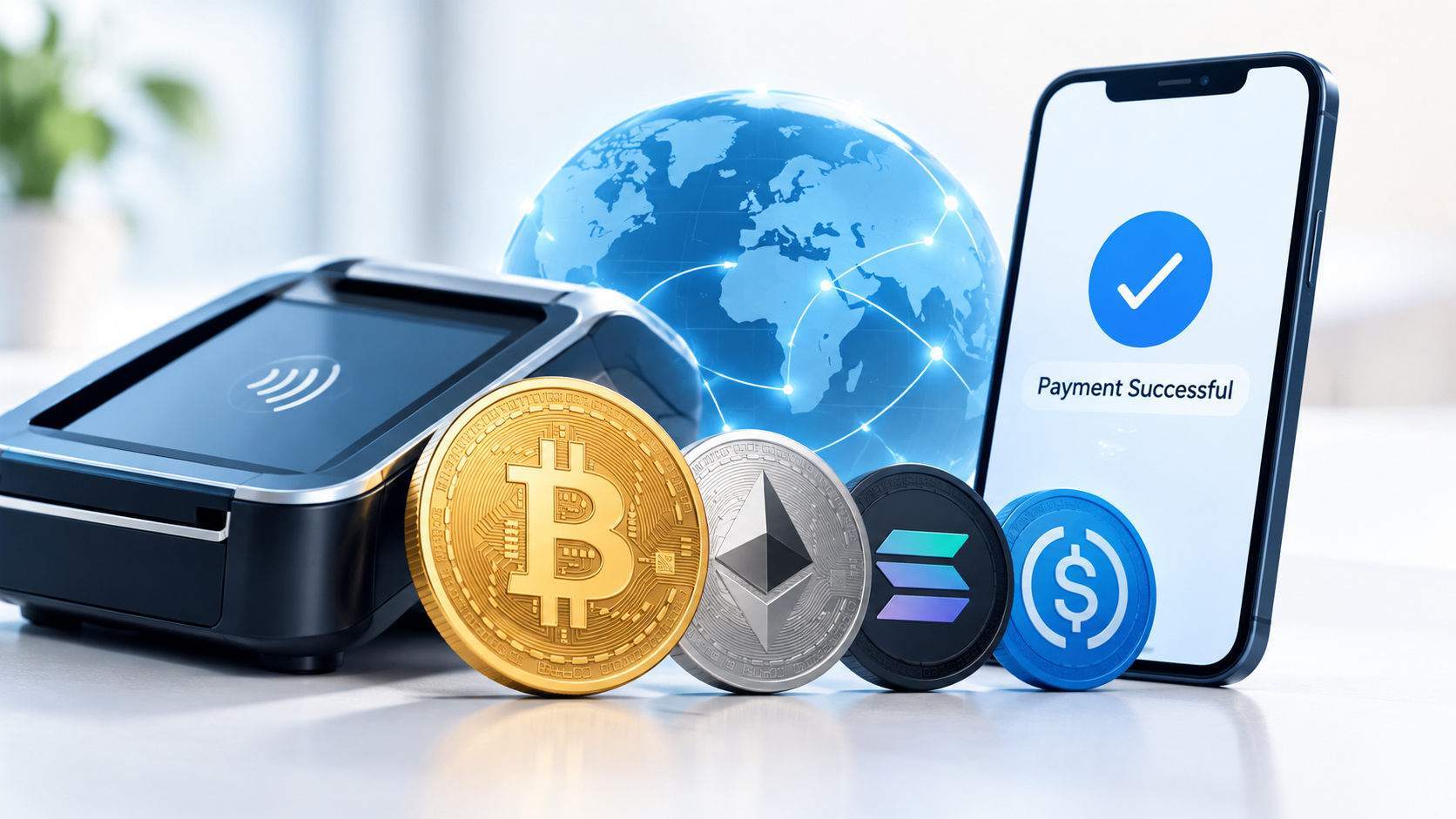
How Crypto Payment Providers Simplify Cross-Border Transactions

International business has become increasingly accessible as companies sell products and services to customers worldwide. However, cross-border payments can still involve high transaction fees, currency conversion costs, banking delays, and complicated payment procedures. These challenges can affect businesses of all sizes, particularly e-commerce stores, software companies, and digital service providers. Crypto payment providers ↗ offer an alternative by helping businesses accept cryptocurrency payments from international customers and manage digital transactions more efficiently.
What Are Crypto Payment Providers?
Crypto payment providers are companies that offer tools and services for accepting, processing, and managing cryptocurrency payments. Depending on the provider, supported digital assets may include Bitcoin, Ethereum, and stablecoins such as USDT and USDC.
These services connect cryptocurrency transactions with business payment systems. Merchants can generate payment requests, display QR codes, track transaction confirmations, and access payment records through a dashboard or integrated application programming interface (API).
Some providers also offer automatic cryptocurrency conversion, settlement in traditional currencies, and integrations with e-commerce platforms. These features can help businesses introduce digital currency payments without developing their own blockchain infrastructure.
Reducing Dependence on Traditional Banking Networks
Traditional international payments often pass through several financial institutions before reaching the recipient. Depending on the payment method and countries involved, this process can introduce intermediary fees, additional verification requirements, and delays.
Cryptocurrency transactions provide another way to transfer digital assets across borders. Businesses can receive payments through supported blockchain networks without relying entirely on traditional banking intermediaries for the cryptocurrency transfer itself.
For example, an online business selling software subscriptions to international customers could accept supported cryptocurrencies alongside credit cards and bank transfers. This additional payment option may make checkout more convenient for customers who already hold digital assets.
However, cryptocurrency payment availability depends on local laws, provider restrictions, and the customer's access to supported digital assets.
Potentially Faster International Payments
Payment speed is an important consideration for businesses serving global markets. Traditional bank transfers can take several business days, depending on the countries, financial institutions, and compliance checks involved.
Some blockchain transactions can be confirmed within minutes, although processing times vary by network, congestion, and transaction fees. Crypto payment providers can simplify the process by monitoring incoming payments and notifying merchants when transactions meet the required confirmation criteria.
Businesses should distinguish between blockchain confirmation and final settlement into a bank account. Converting cryptocurrency into fiat currency and withdrawing funds may require additional processing time.
Managing Cross-Border Payment Costs
International transactions can include processing fees, foreign exchange charges, intermediary banking costs, and withdrawal expenses. For companies handling numerous payments, these charges can gradually reduce profit margins.
Crypto payment providers offer different pricing structures that may suit particular business models. Some charge a percentage of each transaction, while others may include fixed fees or additional costs for conversion and withdrawals.
Blockchain network fees may also apply. Therefore, businesses should compare the total cost of receiving, converting, and settling payments rather than focusing only on the advertised processing fee.
A careful cost comparison helps merchants determine whether cryptocurrency payments offer a practical financial advantage over their existing payment methods.
Using Stablecoins to Manage Currency Volatility
Cryptocurrency price fluctuations can create uncertainty for merchants accepting digital assets. Bitcoin and Ethereum may change in value between the time a customer submits a payment and the time the business converts the funds.
Stablecoins such as USDT and USDC are designed to maintain a value linked to a reference asset, typically the US dollar. Depending on the provider, businesses may accept stablecoins and convert them into supported currencies or other assets.
This approach can help reduce exposure to the price volatility associated with many other cryptocurrencies. Nevertheless, stablecoins carry risks related to issuers, redemption, liquidity, regulation, and platform availability.
Expanding Access to International Customers
Offering cryptocurrency payments can help businesses reach customers who prefer digital assets or face limitations with certain conventional payment methods. This may be particularly useful for online retailers, software companies, digital creators, and businesses selling internationally.
Crypto payment providers can make this process more manageable by offering checkout integrations, payment instructions, transaction monitoring, and support for multiple digital currencies.
Providing several payment methods can improve flexibility, but cryptocurrency adoption varies across markets. Businesses should research customer preferences and applicable local regulations before introducing crypto payments.
Improving Payment Management Through Automation
Managing international payments manually can create administrative challenges. Payment notifications, transaction reconciliation, exchange-rate calculations, and accounting records all require time and attention.
Many crypto payment providers offer dashboards, APIs, transaction histories, and automated notifications to simplify these tasks. Some also support e-commerce plugins and invoicing tools that connect payments with existing business systems.
These integrations can reduce repetitive work and help businesses maintain more organized financial records. Merchants should confirm that the provider's tools are compatible with their website, accounting software, and settlement requirements.
Security and Compliance Considerations
Although blockchain technology provides transaction transparency, cryptocurrency payments still require careful security management. Confirmed transactions are generally difficult to reverse, so businesses should verify payment amounts and confirmation status before delivering goods or services.
Merchants should assess provider security practices, wallet custody arrangements, authentication features, transaction monitoring, and customer support. They should also establish clear refund policies and maintain accurate payment records.
Cross-border cryptocurrency regulations differ between jurisdictions. Depending on the business and location, tax reporting, consumer protection, sanctions screening, and other compliance obligations may apply.
Conclusion
Crypto payment providers can simplify cross-border transactions by offering alternative payment options, blockchain-based transfers, transaction monitoring, and integrations with business systems. Potential benefits include flexible international payments, alternative fee structures, and access to customers who prefer digital currencies.
However, transaction costs, settlement times, regulatory requirements, and security risks vary by provider and market. Businesses should compare available services carefully and evaluate their total costs before adopting a cryptocurrency payment solution. With the right approach, crypto payments can become a useful addition to a broader international payment strategy.
Web:- https://bitnxt.io/best-crypto-payment-gateways ↗
#cryptopaymentproviders