Articles

Articles & Insights

Discover, learn, and grow with stories from our ecosystem members.

search
what is an rfid device Tech & Innovation
Oct 14, 2026 • visibility 12 • 23 min read

what is an rfid device

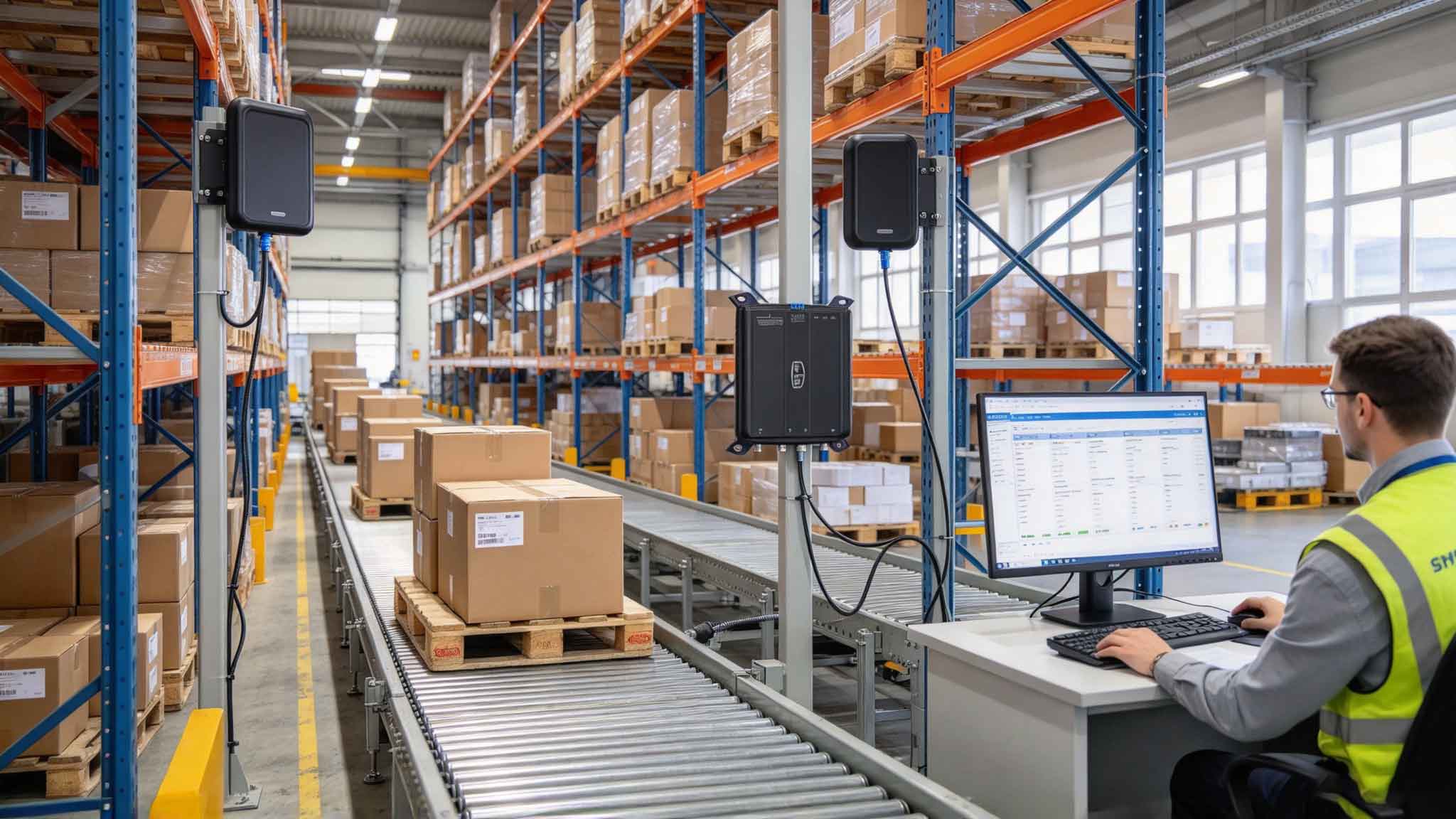
What is an rfid device? An RFID device is electronic hardware that uses radio-frequency communication to identify, read, and sometimes write RFID tags. In UHF RFID systems, the device normally works with passive tags, antennas, and software to capture item-level identification data without requiring direct line of sight.For business applications, the phrase RFID device usually refers to equipment such as a UHF RFID reader, handheld reader, fixed reader, desktop reader, or RFID reader module. The exact hardware depends on where the identification task takes place.GS1 identifies passive UHF RFID as RAIN RFID and states that these systems use the 860–930 MHz range and comply with GS1/EPC Gen2 and ISO/IEC 18000-63. GS1 also identifies fast asset identification, inventory, and tracking as major UHF RFID applications.What Is a UHF RFID Device Used For?A UHF RFID device is mainly used to identify tagged objects quickly within a defined RF reading area.Typical applications include:Warehouse inventoryAsset identificationLogistics and shipment handlingRetail item trackingApparel managementTool managementLibrary inventoryTextile and laundry managementProduction-line identificationTag registration and rewritingThe useful difference becomes obvious on the shop floor. A worker can move past a shelf of tagged items with a handheld UHF reader and collect several tag IDs without stopping to align a scanner with each individual label.GS1 notes that RAIN RFID does not require the same line-of-sight interaction as barcode scanning and can support rapid inventory collection.UHF RFID Device ComponentsUHF RFID ReaderThe reader is the active electronic component that communicates with the RFID tag.Depending on the application, it may be:Device typeTypical applicationFixed UHF RFID readerWarehouse portals, conveyors, production linesHandheld UHF readerShelf inventory, asset searching, field operationsDesktop RFID readerTag registration and controlled read/writeOEM RFID moduleEmbedded RFID equipment and customized systemsThe reader does not operate alone. In a conventional UHF installation, the reader, antenna, RFID tag, communication interface, and application software form one working system.UHF RFID TagThe passive UHF RFID tag contains an RFID chip and RFID antenna. The tag responds when it receives sufficient RF energy from the reader.The data structure can include an EPC and, depending on the tag and application, additional user memory. GS1 states that a typical RAIN RFID tag carries no more than about 8 KB of data, while simple license-plate style tags may use a 96-bit or 128-bit identifier.That distinction matters when specifying tags. Many inventory applications do not need large amounts of information stored directly on the tag. A unique identifier can be enough for the software to retrieve the detailed product record.How Does a UHF RFID Device Work?The operating sequence is straightforward:The UHF RFID reader generates an RF field.A compatible passive tag enters the reading area.The tag responds through backscatter communication.The reader receives the tag response.The reader processes the identification data.Software uses the data as an inventory, tracking, or identification event.GS1’s RAIN RFID architecture describes the reader as the equipment used to read and write tagged items, manage the resulting data, and trigger actions within a solution.The important point is that the RFID device does not magically “track” an object by itself. It creates an identification event. The application determines what that event means—received goods, an inventory count, a tool return, or another business transaction.Why UHF RFID Is Used for Fast IdentificationUHF RFID is particularly useful when many tagged objects must be identified within a short period.GS1 describes RAIN RFID as being designed for fast asset identification, inventory, and tracking, with read ranges that can reach up to 10 meters depending on the environment.That number should not be treated as a guaranteed operating distance.In an actual warehouse, tag orientation, antenna position, reader power, packaging, metal structures, liquids, RF interference, and tag density can change the result. In field testing, the shape of the reading zone is often more important than the maximum range printed on a specification sheet.A well-controlled 3-meter reading zone can be more useful than an uncontrolled 10-meter zone if the application needs to identify only the cartons passing through a doorway.A fixed UHF RFID device identifies tagged cartons as they pass through a controlled warehouse reading zone.UHF RFID Device and RFID StandardsUHF RFID equipment used for supply-chain applications commonly follows the GS1/EPC Gen2 ecosystem.GS1’s current EPC Gen2 standard identifies the UHF RFID air-interface technology as operating in the 860–960 MHz range, while regional implementations determine the actual permitted frequency and power conditions. GS1’s current standard page records Release 3.0.1 as ratified in February 2026.For equipment buyers, standards compatibility is therefore more useful than simply comparing a reader’s advertised read distance.A UHF RFID device should be evaluated according to:Supported RFID protocolRegional frequency requirementsReader output powerAntenna configurationTag compatibilityMulti-tag performanceCommunication interfaceSoftware and SDK supportRequired reading-zone sizeFor Cykeo applications, this is particularly relevant when a UHF RFID device is being integrated into an existing inventory, logistics, tool, textile, or asset-management workflow.What Is an RFID Device Used for in Real Applications?A UHF RFID device becomes useful when physical items need to be identified repeatedly without stopping the workflow.In a warehouse, for example, the reader can be installed beside a receiving or shipping passage. Tagged cartons pass through the defined RF zone, and the system records the tag IDs detected at that point.The same principle works on a smaller scale.A technician can carry a handheld UHF RFID reader along a tool shelf. A retailer can use a reader to count tagged apparel. A textile facility can identify reusable linen as it moves between processing stages.The hardware changes. The underlying task does not: turn a physical tagged object into machine-readable identification data.UHF RFID Device Types and Their Working EnvironmentsFixed UHF RFID DevicesFixed readers are permanently installed at a defined location.Typical deployments include:Warehouse entrances and exitsConveyor systemsProduction linesSorting stationsAsset checkpointsRetail back roomsA fixed installation gives the engineer more control over antenna direction, reader position, cable routing, and reading-zone boundaries.This is where installation experience matters. Moving an antenna only a small distance can change the shape of the RF field around a doorway or conveyor.Handheld UHF RFID DevicesHandheld devices put the reader in the operator’s hands.They are useful when the reading location changes frequently:Shelf inventoryWarehouse cycle countingAsset searchingTool inspectionRetail stock checkingField maintenanceA handheld reader also changes the operator’s workflow. Instead of bringing every item to a scanner, the operator brings the reader to the items.Desktop UHF RFID DevicesDesktop readers are designed for controlled workstations.They are particularly useful for:RFID tag registrationTag encodingTag rewritingLibrary registrationTool entryTextile registrationHere, long reading distance is not necessarily desirable.If an operator is writing one tag, detecting another tag several metres away could create a data-management problem. A defined near-field working area gives the operator much tighter control.UHF RFID Device Performance: What Should Be Measured?Read Rate Is More Useful Than Maximum DistanceA specification such as “10-meter read range” tells only part of the story.During a real deployment, I would pay closer attention to whether the reader consistently identifies the intended tags under actual operating conditions.Useful measurements include:Performance factorWhat to observeRead rateHow consistently tags are identifiedRead zoneWhere tags can actually be detectedMulti-tag performanceBehavior when many tags respond togetherWrite performanceWhether compatible tags are written reliablyRSSIRelative received signal strengthFilteringAbility to exclude unwanted tag dataStabilityPerformance during continuous operationThis is particularly important with UHF RFID because the RF environment is rarely perfectly clean.Metal shelving, liquid products, dense cartons, cable trays, machinery, and tag orientation can all affect the result.The reader should therefore be tested with the actual tag and actual product, not only with a loose sample tag on an open workbench.Why Anti-Collision Matters in a UHF RFID DeviceMulti-Tag Reading in Dense EnvironmentsUHF RFID is often selected because many tags can be identified without individually presenting each item to the reader.That creates another engineering requirement: the reader must manage multiple tag responses.An RFID reader uses anti-collision procedures to communicate with tags without treating simultaneous responses as one unreadable signal.This becomes particularly noticeable in:Packed cartonsClothing racksWarehouse shelvesTool cabinetsLibrary collectionsTextile bundlesCykeo’s UHF RFID platforms use anti-collision and filtering functions to support dense tag recognition.In practical testing, I would not judge the system only by the number of tags detected during one short scan. Repeating the test while changing tag orientation, spacing, product arrangement, and operator movement usually reveals much more.UHF RFID Device Output Power and Reading ZonesReader output power affects the RF field, but maximum power is not automatically the correct setting.A higher output can enlarge the operating area. It can also increase the possibility of detecting tags that are outside the intended process.For a warehouse portal, a broader reading zone may be useful.For a tag-writing workstation, it may be undesirable.Cykeo’s RFID reader products can provide adjustable RF output according to the product configuration. For example, the CYKEO-M4L OEM RFID module supports output adjustment up to 33 dBm, with 1 dBm adjustment steps.That kind of control is valuable during commissioning because engineers can tune the system around the physical reading requirement rather than simply operating at maximum output.How RFID Device Software Fits Into the SystemReader Data Is Only the BeginningAn RFID reader produces identification data. The application decides what happens next.A typical UHF RFID system may look like:RFID tag → antenna → reader → communication interface → application → databaseThe application might turn a tag ID into:Product informationAsset informationInventory quantityReceiving eventShipping eventTool-borrowing recordTextile circulation recordFor custom development, the communication method and software tools deserve attention before hardware is finalized.Cykeo’s RFID development ecosystem includes SDK/API resources for supported products, while its desktop RFID platform provides C# and Java development materials for integration.That matters when the reader needs to become part of an existing business application rather than operate as an isolated demonstration device.How to Select a UHF RFID DeviceBefore choosing a reader, document the physical workflow.1. Define the Reading AreaIs the reader operating over:A desk?A shelf?A doorway?A conveyor?A production station?An open warehouse?The answer immediately narrows the hardware options.2. Define Tag DensityReading one tag is fundamentally different from reading 50, 100, or several hundred tags in close proximity.3. Test the Actual ProductDo not test only an RFID inlay on a clean table.Test the finished carton, garment, tool, container, or textile.4. Check Regional RequirementsUHF RFID operating conditions vary by region. Frequency and permitted power must match the target market.5. Check Communication and IntegrationUSB, RS-232, Ethernet, APIs, SDKs, and software documentation can all influence how quickly the device becomes part of a working system.6. Define Read and Write RequirementsIf tags only need to be identified, read-only operation may be sufficient.If tags must be initialized or rewritten, reader write capability, tag memory, permissions, and software support must be considered together.A desktop UHF RFID device provides a controlled reading and writing area for RFID tag registration.Common UHF RFID Device Questions1. What is an RFID device?An RFID device is hardware used to communicate with RFID tags and process their identification data. In UHF applications, it commonly refers to a fixed reader, handheld reader, desktop reader, or embedded RFID module.2. What is a UHF RFID device used for?A UHF RFID device is used for fast identification of RFID-tagged objects. Common applications include inventory, logistics, asset management, retail, textile management, tool tracking, library systems, and production operations.3. Can a UHF RFID device read multiple tags?Yes. UHF RFID readers are designed to identify multiple compatible tags within their operating zone. Anti-collision processing allows the reader to manage multiple tag responses.4. How far can a UHF RFID device read?The distance varies according to reader power, antenna configuration, tag characteristics, orientation, materials, RF interference, and regional operating requirements. GS1 notes that RAIN RFID can reach up to 10 meters depending on the environment, but actual deployment distance must be tested.5. Can a UHF RFID device write to tags?Some UHF RFID devices support both reading and writing. The reader, tag, memory configuration, protocol, permissions, and application software must all support the required operation.6. Does UHF RFID require line of sight?No. UHF RFID does not require the direct optical line of sight used by barcode scanning. However, materials, tag orientation, metal, liquids, and the RF environment can strongly affect communication.7. Is a UHF RFID reader the same as an RFID tag?No. The reader is the electronic device that communicates with the tag. The RFID tag is attached to the physical object and responds to the reader’s RF communication. They perform different roles within the RFID system.What Is an RFID Device? The Practical AnswerAn RFID device is the hardware layer that allows an RFID system to identify tagged objects through radio-frequency communication.For UHF RFID, that hardware can be a fixed reader, handheld reader, desktop reader, or embedded module. The correct choice depends on the physical process—not simply on the reader’s maximum range or output power.A warehouse may need a fixed reader and carefully positioned antennas. A technician counting shelf inventory may need a handheld device. A label administrator may need a desktop UHF RFID device with a tightly controlled read/write area.That distinction is where RFID projects move from a specification sheet to a working system.What is an RFID device? In practical UHF RFID applications, it is the hardware that connects physical tagged objects with usable digital identification data, allowing businesses to collect inventory, asset, logistics, registration, and tracking information more efficiently.

18650 Battery Series and Parallel: Understanding S and P Configurations Tech & Innovation
Oct 14, 2026 • visibility 12 • 22 min read

18650 Battery Series and Parallel: Understanding S and P Configurations

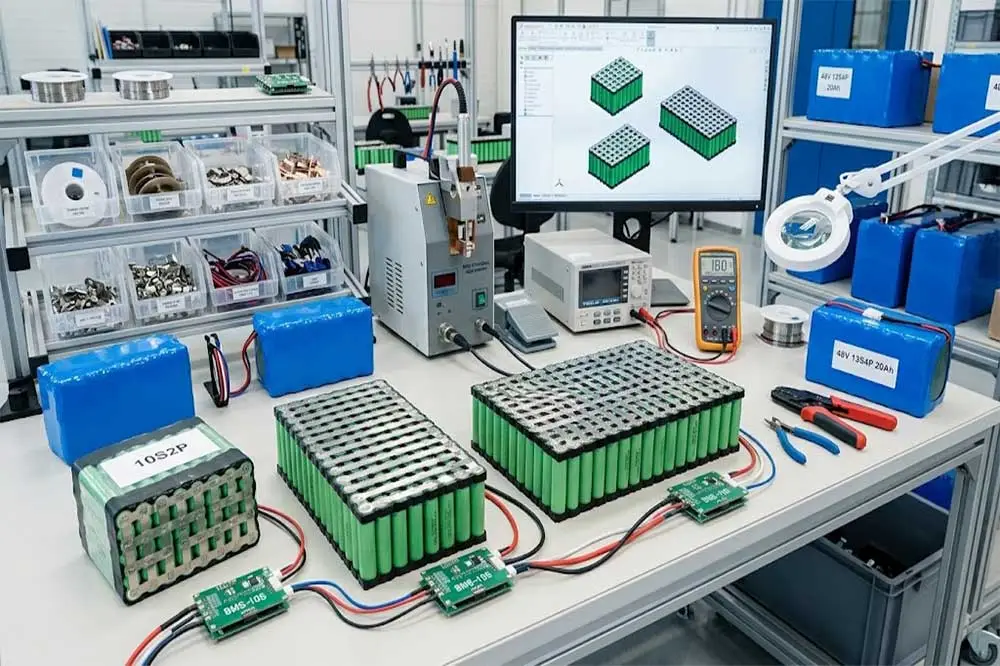
When several 18650 cells are combined into one battery pack, the cells can be connected in series, parallel, or a combination of both.This is where terms such as 10S2P, 10S4P, and 13S4P come from.The basic idea is simple. Series connections increase voltage, while parallel connections increase capacity and help distribute the load across more cells. A battery pack can then combine both methods to reach the voltage, capacity, and current required by the application.For anyone designing or sourcing a custom 18650 battery pack, understanding S and P configurations is one of the most useful starting points.What Do S and P Mean on 18650 Battery Pack?The letters are straightforward:S = SeriesP = ParallelThe number before S tells you how many cells or parallel groups are connected in series.The number before P tells you how many cells are connected in parallel within each group.For example:10S2Pmeans 10 series groups, with 2 cells in parallel in each group.The total number of cells is:10 × 2 = 20 cellsA 13S4P pack contains:13 × 4 = 52 cellsThe S/P notation therefore gives engineers a quick way to describe the basic structure of a battery pack.What Happens When 18650 Cells Are Connected in Series?A series connection adds the voltage of the cells.Suppose one 18650 cell has a nominal voltage of 3.6V.Two cells in series provide approximately:3.6V × 2 = 7.2VTen cells in series provide:3.6V × 10 = 36VThirteen cells provide:3.6V × 13 = 46.8VThe same principle applies to the maximum charging voltage.If the cell’s specified maximum charging voltage is 4.2V, a 10S configuration reaches:4.2V × 10 = 42VA 13S configuration reaches:4.2V × 13 = 54.6VThis is why the series count must match the charger, BMS, and equipment.For a more detailed explanation of nominal and full-charge voltage, see [18650 Battery Voltage: 3.6V vs 3.7V and 4.2V Explained].What Happens When 18650 Cells Are Connected in Parallel?Parallel connections work mainly with capacity and current sharing.Suppose one cell has a capacity of 3000mAh.Two cells in parallel provide approximately:3000mAh × 2 = 6000mAhFour cells provide:3000mAh × 4 = 12000mAhThe voltage remains approximately the same as one cell.So a 1P group made from a 3.6V 3000mAh cell is approximately:3.6V / 3AhA 4P group is approximately:3.6V / 12AhThe voltage has not become 14.4V. The capacity has increased instead.This difference between series and parallel is the key concept behind most multi-cell battery packs.Series vs Parallel at a GlanceConnectionMain EffectVoltageCapacity1S1PSingle cellCell voltageCell capacitySeriesIncreases voltageHigherEssentially unchangedParallelIncreases capacityEssentially unchangedHigherSeries + ParallelAdjusts bothHigherHigherThis simple table explains why most practical 18650 packs use both S and P.A battery for a low-voltage device may require only a few cells, while an e-bike or industrial battery may use dozens of cells in a larger S/P arrangement.How Does 10S4P Battery Pack Work?10S4P is a useful example because it shows both connections at the same time.Imagine four 18650 cells connected in parallel.That creates one 4P group.Now create ten identical groups and connect those groups in series.The result is:10S4PUsing 3.6V, 3000mAh cells:Nominal voltage: 36VCapacity: 12AhTotal cells: 40The physical cell count is:10 × 4 = 40 cellsThe 10 series groups determine the voltage.The four cells in each group determine the capacity and help share the load.How Does a 13S4P Battery Pack Work?A 13S4P battery uses the same basic idea but has more series groups.Using 3.6V, 3000mAh cells:13 × 3.6V = 46.8V nominalAnd:4 × 3Ah = 12AhThe total cell count is:13 × 4 = 52 cellsSo the simplified configuration is:13S4P / 46.8V / 12Ah / 52 cellsThis is a common type of configuration for a 48V-class lithium-ion battery.The commercial label may say “48V,” while the detailed engineering specification uses the actual nominal voltage and maximum charging voltage.Why Not Simply Connect More Cells in Series?Adding more cells in series increases voltage.That sounds useful, but it also changes the requirements for the entire battery system.A higher series count can require:A different BMSA different chargerMore cell voltage monitoringDifferent insulation requirementsDifferent equipment voltage compatibilityMore attention to cell balancingThe series count should therefore be selected from the requirements of the equipment rather than simply adding cells to obtain a higher voltage.Why Add More Cells in Parallel?There are two common reasons.The first is higher capacity.If one cell provides 3Ah, four cells in parallel provide approximately 12Ah.The second is load sharing.A larger parallel group can distribute current across more cells. This can be important for applications with higher continuous or peak current demands.However, the actual current capability of the pack depends on the cell’s specifications, temperature, BMS, connections, thermal design, and other factors.The P count should not be selected from a simple current multiplication alone.For more information, see [18650 Battery Discharge Current: What Buyers Should Check].How S/P Configuration Affects Battery CapacityThe basic capacity relationship is:Pack Capacity ≈ Cell Capacity × PThe series count does not directly multiply the Ah rating.For example, using 3000mAh cells:10S1P = 3Ah10S2P = 6Ah10S3P = 9Ah10S4P = 12AhThe voltage changes with the S count, while the capacity changes with the P count.This is why a 10S4P pack and a 13S4P pack can both have 12Ah when they use the same 3000mAh cells, even though their voltage is different.How S/P Configuration Affects EnergyBattery energy is approximately:Energy (Wh) = Nominal Voltage × Capacity (Ah)For a 10S4P pack using 3000mAh cells:36V × 12Ah = 432WhFor a 13S4P pack:46.8V × 12Ah = 561.6WhBoth packs have the same nominal capacity of 12Ah.The 13S4P pack contains more energy because its nominal voltage is higher.This is an important distinction when comparing battery specifications. Looking only at Ah can give an incomplete picture.For a detailed explanation, see [How Much Energy Does an 18650 Battery Hold? A Simple Wh Guide].Common 18650 S/P ConfigurationsHere are some simplified examples using 3.6V, 3000mAh cells:ConfigurationNominal VoltageCapacityTotal Cells5S2P18V6Ah107S2P25.2V6Ah1410S2P36V6Ah2010S4P36V12Ah4013S2P46.8V6Ah2613S4P46.8V12Ah5213S6P46.8V18Ah7814S4P50.4V12Ah56These numbers are simplified examples.The actual battery design needs to consider the selected cell, operating current, charger, BMS and mechanical layout.10S2P vs 10S4P: What Is the Difference?Both configurations have the same series count.Therefore, assuming the same cells, they have approximately the same nominal voltage.The difference is the parallel count.10S2PUsing 3000mAh cells:36V nominal6Ah20 cells10S4PUsing the same cells:36V nominal12Ah40 cellsThe 10S4P battery has twice the capacity and twice the number of cells.It will also normally be larger and heavier.This is a simple example of how the P count changes the physical size of a battery.13S2P vs 13S4PThe same comparison can be made with a 48V-class battery.13S2P26 cellsApproximately:46.8V / 6Ah13S4P52 cellsApproximately:46.8V / 12AhAgain, the voltage remains approximately the same because the S count has not changed.The capacity doubles because the P count doubles.Does More P Always Mean a Better Battery?No.A larger parallel count can increase capacity and help distribute current, but it also increases:Cell countPack sizeWeightCostAssembly workConnection pointsPotential thermal loadThe right P count is therefore a balance between the electrical requirements and the physical limitations of the product.A battery manufacturer may recommend a different cell capacity or configuration if the enclosure is too small for the initial design.Does a Higher-Capacity Cell Reduce the Cell Count?It can.Suppose a battery requires approximately 12Ah.Using 3000mAh cells:12Ah ÷ 3Ah = 4PSo the pack needs 4 cells in parallel.Using 3500mAh cells:12Ah ÷ 3.5Ah ≈ 3.43PA practical design would need a suitable whole-number parallel configuration, such as 4P, giving approximately 14Ah.Alternatively, another cell specification or pack architecture may be considered depending on the project.This is why selecting the cell and selecting the S/P configuration are closely related decisions.See [Standard 18650 Battery Capacity: 2000mAh, 2600mAh, 3000mAh or 3500mAh?] for a comparison of common cell capacities.High Capacity vs High Discharge CellsAn OEM battery designer also needs to consider how the battery will be used.A cell with high capacity may be attractive for applications where long runtime is the main requirement.A high-discharge cell may be more appropriate when the equipment regularly demands high current.The choice can affect the required P count.For example, a high-current application may need more cells in parallel even if the capacity target is relatively modest.That is why the S/P configuration should be designed together with the cell specification rather than selected independently.See [High Capacity vs High Discharge 18650 Batteries] for a more detailed comparison.Cell Matching Is Important in S/P PacksA battery pack may contain 20, 40, 52, 60 or more cells.Those cells should not simply be selected at random.For production packs, manufacturers may check:CapacityInternal resistanceVoltageAppearanceBatch consistencySelf-discharge characteristicsMatching helps reduce differences between cells used in the same battery pack.This becomes particularly important when the pack contains many series groups.How Does the BMS Relate to S/P Configuration?The BMS must match the battery architecture.A 10S battery requires a BMS designed for a 10-series configuration.A 13S battery requires a corresponding 13-series BMS.The BMS may monitor individual series groups and provide functions such as:Overcharge protectionOver-discharge protectionOver-current protectionShort-circuit protectionCell balancingTemperature monitoringThe parallel count also affects the current requirements of the BMS and the rest of the electrical system.For an OEM project, it is better to select the BMS as part of the complete battery design rather than adding it after the cell arrangement has already been fixed.Mechanical Layout Matters TooA 13S4P battery contains 52 cells.But 52 cells can be arranged in different physical layouts.The designer may need to work around:A long and narrow enclosureA compact rectangular housingA curved battery compartmentA mounting bracketA fixed connector positionLimited cooling spaceThis means there is not always one universal physical layout for a particular S/P configuration.The electrical configuration may stay the same while the physical arrangement changes.For more information about the cell format itself, see [18650 Battery Dimensions: What Does 18650 Really Mean?].Series and Parallel Connections Need Consistent CellsThe cells used in a pack should be appropriate for the same application and configuration.Mixing cells with different capacities, ages, chemistries or electrical characteristics can create design and performance problems.For OEM production, it is better to establish the cell specification before assembly and maintain consistency between production batches.This is particularly important for large-volume battery projects where the same S/P configuration may be manufactured repeatedly.How Many Cells Does a Battery Pack Need?Once the S and P configuration is known, the physical cell count is straightforward:Total Cells = S × PFor example:10S2P10 × 2 = 20 cells10S4P10 × 4 = 40 cells13S4P13 × 4 = 52 cells13S6P13 × 6 = 78 cellsThis calculation is simple.Choosing the correct S/P configuration is the more important engineering decision.For a complete step-by-step calculation, see [How Many 18650 Cells Do You Need for Battery Pack?].S/P Configuration for OEM Battery PacksFor a custom battery project, the manufacturer normally needs more information than just “10S4P.”A useful OEM specification can include:Battery voltage:Nominal and maximum voltage.Capacity:Required Ah.Continuous current:Normal operating current.Peak current:Maximum current and duration.Cell type:18650 and preferred cell characteristics.Dimensions:Maximum battery length, width and height.BMS:Required series count and current rating.Connector:Connector model and cable requirements.Charger:Output voltage and current.Application:E-bike, power tool, industrial equipment, portable electronics, etc.Quantity:Prototype quantity and expected production volume.This information allows the supplier to evaluate whether the proposed S/P configuration is practical.Common S/P Configuration MistakesMistake 1: Thinking S and P mean the same thingThey do not.S mainly affects voltage. P mainly affects capacity and current sharing.Mistake 2: Choosing P only from the capacityCurrent demand may require a different parallel configuration.Mistake 3: Ignoring the chargerThe charger must match the battery’s actual maximum charging voltage.Mistake 4: Forgetting the BMSThe BMS must match the series configuration and electrical requirements.Mistake 5: Ignoring the enclosureMore parallel cells usually mean more physical volume and weight.Mistake 6: Mixing unsuitable cellsCells should be appropriately matched for the battery configuration and production requirements.A Simple Way to Think About S/PIf the terminology still seems confusing, remember it this way:S controls voltage.P controls capacity.S × P gives the number of cells.For example:13S4Pmeans:13 series groups4 cells per group52 cells totalUsing 3.6V, 3000mAh cells, the simplified result is:46.8V / 12Ah / 52 cellsThat is the basic logic behind many 18650 battery pack configurations.ConclusionSeries and parallel connections are the foundation of multi-cell 18650 battery pack design.A series connection increases voltage, while a parallel connection increases capacity and helps distribute current across more cells.The two are combined to create configurations such as 10S2P, 10S4P, 13S4P and 13S6P.The right configuration depends on more than the desired voltage. Cell capacity, discharge current, energy requirements, BMS, charger, dimensions, thermal conditions and the application all need to be considered.For OEM battery projects, understanding S/P terminology makes it much easier to discuss specifications with a battery manufacturer and evaluate whether a proposed 18650 pack configuration fits the actual product requirements.

Extract Brands Use Competitor Intelligence for Data Insights Tech & Innovation
Oct 13, 2026 • visibility 17 • 13 min read

Extract Brands Use Competitor Intelligence for Data Insights

IntroductionBrands increasingly rely on structured market information to understand competitor movements, pricing changes, customer preferences, and emerging opportunities. Extract Brands Use Competitor Intelligence for Data Insights helps organizations organize competitive signals into actionable information for stronger positioning. Effective Competitive Intelligence also supports better decisions across pricing, assortment, promotions, and customer acquisition strategies.Competitor data provides valuable visibility into product launches, promotional campaigns, ratings, availability, and positioning across digital marketplaces. When these signals are collected consistently, brands can compare their performance against competitors and identify areas requiring immediate attention. This approach supports more informed planning while reducing dependence on fragmented manual research.Consistent data collection can also help businesses recognize market gaps before they become significant challenges. By comparing competitor activity across multiple channels, teams can identify pricing opportunities, improve product offerings, and refine promotional strategies. Structured insights make it easier to measure performance changes and allocate resources toward activities that support measurable market-share growth.Transforming Competitor Signals Into Actionable Growth StrategiesBrands need consistent competitor information to understand how pricing, product availability, assortment, and promotions influence purchasing decisions. Instead of reviewing isolated competitor updates manually, organizations can collect information continuously and organize it into comparable datasets. This creates a stronger foundation for evaluating market movements and identifying areas where their own offerings may require adjustment.A structured approach also allows teams to compare several competitors using consistent fields, making recurring analysis more reliable and reducing gaps caused by inconsistent research methods. Automated collection becomes particularly valuable when competitive conditions change rapidly. A Web Scraping API can help businesses gather relevant product, pricing, availability, and promotional information from multiple digital sources in a structured format.Teams can then feed this information into internal dashboards or analytical systems. This makes recurring monitoring easier and gives decision-makers access to comparable information without depending entirely on manual collection. The resulting workflow can support faster evaluations of competitive positioning and category-level changes.Key areas businesses can monitor include:Competitor product pricing and discountsProduct availability across digital channelsChanges in assortment and category coveragePromotional activity and campaign frequencyProduct launches and catalog modificationsRecurring competitive movement patternsPricing — Strategic Purpose: Positioning evaluation.Availability — Strategic Purpose: Supply monitoring.Promotions — Strategic Purpose: Campaign comparison.Assortment — Strategic Purpose: Catalog planning.Another important advantage comes from connecting current competitor information with historical records. Real-Time Brands Use Competitor Intelligence to Increase Market Value can help businesses assess how quickly competitors modify prices, launch products, change promotions, or adjust availability. These observations allow teams to distinguish temporary changes from sustained market movements and develop strategies based on measurable competitive behavior rather than isolated observations.Strengthening Competitive Positioning Through Customer SignalsCustomer feedback adds an important dimension to competitor analysis because purchasing decisions are influenced by experiences as well as price and availability. Ratings, written reviews, review frequency, and recurring complaints can reveal how customers perceive competing products. When businesses organize these signals alongside product information, they can identify areas where competitors receive positive responses and categories where customers repeatedly report problems.Customer Reviews Data Scraping can help businesses systematically collect publicly available review-related information for structured comparison. Instead of examining individual review pages manually, teams can organize ratings, review counts, recurring themes, and product-level feedback into datasets. This makes it easier to compare customer sentiment across competing products and identify patterns that may influence future product development, service improvements, or positioning decisions.Competitive analysis becomes more useful when customer signals are connected with broader business information. Brands Use Competitive Intelligence API for Data Insights can support analytical workflows by connecting structured competitor information with dashboards, reporting systems, or other business applications. This enables teams to examine customer feedback alongside pricing, availability, assortment, and promotional activity.Important customer-focused monitoring areas include:Product ratings and review volumesRecurring customer complaintsFrequently mentioned product attributesPositive customer experience patternsChanges in review sentimentCompetitor product strengths and weaknessesRatings — Business Application: Quality comparison.Review Volume — Business Application: Demand assessment.Complaints — Business Application: Improvement planning.Positive Feedback — Business Application: Strength identification.Businesses can use these insights to prioritize improvements rather than responding to individual comments in isolation. Repeated complaints may highlight product or service weaknesses, while consistently positive feedback can indicate features worth studying. Combining customer signals with competitor performance data also helps teams establish clearer priorities and identify changes that could strengthen their own market positioning.Converting Market Comparisons Into Measurable Share GrowthCompetitive information becomes more useful when businesses connect external market activity with measurable commercial objectives. Companies can compare competitor pricing, product coverage, promotional frequency, availability, and customer response to understand where their own market position differs. This comparison creates a practical foundation for identifying opportunities within categories where competitors have stronger visibility, broader assortments, or more attractive offers.Market Research becomes more effective when supported by continuously collected competitor information rather than occasional snapshots. A Web Data Scraper for Brand Competitor Research can help businesses organize information from relevant digital sources and maintain structured records for recurring analysis. With consistent datasets, teams can compare historical and current competitor activity, evaluate category changes, and identify patterns that may influence demand or purchasing behavior.Businesses can also use Scrape Competitor Data for Market Share Analysis when they need to evaluate competitive positioning across specific products or categories. Structured competitor records can help teams identify pricing differences, catalog gaps, product availability patterns, and promotional intensity. When these signals are compared with internal sales or performance data, organizations can better understand where competitive pressure is increasing and where additional commercial opportunities may exist.Businesses can focus on several measurable areas:Category-level competitive positioningProduct and assortment coverageRelative pricing and promotional activityCompetitor availability patternsMarket movement across product categoriesChanges in competitive intensityMarket Share — Business Application: Positioning evaluation.Price Difference — Business Application: Pricing review.Category Coverage — Business Application: Assortment planning.Promotional Frequency — Business Application: Campaign assessment.The resulting analysis can support several strategic decisions, including assortment expansion, pricing adjustments, promotional planning, and category prioritization. This creates a continuous feedback cycle where market changes are monitored, analyzed, and translated into practical actions that support stronger positioning and potential share growth.How Datazivot Can Help You?We help businesses organize competitive information into structured datasets designed for practical analysis. By using Extract Brands Use Competitor Intelligence for Data Insights, organizations can evaluate competitor pricing, product availability, assortment changes, customer feedback, and promotional activity across relevant digital sources.The approach can support businesses operating across ecommerce, retail, travel, food delivery, real estate, entertainment, and other data-intensive markets. Information can be collected from relevant digital sources, cleaned, standardized, and prepared according to specific analytical requirements.Datazivot can support organizations with:Automated collection from relevant online sourcesStructured competitor product and pricing datasetsRecurring monitoring of market changesProduct, rating, and review informationData cleaning and standardizationFlexible data delivery for analytical workflowsWith structured data available for recurring analysis, teams can compare competitors more efficiently and identify important changes across their target markets. Datazivot can also support Brands Use Competitive Intelligence API for Data Insights by providing organized competitive information that fits analytical and reporting workflows.ConclusionBrands require consistent and structured information to understand changing competitive conditions and identify areas for improvement. Extract Brands Use Competitor Intelligence for Data Insights can help businesses evaluate pricing, product availability, customer feedback, assortment, and promotional activity through organized datasets. When these insights are reviewed regularly, teams can make more informed decisions and identify opportunities for stronger positioning across competitive categories.Continuous market monitoring can also improve how businesses respond to emerging changes. Real-Time Brands Use Competitor Intelligence to Increase Market Value supports ongoing evaluation of competitor movements and commercial signals, helping teams connect external market activity with internal performance objectives. Contact Datazivot today to build reliable competitor data solutions for stronger market intelligence, strategic planning, and sustainable market-share growth.#ExtractBrandsUseCompetitorIntelligenceForDataInsights,#RealTimeBrandsUseCompetitorIntelligenceToIncreaseMarketValue,#BrandsUseCompetitiveIntelligenceAPIForDataInsights,#WebDataScraperForBrandCompetitorResearch,Source: https://www.datazivot.com/extract-brands-use-competitor-intelligence-for-data-insights.phpContact us:E-mail: [email protected] No: +91 8866656657Visit Now: https://www.datazivot.com/

Melissa Melissa Torres
Read arrow_forward
Extract Brands Use Competitor Intelligence for Data Insights Tech & Innovation
Oct 13, 2026 • visibility 19 • 13 min read

Extract Brands Use Competitor Intelligence for Data Insights

IntroductionBrands increasingly rely on structured market information to understand competitor movements, pricing changes, customer preferences, and emerging opportunities. Extract Brands Use Competitor Intelligence for Data Insights helps organizations organize competitive signals into actionable information for stronger positioning. Effective Competitive Intelligence also supports better decisions across pricing, assortment, promotions, and customer acquisition strategies.Competitor data provides valuable visibility into product launches, promotional campaigns, ratings, availability, and positioning across digital marketplaces. When these signals are collected consistently, brands can compare their performance against competitors and identify areas requiring immediate attention. This approach supports more informed planning while reducing dependence on fragmented manual research.Consistent data collection can also help businesses recognize market gaps before they become significant challenges. By comparing competitor activity across multiple channels, teams can identify pricing opportunities, improve product offerings, and refine promotional strategies. Structured insights make it easier to measure performance changes and allocate resources toward activities that support measurable market-share growth.Transforming Competitor Signals Into Actionable Growth StrategiesBrands need consistent competitor information to understand how pricing, product availability, assortment, and promotions influence purchasing decisions. Instead of reviewing isolated competitor updates manually, organizations can collect information continuously and organize it into comparable datasets. This creates a stronger foundation for evaluating market movements and identifying areas where their own offerings may require adjustment.A structured approach also allows teams to compare several competitors using consistent fields, making recurring analysis more reliable and reducing gaps caused by inconsistent research methods. Automated collection becomes particularly valuable when competitive conditions change rapidly. A Web Scraping API can help businesses gather relevant product, pricing, availability, and promotional information from multiple digital sources in a structured format.Teams can then feed this information into internal dashboards or analytical systems. This makes recurring monitoring easier and gives decision-makers access to comparable information without depending entirely on manual collection. The resulting workflow can support faster evaluations of competitive positioning and category-level changes.Key areas businesses can monitor include:Competitor product pricing and discountsProduct availability across digital channelsChanges in assortment and category coveragePromotional activity and campaign frequencyProduct launches and catalog modificationsRecurring competitive movement patternsPricing — Strategic Purpose: Positioning evaluation.Availability — Strategic Purpose: Supply monitoring.Promotions — Strategic Purpose: Campaign comparison.Assortment — Strategic Purpose: Catalog planning.Another important advantage comes from connecting current competitor information with historical records. Real-Time Brands Use Competitor Intelligence to Increase Market Value can help businesses assess how quickly competitors modify prices, launch products, change promotions, or adjust availability. These observations allow teams to distinguish temporary changes from sustained market movements and develop strategies based on measurable competitive behavior rather than isolated observations.Strengthening Competitive Positioning Through Customer SignalsCustomer feedback adds an important dimension to competitor analysis because purchasing decisions are influenced by experiences as well as price and availability. Ratings, written reviews, review frequency, and recurring complaints can reveal how customers perceive competing products. When businesses organize these signals alongside product information, they can identify areas where competitors receive positive responses and categories where customers repeatedly report problems.Customer Reviews Data Scraping can help businesses systematically collect publicly available review-related information for structured comparison. Instead of examining individual review pages manually, teams can organize ratings, review counts, recurring themes, and product-level feedback into datasets. This makes it easier to compare customer sentiment across competing products and identify patterns that may influence future product development, service improvements, or positioning decisions.Competitive analysis becomes more useful when customer signals are connected with broader business information. Brands Use Competitive Intelligence API for Data Insights can support analytical workflows by connecting structured competitor information with dashboards, reporting systems, or other business applications. This enables teams to examine customer feedback alongside pricing, availability, assortment, and promotional activity.Important customer-focused monitoring areas include:Product ratings and review volumesRecurring customer complaintsFrequently mentioned product attributesPositive customer experience patternsChanges in review sentimentCompetitor product strengths and weaknessesRatings — Business Application: Quality comparison.Review Volume — Business Application: Demand assessment.Complaints — Business Application: Improvement planning.Positive Feedback — Business Application: Strength identification.Businesses can use these insights to prioritize improvements rather than responding to individual comments in isolation. Repeated complaints may highlight product or service weaknesses, while consistently positive feedback can indicate features worth studying. Combining customer signals with competitor performance data also helps teams establish clearer priorities and identify changes that could strengthen their own market positioning.Converting Market Comparisons Into Measurable Share GrowthCompetitive information becomes more useful when businesses connect external market activity with measurable commercial objectives. Companies can compare competitor pricing, product coverage, promotional frequency, availability, and customer response to understand where their own market position differs. This comparison creates a practical foundation for identifying opportunities within categories where competitors have stronger visibility, broader assortments, or more attractive offers.Market Research becomes more effective when supported by continuously collected competitor information rather than occasional snapshots. A Web Data Scraper for Brand Competitor Research can help businesses organize information from relevant digital sources and maintain structured records for recurring analysis. With consistent datasets, teams can compare historical and current competitor activity, evaluate category changes, and identify patterns that may influence demand or purchasing behavior.Businesses can also use Scrape Competitor Data for Market Share Analysis when they need to evaluate competitive positioning across specific products or categories. Structured competitor records can help teams identify pricing differences, catalog gaps, product availability patterns, and promotional intensity. When these signals are compared with internal sales or performance data, organizations can better understand where competitive pressure is increasing and where additional commercial opportunities may exist.Businesses can focus on several measurable areas:Category-level competitive positioningProduct and assortment coverageRelative pricing and promotional activityCompetitor availability patternsMarket movement across product categoriesChanges in competitive intensityMarket Share — Business Application: Positioning evaluation.Price Difference — Business Application: Pricing review.Category Coverage — Business Application: Assortment planning.Promotional Frequency — Business Application: Campaign assessment.The resulting analysis can support several strategic decisions, including assortment expansion, pricing adjustments, promotional planning, and category prioritization. This creates a continuous feedback cycle where market changes are monitored, analyzed, and translated into practical actions that support stronger positioning and potential share growth.How Datazivot Can Help You?We help businesses organize competitive information into structured datasets designed for practical analysis. By using Extract Brands Use Competitor Intelligence for Data Insights, organizations can evaluate competitor pricing, product availability, assortment changes, customer feedback, and promotional activity across relevant digital sources.The approach can support businesses operating across ecommerce, retail, travel, food delivery, real estate, entertainment, and other data-intensive markets. Information can be collected from relevant digital sources, cleaned, standardized, and prepared according to specific analytical requirements.Datazivot can support organizations with:Automated collection from relevant online sourcesStructured competitor product and pricing datasetsRecurring monitoring of market changesProduct, rating, and review informationData cleaning and standardizationFlexible data delivery for analytical workflowsWith structured data available for recurring analysis, teams can compare competitors more efficiently and identify important changes across their target markets. Datazivot can also support Brands Use Competitive Intelligence API for Data Insights by providing organized competitive information that fits analytical and reporting workflows.ConclusionBrands require consistent and structured information to understand changing competitive conditions and identify areas for improvement. Extract Brands Use Competitor Intelligence for Data Insights can help businesses evaluate pricing, product availability, customer feedback, assortment, and promotional activity through organized datasets. When these insights are reviewed regularly, teams can make more informed decisions and identify opportunities for stronger positioning across competitive categories.Continuous market monitoring can also improve how businesses respond to emerging changes. Real-Time Brands Use Competitor Intelligence to Increase Market Value supports ongoing evaluation of competitor movements and commercial signals, helping teams connect external market activity with internal performance objectives. Contact Datazivot today to build reliable competitor data solutions for stronger market intelligence, strategic planning, and sustainable market-share growth.#ExtractBrandsUseCompetitorIntelligenceForDataInsights,#RealTimeBrandsUseCompetitorIntelligenceToIncreaseMarketValue,#BrandsUseCompetitiveIntelligenceAPIForDataInsights,#WebDataScraperForBrandCompetitorResearch,Source: https://www.datazivot.com/extract-brands-use-competitor-intelligence-for-data-insights.phpContact us:E-mail: [email protected] No: +91 8866656657Visit Now: https://www.datazivot.com/

Melissa Melissa Torres
Read arrow_forward