

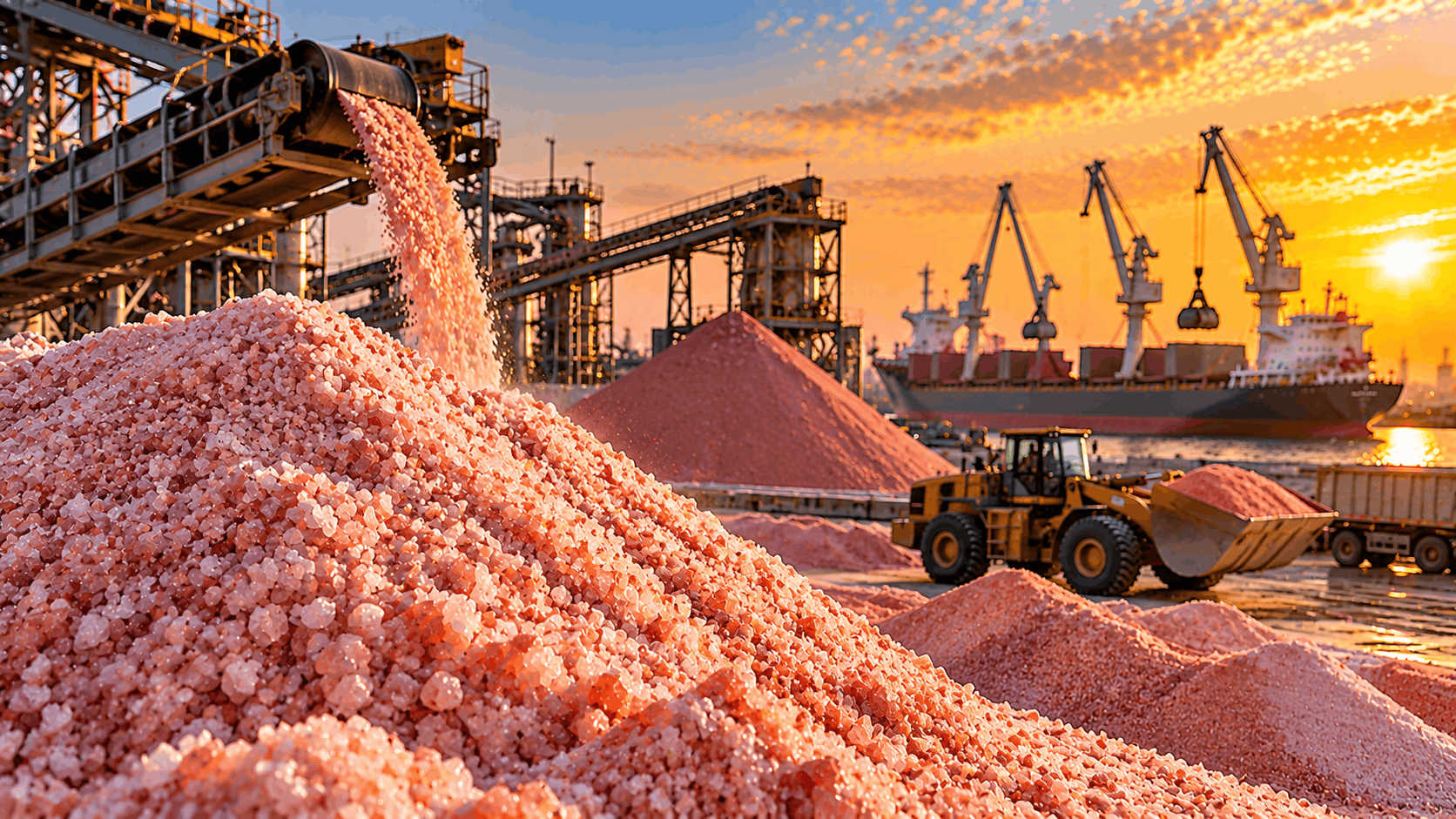
Potash Price Trend 2026: China & India Market Update

Potash just moved, and anyone buying fertilizer inputs needs to know by how much. As of August 2026, China’s potash price sits at USD 515.46/MT on an FOB basis. India’s landed cost is a different story entirely: USD 606.25/MT CIF. That’s a real spread, not a rounding error, and it says plenty about how each market sources this stuff.
Why care about potash specifically? It’s one of the three core nutrients feeding global agriculture, right alongside nitrogen and phosphate. Farmers need it for crop yield. Fertilizer producers need it to build their blends. When the potash price trend shifts, input costs for an entire growing season can shift with it.
Current Potash Prices: China vs IndiaPotashChinaFOBUSD 515.46/MTAugust 2026PotashIndiaCIFUSD 606.25/MTAugust 2026Subtract one from the other and you get USD 90.79/MT. On a single ton, fine, nobody blinks. Across a few thousand tons of seasonal procurement though, that number turns into a serious budget line.
A few notes before reading too much into the gap:
China’s figure is FOB. Buyer takes on freight and insurance from the loading port onward.India’s figure is CIF. Freight and insurance are already baked in, which is a big part of why the number runs higher.Both prices reflect August 2026. Potash doesn’t sit still for long, so treat this as a snapshot, not a forecast.Comparing FOB to CIF directly isn’t entirely fair. Some of that USD 90.79 gap is just the incoterm structure doing its job. Still a useful reference point, just don’t mistake it for an apples to apples comparison.
Why Potash Prices MovePotash pricing rarely has one clean explanation. Usually it’s several things layering on top of each other.
Mining and production costs. Potash comes almost entirely from mined deposits concentrated in a handful of countries. Energy costs for extraction and processing, labor, and equipment maintenance all factor into the base price before it even leaves the mine.
Export policy. A handful of producing nations dominate global supply. Export quotas, licensing changes, or trade restrictions from any one of them can swing prices fast, sometimes within a single trading cycle.
Demand side matters too. China’s agricultural sector consumes enormous volumes domestically, and its FOB pricing reflects proximity to major mining regions plus established trade relationships. India imports a much larger share of its potash needs. That import dependence, paired with longer shipping distances, explains a good chunk of why its CIF number runs higher.
Freight and shipping. Bulk commodity freight rates swing with fuel costs and vessel availability. A tight shipping market pushes CIF prices up even when the underlying mined cost hasn’t changed at all.
Currency. Potash trades in dollars. A weaker rupee against the dollar raises the delivered cost for Indian buyers regardless of what’s happening at the mine.
Quick Questions Buyers Are AskingIs China’s FOB price actually cheaper to work with?
Not necessarily. FOB shifts freight and insurance risk onto the buyer. Factor those costs in and the real landed price can end up closer to India’s CIF figure than the headline number suggests.
Does the India-China gap mean India should produce more domestically?
It’s one argument in favor. India’s heavy import reliance is exactly why that CIF premium exists. Domestic capacity, where geology allows it, would chip away at that dependency over time.
Will this spread hold through the rest of 2026?
Probably, barring a major export policy shift from a top producing country. Structural differences like import dependency don’t disappear overnight.
What This Means for Buyers and InvestorsProcurement teams sourcing potash have real decisions to make here. China’s lower FOB number looks appealing, but freight, insurance, and contract reliability eat into that advantage fast. Run the full landed cost before assuming it’s the better deal.
Investors watching fertilizer and agri-input markets should pay attention to India’s import exposure. A persistent CIF premium like this one tends to attract capital toward domestic processing and blending capacity, even when raw mining isn’t feasible locally.
Business advisers working with agriculture clients, fertilizer blenders, or distributors should treat this potash price trend as a leading indicator. Fertilizer formulation costs typically follow raw potash pricing within a growing season, so tracking this now helps with budget planning before procurement season hits.
Looking Ahead: Q3 2026 OutlookWhere does potash go from here? Hard to say with total certainty. Export policy out of major producing nations remains the biggest wildcard, and that’s genuinely unpredictable quarter to quarter.
What looks fairly stable: the structural gap between China’s FOB pricing and India’s CIF cost. Import dependency doesn’t shift in a single quarter. Freight markets could tighten or loosen, feedstock costs could move, but the core dynamic driving this spread isn’t going anywhere fast.
Buyers locking contracts off outdated figures risk getting caught off guard. Potash can move quickly when export policy changes, so treat August 2026 numbers as a starting reference and nothing more.
ConclusionThe potash price trend ↗ for Q3 2026 draws a clear line between China’s FOB rate of USD 515.46/MT and India’s CIF rate of USD 606.25/MT, both as of August 2026. That USD 90.79 gap comes down to incoterm structure, import dependency, and freight, not random market noise. For procurement teams, investors, and advisers tracking fertilizer inputs, staying current on these numbers matters more than most people give it credit for.
FAQ SectionWhat is the current potash price trend in China and India?
China’s potash is priced at USD 515.46/MT FOB as of August 2026. India’s landed cost comes in at USD 606.25/MT CIF, roughly USD 90.79 higher per ton, largely due to differences in incoterm basis and import reliance.
Why is potash more expensive in India than China?
India’s figure is CIF, so freight and insurance are already included. China’s FOB number isn’t. Add India’s heavier dependence on imported potash and longer shipping routes, and the higher landed cost makes sense.
What drives potash prices globally?
Mining and processing costs set the baseline. Export policy from major producing nations matters a lot too, since supply is concentrated in just a few countries. Freight rates and currency swings add further pressure on top of that.
How often do potash prices change?
Potash can shift within weeks, especially around export policy announcements or shipping disruptions. The August 2026 figures here are a solid benchmark, but anyone negotiating contracts should pull fresh pricing before locking anything in.
What should buyers expect for Q3 2026?
The China-India price gap will likely persist through Q3, since it’s rooted in structural factors like import dependency. Export policy changes from major producers remain the biggest risk to watch, and could move prices faster than usual.